


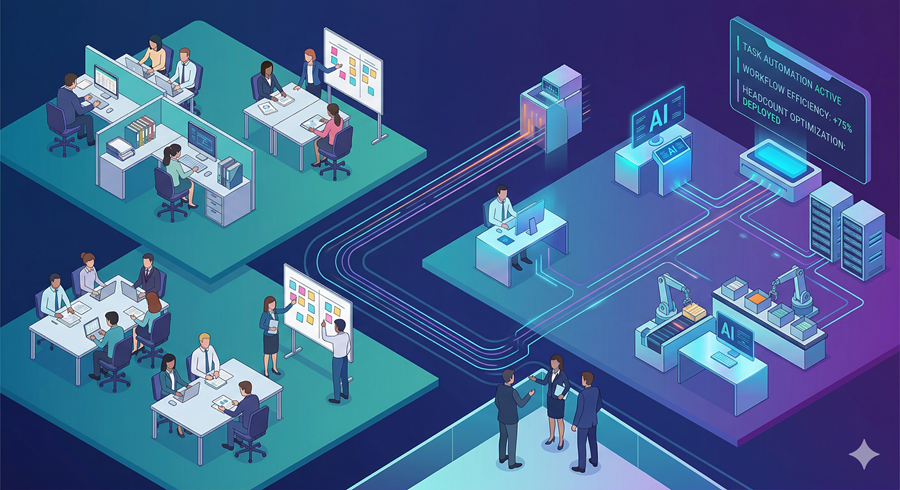
I can’t ignore what’s happening anymore. Artificial intelligence is no longer just assisting us. It’s outperforming us in certain tasks and quietly taking over roles we once thought were secure.
This shift feels sudden, but it has been building for years. Now it’s visible in layoffs, hiring freezes, and a growing reliance on machines over people.
The Quiet Restructuring of Work
I’ve noticed a pattern. Companies are cutting jobs while investing heavily in AI. Some of it may be corrected after overhiring, but the direction is clear.
Businesses are realizing they can operate with fewer people. Tasks that once required entire teams can now be handled by a handful of tools. The result is leaner organizations with higher efficiency, but also fewer opportunities for workers.
What makes this more unsettling is how normalized it’s becoming.
From Unreliable Tool to Core Operator
Not long ago, AI felt like a novelty. It made mistakes, produced unreliable outputs, and required constant supervision.
That is no longer the case.
Today, I can rely on AI to write code, generate content, analyze competitors, and even run parts of a business. What used to take a team can now be handled through a stack of tools working together.
In some cases, entire companies are being built without traditional employees. It’s not just cost saving. It’s a complete redesign of how work gets done.
The Economics No One Can Ignore
There is a hard truth behind all of this. AI is cheaper.
Running a business with AI tools can cost a fraction of what it takes to hire people. For many founders and executives, the decision becomes obvious. Lower costs, faster output, and higher margins.
This creates a powerful incentive to automate as much as possible. And once one company does it, competitors feel pressure to follow.
It becomes less of a choice and more of a survival strategy.
Who Is Most at Risk
Not all jobs are affected equally. I’ve seen that roles involving data, analysis, and digital work are the most exposed.
Software engineers, analysts, and other white-collar professionals are already feeling the pressure. Meanwhile, jobs that require physical presence or human connection remain more resilient for now.
Work that involves care, craftsmanship, or real-world interaction is harder to replace. But even that may not be immune forever.
Adapting Before It’s Too Late
This is the part I keep coming back to. Ignoring AI is no longer an option.
I’ve seen people pivot, learning how to work alongside these tools instead of competing with them. Others are still hoping things will slow down. They won’t.
There are also risks in moving too fast. Overreliance without oversight can lead to serious mistakes, especially in fields like law or finance where accuracy matters deeply.
Still, the direction is clear. AI is not just changing jobs. It’s redefining them.
The real question is not whether this transformation will happen. It’s whether we will adapt in time to stay relevant in a world that is moving faster than ever.
Follow Us on:
Clutch
Goodfirms
Linkedin
Instagram
Facebook
Youtube
