


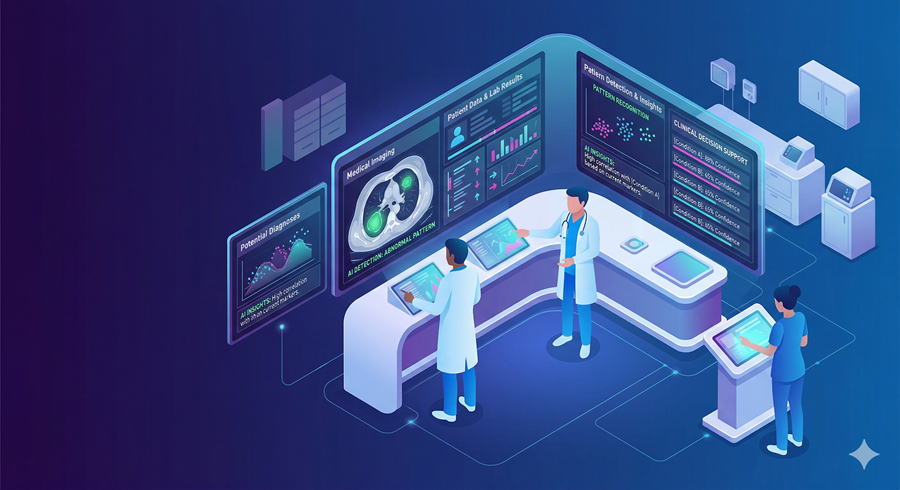
I see AI becoming increasingly useful in helping doctors detect diseases earlier and more accurately. Instead of replacing clinical judgment, it acts as an additional layer of analysis that can scan medical images, patient histories, and lab results to highlight patterns that might otherwise be missed. In complex conditions where symptoms overlap or appear unclear, this kind of support can make a meaningful difference. For me, the most important aspect is that it reduces cognitive load on physicians and helps reduce diagnostic errors caused by fatigue or limited resources.
AI in Personalized Treatment
I also notice AI playing a growing role in tailoring treatments to individual patients. By analyzing genetic information, medical history, and treatment responses, these systems can help predict which therapies are more likely to work for a specific person. This is especially important in chronic diseases where patients often go through multiple treatments before finding the right one. What stands out to me is how this reduces trial and error and makes care more efficient while improving patient outcomes.
AI in Prediction and Prevention
I find predictive healthcare particularly transformative. Instead of waiting for symptoms to appear, AI systems can analyze patterns in lifestyle data, wearable devices, and clinical records to estimate future health risks. This allows earlier intervention for diseases like diabetes, cardiovascular conditions, and kidney disorders. From my perspective, this shift from reactive care to preventive care could fundamentally change how healthcare systems manage long-term population health.
AI in Drug Discovery and Clinical Trials
I also see major changes happening in how new treatments are discovered and tested. Traditional drug development is slow and expensive, and many candidates fail during human trials. AI helps address this by analyzing human datasets to identify promising compounds earlier in the process. It also speeds up clinical trials by identifying suitable patients more efficiently, reducing both time and cost. I believe this could significantly accelerate the delivery of life-saving treatments.
AI in Administration and Medical Education
I finally notice AI transforming the operational side of healthcare as well as education. It can handle administrative tasks such as documentation, scheduling, and billing, which allows medical professionals to spend more time with patients. In education, it provides simulated clinical environments where students can practice diagnosing and treating virtual patients. I see this as an important step in preparing future healthcare workers for an AI-assisted environment.
I see all these developments converging into a single direction where healthcare becomes more data-driven, predictive, and interconnected. While the technology is advancing quickly, I also believe the real challenge lies in how responsibly it is implemented. For me, the future of medicine will depend on balancing human judgment with machine intelligence in a way that strengthens both.
