I treat yearly healthcare updates not as predictions but as observable trends. My focus is on scanning research papers, product launches, and clinical deployments to identify patterns that are quietly reshaping medicine. This year, several developments stand out strongly, from longevity science becoming practical to AI systems entering everyday clinical workflows. What connects them is not hype but real-world adoption happening across hospitals, clinics, and consumer health tools.
Practical Longevity Becomes a Real Focus
I see longevity research moving from theory into practical application. Instead of waiting for breakthroughs that reverse aging, the focus is shifting toward extending healthy lifespan through better screening, lifestyle optimization, and data-driven decisions. Digital health tools and AI systems now help individuals track behavior patterns, understand risk factors, and make small but consistent improvements. I find this shift important because it turns longevity into something actionable today rather than a distant scientific goal.
AI Scribes Enter Clinical Practice
I notice AI scribes becoming one of the most immediate practical uses of artificial intelligence in healthcare. These systems go beyond simple transcription by interpreting doctor-patient conversations and converting them into structured medical records. This reduces administrative burden and allows clinicians to spend more time with patients instead of documentation. In my view, this is one of the clearest examples of AI directly improving healthcare efficiency without changing clinical decision-making itself.
Digital Health, GLP1 Therapies, and Continuous Monitoring
I see digital health becoming essential in managing chronic conditions, especially when combined with new drug classes like GLP1 therapies. Medications alone are not enough without behavioral support systems that help patients maintain long-term lifestyle changes. Continuous glucose monitoring is also expanding beyond diabetes care, giving people real-time insight into how food, sleep, and stress affect their bodies. I find this combination powerful because it connects treatment with everyday behavior, turning health management into an ongoing feedback loop.
Generative AI and Small Language Models in Medicine
I observe generative AI becoming more structured in healthcare adoption, moving toward curated marketplaces where clinicians can choose validated tools instead of building systems from scratch. At the same time, small language models are expanding access by running directly on devices without constant internet connectivity. This makes AI more usable in regions with limited infrastructure. I think this dual trend is important because it balances high-end innovation with global accessibility, ensuring AI benefits are not limited to advanced hospitals alone.
Redefining Healthcare Through AI Collaboration
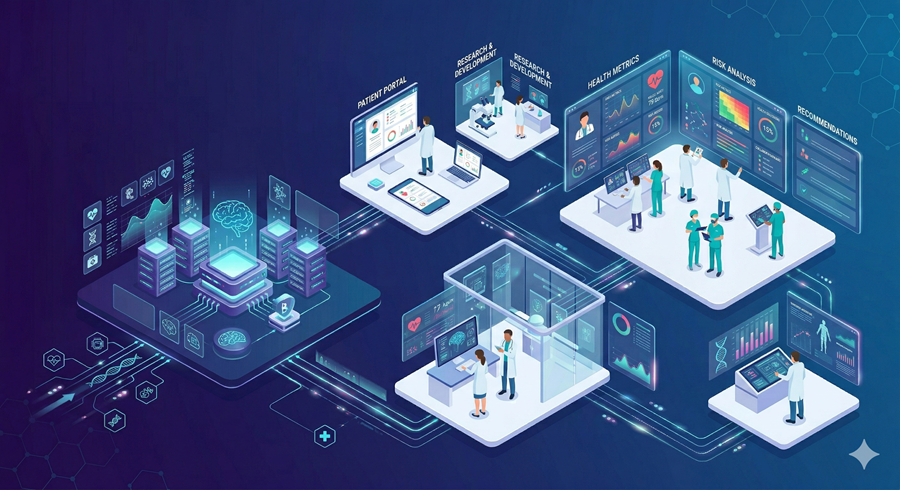
I believe healthcare is moving toward a model where humans, patients, and AI systems work together as a unified team. AI is beginning to support clinical reasoning, assist in diagnostics, and help interpret patient data in real time. At the same time, hardware-heavy innovations are becoming harder to scale, while software-driven intelligence continues to expand rapidly. I see this as a structural shift in medicine where intelligence, not infrastructure alone, becomes the primary driver of healthcare progress.
Closing Perspective
I see these trends converging into a single direction where healthcare becomes more predictive, personalized, and automated. The important challenge is not whether AI will enter medicine, but how responsibly it will be integrated into real clinical systems. For me, the real transformation is already underway, and the next few years will define how smoothly this transition benefits both patients and healthcare professionals.