I have been tracking emerging technologies across healthcare, energy, and digital systems, and what stands out to me is how quickly innovation is moving from experimental labs into real-world deployment. These fifteen trends show a world where intelligence, automation, and biology are converging faster than ever before.
AI, Education, and Human Interaction
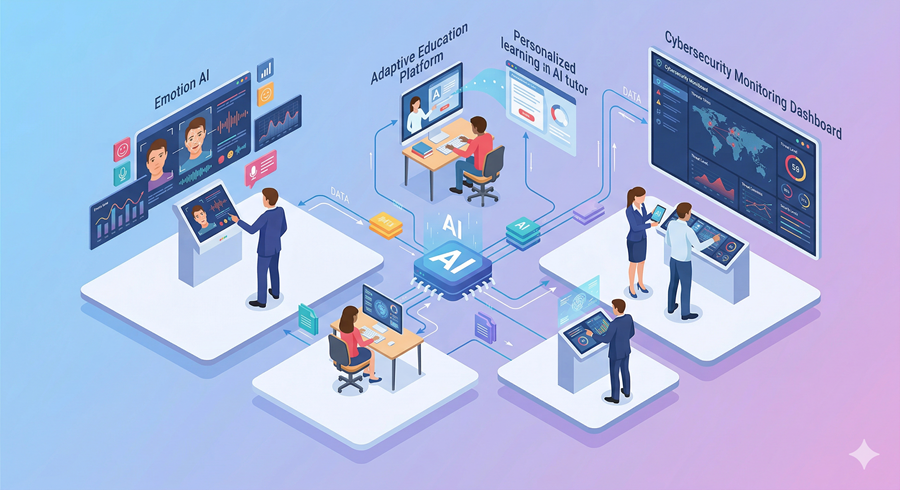
I see AI becoming more human aware, not just in conversation but in how it understands emotion, intent, and learning patterns. Emotion AI is now being used in vehicles and healthcare to detect fatigue, stress, and early mental health signals. I also see AI tutors transforming education by adapting lessons in real time based on how each student learns. At the same time, AI cybersecurity systems are becoming essential as threats grow more complex and fast moving. I find these systems are changing how humans interact with information, making machines more responsive to tone and context in daily use.
Autonomous Machines and Logistics
I notice autonomy spreading beyond cars into drones, ships, and long haul trucking systems that operate with minimal human input. These systems are already completing deliveries, navigating oceans, and testing large scale freight operations across countries. Entire logistics chains are slowly shifting toward automation. Air, sea, and land systems are now beginning to work together as connected intelligent networks.
Future Connectivity
I see connectivity shifting with satellite internet networks and early 6G development. Satellite constellations are already providing internet to remote regions while raising challenges like space congestion. At the same time, 6G research promises extreme speed and near zero latency for future communication systems. Together, these technologies will redefine global connectivity, especially in remote and underserved areas.
Advanced Materials and Nanotechnology
I find materials science especially exciting as self healing materials move closer to real use in cars, electronics, and infrastructure. Nanotechnology is also accelerating medicine and computing through targeted drug delivery and smaller, more powerful chips. These advances are making systems more efficient, precise, and sustainable.
Digital Worlds and Bio Revolution
I also see digital twins becoming important for simulating cities, factories, and infrastructure before real-world deployment. Blockchain is expanding into identity systems and supply chains beyond finance. At the same time, synthetic biology is combining computation and genetics to create new medicines, fuels, and materials. I see a future where digital and biological systems evolve together, shaping the next decade of innovation.