I have been watching the conversation around AI and jobs evolve, but recently it feels less like a debate and more like a warning. What used to sound like distant speculation is starting to show up in real data, real hiring trends, and real stories of people struggling to find work despite strong qualifications.
The Collapse of Entry-Level Opportunities
One of the most striking patterns I see is the decline in entry-level roles. These jobs were once the foundation of professional careers. They allowed people to learn, make mistakes, and gradually build expertise. Now, many of those roles are quietly disappearing.
Companies are not always announcing this shift directly, but the signals are clear. Fewer job postings, more applicants per role, and increasing reliance on AI systems to handle tasks that were once assigned to junior employees. It creates a bottleneck where new graduates find it harder to even enter the workforce.
AI Is Replacing Tasks, Not Just Assisting Them
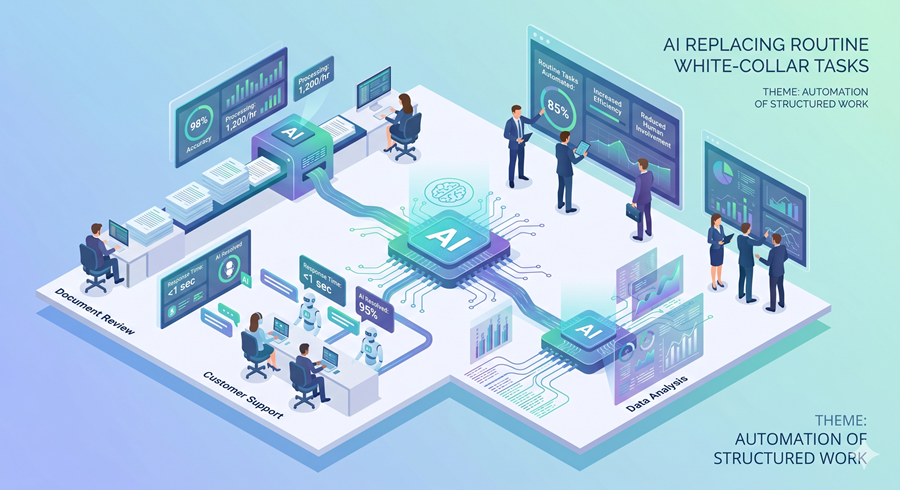
I think the biggest difference this time compared to past technologies is that AI is not just helping people work faster. It is actually doing the work itself. Tasks like customer support, document review, data analysis, and even basic legal or financial work can now be handled by software.
This changes the equation entirely. When a system can complete tasks end-to-end, the need for human involvement drops significantly. And since entry-level roles are often built around repetitive or structured tasks, they are the first to be affected.
The Economic Shift Beneath the Surface
At the same time, I notice something unusual in the broader economy. We are not yet seeing massive spikes in unemployment, but we are seeing slower hiring, reduced wage growth, and increasing competition for fewer opportunities.
This suggests that the impact is gradual but real. Instead of sudden job losses across the board, we are seeing fewer roles being created in the first place. That kind of shift is harder to detect, but it can be just as significant over time.
The Broken Career Ladder Problem
What concerns me most is the long-term effect on career development. If entry-level roles disappear, the entire pipeline of talent is disrupted. Senior professionals do not appear out of nowhere. They develop through years of experience, starting from junior positions.
Without that foundation, companies may face a shortage of skilled workers in the future. It creates a paradox where short-term efficiency leads to long-term instability in the workforce.
A Shift Toward Different Kinds of Work
I also see a growing divide between types of jobs. Roles that involve physical work, hands-on skills, or real-world interaction seem more resilient for now. Meanwhile, digital and office-based roles are facing increasing pressure from automation.
This does not mean white-collar work will disappear entirely, but it is clearly being redefined. The value is shifting toward skills that require judgment, creativity, and adaptability rather than routine execution.
Short Paragraph
What stands out to me is not just the speed of change, but the direction. AI is not simply improving work. It is reshaping who gets to participate in it. The biggest question now is not whether change is coming, but how we adapt to a world where the first step of a career is no longer guaranteed.