


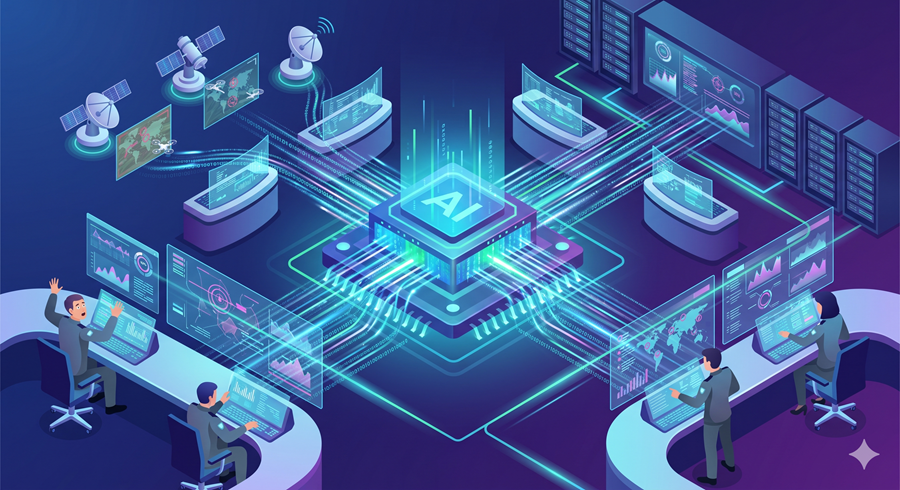
I have been following the rise of AI across industries, but what concerns me most right now is how quickly it is entering high-stakes domains like warfare and finance. This is no longer just about innovation or productivity. It is about control, responsibility, and the speed at which decisions are being made without direct human involvement.
AI Moves Into Active Combat Systems
I see a clear shift happening in modern warfare. AI is no longer limited to simulations or analysis. It is now being used in real combat environments for tasks like target identification, surveillance, and operational support. This changes the nature of decision-making on the battlefield.
When AI systems assist in identifying and prioritizing targets, the timeline for action becomes shorter. Decisions that once required multiple layers of human review can now be influenced or accelerated by algorithms. This raises serious concerns about accuracy, accountability, and the risk to civilians.
The Rise of Algorithmic Warfare
What stands out to me is the concept of high-speed, algorithm-driven warfare. As AI systems process data faster than humans, the pressure to respond at machine speed increases. That creates a scenario where human oversight is reduced simply because there is no time to intervene.
This reminds me of past technological arms races, but with one key difference. Unlike nuclear systems, where human control remains central, AI systems can operate with increasing autonomy. That shift makes the risks harder to predict and potentially more difficult to contain.
A Regional and Global Trend
I also notice that this is not limited to one country. The integration of AI into military systems is becoming a broader trend, especially in regions with ongoing conflict. Automated and semi-automated systems are being adopted as part of standard defense strategies.
This suggests that the AI arms race is not just about capability, but about pace. Once one nation adopts these systems, others are pushed to follow, creating a cycle of rapid escalation.
Financial Systems Facing Similar Risks
At the same time, I see similar concerns emerging in the financial world. Advanced AI models are now powerful enough to influence markets, analyze risks, and even execute decisions at speeds beyond human capability.
Regulators and financial institutions are beginning to question whether these systems could introduce new forms of instability. If AI-driven decisions interact in unpredictable ways, it could lead to disruptions that are difficult to manage in real time.
The Growing Gap Between Power and Oversight
What connects both defense and finance is a widening gap. AI capabilities are advancing faster than the systems designed to monitor and regulate them. Human oversight, which has traditionally acted as a safeguard, is being challenged by the speed and complexity of these technologies.
For me, the core issue is not just how powerful AI becomes, but whether our ability to guide and control it can keep up.
Short Paragraph
What stands out most is the speed of this transition. AI is moving into critical systems where decisions carry real-world consequences, yet the frameworks for oversight are still catching up. That gap may define how safely this technology evolves in the years ahead.
