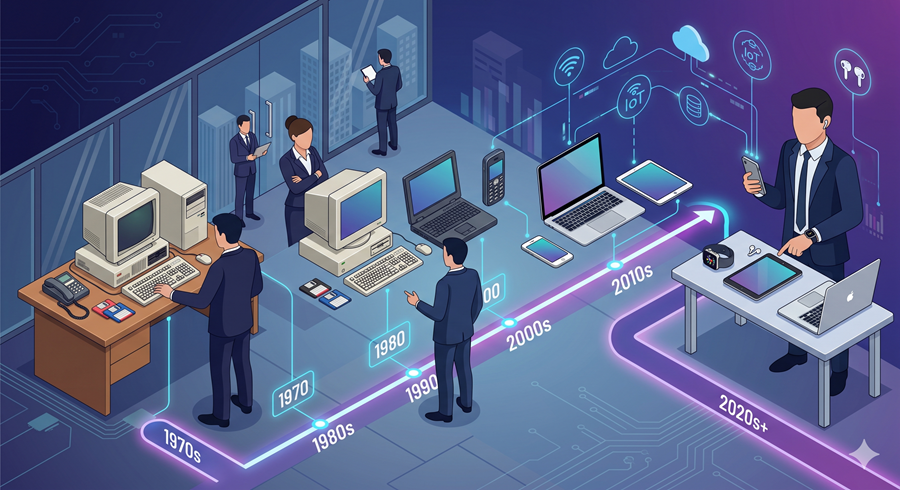
I find it incredible to look at how far personal technology has come over the last 50 years. What started as a small experiment in personal computing has grown into something that now shapes communication, creativity, entertainment, and even how I think about everyday life.
In the early days, computers were not designed for ordinary people. They were large, complex systems meant for specialists. The idea of bringing computing into homes was still new and uncertain. But over time, that changed as engineers and innovators began focusing less on raw technical power and more on making machines that people could actually use.
The Shift From Complexity to Simplicity
What stands out to me most is how design philosophy evolved. Early personal computers were limited, but they introduced a new idea: technology should be accessible. Instead of forcing users to adapt to machines, machines began adapting to users. That shift is what made personal computing truly personal.
As systems improved, computing moved from desks to laptops and eventually into our pockets. Each step made technology more portable, but also more integrated into daily life. Now, I rely on devices that are always with me, always connected, and always evolving.
Technology Becomes a Daily Companion
I also notice how technology has stopped being just a tool and has become more like a constant companion. It helps me navigate places, communicate instantly, manage work, and even make decisions. This level of dependence would have been hard to imagine decades ago.
At the same time, I think about how this convenience changes behavior. When systems become too helpful, I sometimes rely on them instead of developing the same skills myself. That tradeoff between convenience and independence feels more important as technology becomes more advanced.
Ownership and the Modern Digital Shift
Another change I see is in how ownership works. Earlier, buying a device meant owning a complete system. Today, many tools are tied to subscriptions, cloud services, and ongoing updates. That means the technology I use can change over time without me fully controlling it.
This creates both benefits and challenges. On one hand, I get constant improvements. On the other hand, I lose some stability and control over the tools I depend on.
Looking Ahead at the Next Phase of Computing
I often wonder what the next phase of personal technology will look like. Whether it becomes more wearable, more voice-driven, or even more integrated into everyday environments, the direction seems to be toward a deeper connection between humans and machines.
But I also think the real question is not just what technology can do, but how much of it I actually want shaping my decisions and experiences.
Short Paragraph
Apple’s 50-year story reflects a larger transformation in how humans interact with technology. What began as simple personal computing has evolved into a deeply connected digital ecosystem that influences nearly every part of daily life, raising new questions about convenience, control, and dependence.