For the first time in decades, searching online feels fundamentally different. Google is no longer treating search like a keyword engine. It’s turning it into a full AI assistant.
The new search experience looks less like traditional Google and more like a conversation with an intelligent agent. Instead of typing a few words and scrolling through blue links, I can now upload files, videos, screenshots, or images and ask layered questions with real context behind them.
That shift matters more than most people realize.
Google built its empire on helping us find information. Now it wants to generate the answer itself.
AI Is Becoming the Default Layer Across Everything
The biggest theme from the event wasn’t just new tools. It was integration.
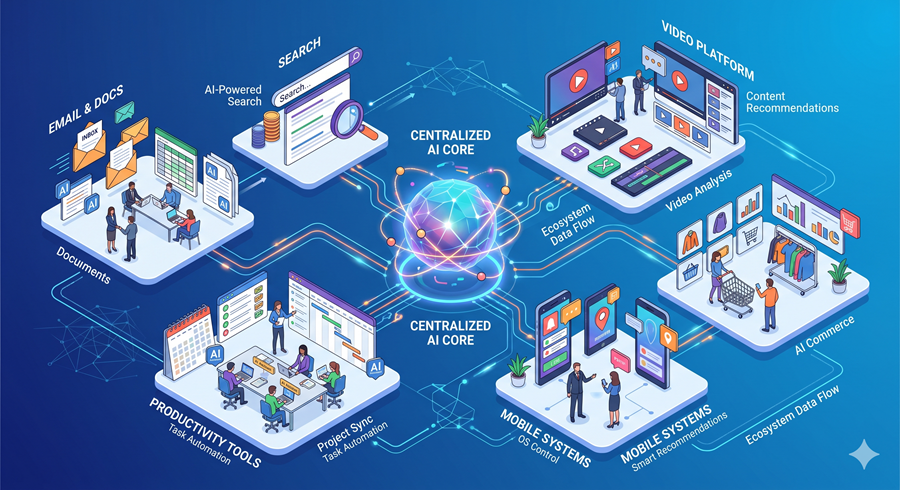
AI is no longer a feature sitting off to the side. It’s becoming the operating system behind Search, Gmail, Docs, YouTube, Android, shopping, and even task management.
The new Gemini updates push this even further. The latest Flash model is designed to be faster, cheaper, and surprisingly more powerful than previous premium versions. Meanwhile, the upcoming Pro model is aiming directly at the top AI systems currently dominating the market.
What stood out to me most is how Google is moving toward “agentic” workflows. Instead of simply answering questions, these systems can act on your behalf.
Book appointments. Compare prices. Track carts. Organize your inbox. Summarize your day. Draft documents from voice notes. All with minimal manual input.
That’s a very different internet from the one we grew up with.
The Real Battle Is Ecosystem Control
Most AI companies are building powerful chatbots. Google is doing something broader.
It’s embedding AI into products that billions of people already use every day.
That creates a huge advantage.
A personalized assistant becomes much more useful when it can access your calendar, emails, documents, search history, maps, shopping activity, and media habits all in one ecosystem. That’s clearly the direction this is heading.
The introduction of tools like Gemini Sparks and Daily Brief signals a future where your AI assistant continuously watches, organizes, and anticipates your needs across platforms.
Convenient? Absolutely.
A little unsettling? Also yes.
Content Creation Is About to Change Again
Another major shift is happening quietly in the background.
Google is heavily investing in AI-generated media through tools for video, music, image editing, and app generation. Some of these systems can now create interactive dashboards, mini apps, charts, and editable videos directly from prompts.
Even YouTube search is changing. Instead of finding videos through keywords, users may soon ask questions conversationally and jump directly to specific moments containing the answer.
As someone who has watched digital platforms evolve for years, this feels like the beginning of another major reset for creators, marketers, and educators.
Traffic patterns will change. Discovery will change. Attention itself may change.
We’re Entering the AI Interface Era
The most important takeaway is simple: AI is becoming the interface.
Not just a chatbot.
Not just a tool.
The interface.
And once that happens, the way we interact with the internet may never look the same again.