


For years, building an app felt locked behind two gates. Either I had to learn coding for months, or I had to pay someone thousands of dollars to turn an idea into something real.
That’s changing fast.
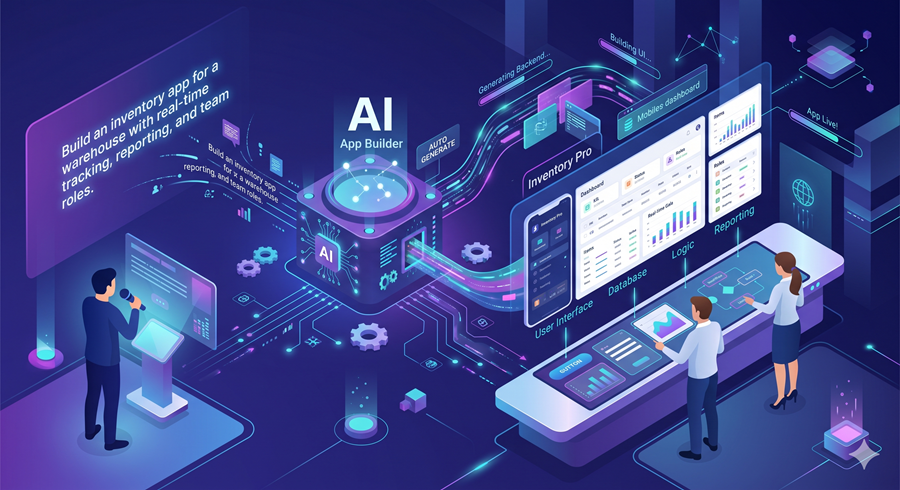
Google just introduced a shift that feels bigger than most people realize. I can now describe an app in plain English, and AI builds it for me. Not a fake demo. Not a rough sketch. A functioning app that can connect to Gmail, Google Sheets, Docs, Drive, and even run directly on my phone.
The wild part is that much of it costs nothing to start.
This is the first time app creation feels accessible to normal people instead of just developers.
Your Apps Can Finally Use Real Data
The biggest upgrade is not the design tools. It’s the integration.
Apps can now directly connect with Google Workspace tools. That means an app can read spreadsheet data, organize files in Drive, draft emails, or pull information from documents automatically.
Before this, most no-code AI apps felt isolated. They looked impressive but couldn’t interact with the systems people actually use every day.
Now they can.
Even better, Google quietly removed one of the most frustrating technical hurdles: authentication. The system automatically handles permissions and secure logins behind the scenes.
That sounds small until you realize how much complexity it removes.
A simple sentence can now replace hours of setup work.
This Changes Everyday Work
What excites me most is not flashy AI demos. It’s the boring tasks that disappear.
Imagine running a small business where sign-ups flow into a spreadsheet. Instead of manually checking entries and sending follow-up emails, I can create a lightweight app that detects new leads and drafts personalized responses automatically.
That is where the real value lives.
Not viral apps. Not billion-dollar startups.
Just small tools that quietly save time every single day.
The people who learn this early will build tiny systems that compound into huge advantages later.
AI Is Becoming a Real App Builder
Another major shift is that these apps are no longer limited to browser pages. AI can now generate native Android apps using the same development framework professional developers rely on.
That means the apps can access phone hardware like GPS, cameras, Bluetooth, and sensors. Some can even work offline.
I can test the app directly inside my browser using a virtual Android device, then move it onto my actual phone within minutes.
The gap between “idea” and “working product” is collapsing.
And AI itself is getting smarter during the process. Instead of forgetting previous instructions, newer systems remember the entire project structure and update multiple files without breaking everything else.
That sounds technical, but it matters because reliability is what turns AI from a toy into a useful tool.
The Real Opportunity Most People Will Miss
I think the biggest mistake right now is assuming this is only for programmers.
It isn’t.
This is about learning how to automate pieces of life and work before everyone else does.
A year from now, some people will still spend hours doing repetitive tasks manually. Others will quietly build small AI tools that handle those tasks for them automatically.
The difference between those two groups will become impossible to ignore.
