Something fundamental just changed about the internet. For the first time in decades, searching online no longer feels like typing keywords into a box and scrolling through links. It feels like talking to an intelligent assistant that already understands context, remembers what you need, and builds answers in real time.
That shift became impossible to ignore after Google unveiled 22 major AI updates in a single event. And honestly, this did not feel like a normal product launch. It felt like Google was rebuilding its entire ecosystem around AI agents.
Search Is Becoming a Conversation
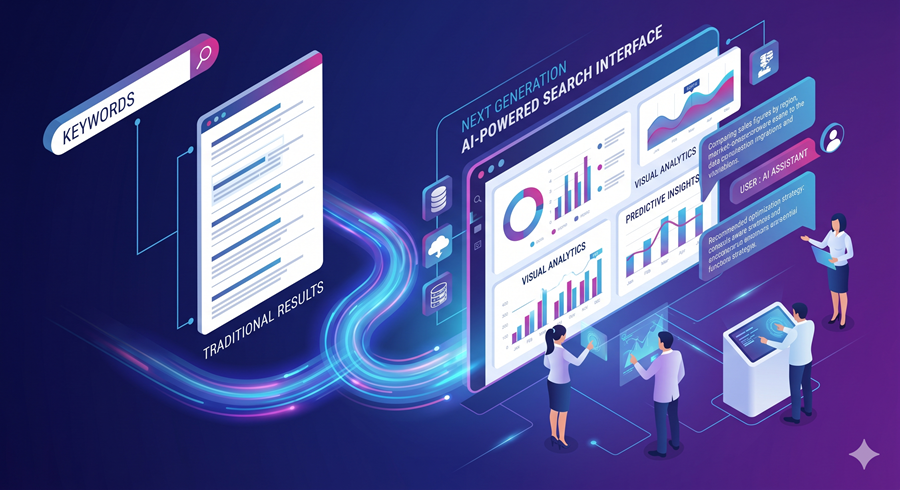
The biggest update is surprisingly simple: the search bar itself. Instead of typing short keywords, I can now ask detailed questions the same way I would inside ChatGPT or Gemini. I can upload images, videos, files, and combine them with prompts. Search is no longer about finding websites. It is becoming an interactive reasoning system.
What stood out most is that AI mode is quietly becoming the default experience. Google is moving away from “ten blue links” toward generated answers, mini dashboards, charts, and even interactive tools created instantly from a prompt.
That changes user behavior completely. If I ask for a workout plan, I may not get a list of articles anymore. I might get a personalized fitness tracker generated on the spot.
Google Is Chasing AI Dominance Fast
The new Gemini 3.5 Flash model may be the most important technical announcement.
Google claims it is faster and stronger than previous premium models while costing less to run. That matters because speed is becoming the real battleground in AI. People do not just want intelligence anymore. They want instant intelligence.
At the same time, Gemini 3.5 Pro is being positioned as a top-tier reasoning model designed to compete directly with the strongest systems from OpenAI and Anthropic.
For the first time in a while, it feels like Google is no longer playing catch-up.
AI Is Quietly Entering Everyday Life
The updates were not limited to search.
Gmail can now be spoken to like an assistant. Docs can structure your thoughts while you talk. YouTube search is becoming prompt-based instead of keyword-based. Shopping carts follow you across apps. AI systems can even call businesses on your behalf to book services.
Individually, these features sound small.
Together, they signal something much bigger: Google wants AI woven into every digital action you take.
And because these tools connect across Gmail, Docs, Calendar, Search, Android, and YouTube, Google may have an ecosystem advantage nobody else can easily replicate.
The Real Story Isn’t the Features
Most people will focus on the flashy demos.
I think the real story is this: Google is trying to transform from a search company into an AI operating system for daily life.
That changes how we search, create, shop, communicate, and eventually make decisions.
The internet used to help us find information.
Now it is starting to act on our behalf.