The most important thing Google is doing with Workspace Intelligence is not adding more AI features. It is removing the need to repeatedly explain your work.
That sounds minor until you consider how most people use AI today. Every useful interaction begins with context loading: uploading files, explaining the project, restating the goal, and reconnecting the model to prior work. That overhead has always been the hidden tax on AI productivity.
Workspace Intelligence is designed to remove that tax. Instead of asking users to constantly reconstruct context, Google is making context persistent across the workspace.
That is the real shift.
The Model Now Works Inside Your Operating Context
What changes here is not just access to documents. It is continuity.
Gemini can now pull from documents, spreadsheets, email threads, calendars, and shared project materials as part of a single working context. That means the model is no longer responding to isolated prompts. It is operating inside the structure of ongoing work.
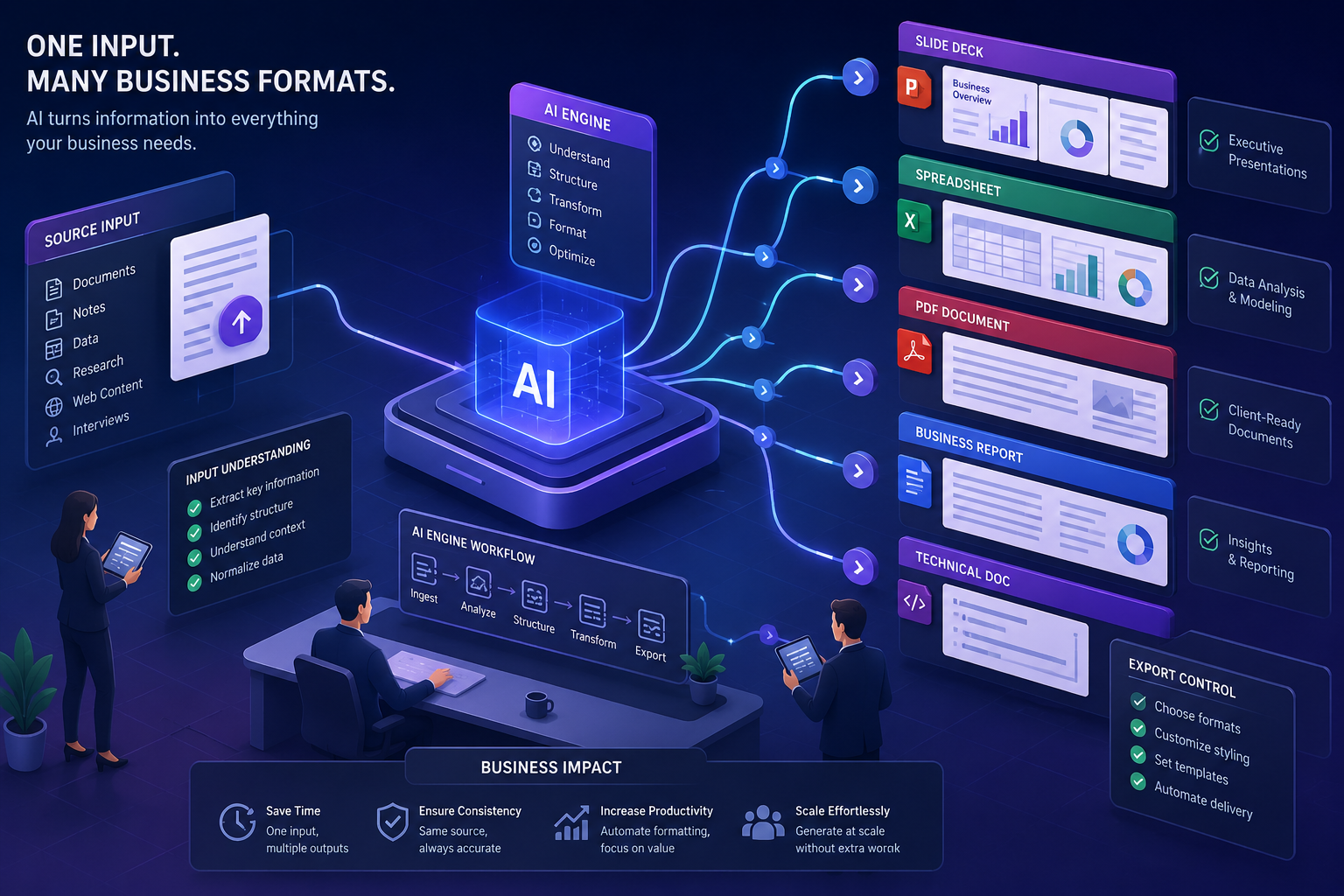
This matters because most business tasks are not single actions. They are connected sequences. A pitch deck depends on a spreadsheet. An invoice depends on an email. A proposal depends on prior documents, tone, and formatting. Workspace Intelligence allows the model to follow those dependencies without forcing the user to manually reconstruct them.
That makes the system less like a chatbot and more like embedded operational memory.
This Changes Where Knowledge Work Happens
The practical impact is not just faster output. It is less fragmentation.
Most workplace inefficiency comes from context switching between tools, files, and conversations. Work is slowed less by writing than by searching, reassembling, and translating scattered information. Workspace Intelligence compresses that movement.
Once the model can move across Gmail, Drive, Docs, Sheets, and Slides with awareness of shared context, the user spends less time coordinating systems and more time making decisions.
That is the deeper productivity gain: less time reconstructing state.
Projects Make Context Actionable
The most important structural addition may be projects.
Projects turn scattered files and conversations into bounded knowledge environments. That matters because context is only useful when it is constrained. Broad access creates noise. Scoped access creates relevance.
This makes Workspace Intelligence more than a general assistant. It becomes a focused reasoning layer built around specific business contexts, closer to an internal operating system than a universal chat tool.
That is where the product becomes materially more useful.
Google Is Building Memory Into Work
The deeper implication is simple: Google is turning memory into product infrastructure.
Workspace Intelligence is not just about helping generate content faster. It is about making work state persistent, portable, and computationally useful across tools.
That changes the role of AI in the workplace. It is no longer just a tool for generating outputs. It is becoming the system that remembers how work connects.
Follow Us on:
Clutch
Goodfirms
Linkedin
Instagram
Facebook
Youtube