


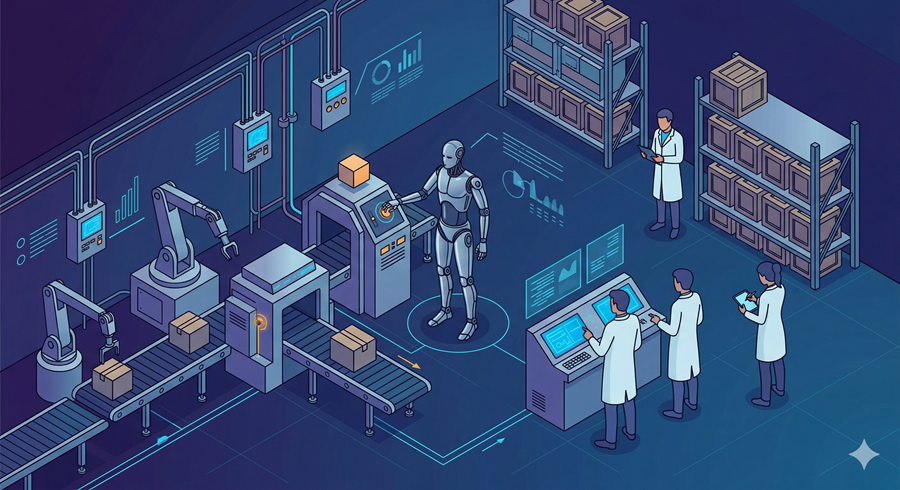
I see the T800 as part of a new wave of humanoids designed to operate in real environments rather than controlled labs. Its structure combines industrial materials with a human-scale frame, allowing it to move with surprising agility despite its weight. What makes it notable is not just its appearance but the attempt to balance strength, safety, and mobility in a single platform.
Engineering the Body: Movement and Strength
I find the engineering behind its movement particularly interesting. The robot is designed with multiple degrees of freedom in its limbs, allowing it to perform complex actions such as running, jumping, and precise manipulation despite its rigid metal frame. Its joint systems are designed to distribute force efficiently, helping maintain stability during dynamic motion and reducing the risk of mechanical strain.
Intelligence and Onboard Computing
Beyond the physical structure, the T800 also relies on onboard intelligence to coordinate movement and perception. I find it important that it integrates sensors, vision systems, and computing into a unified pipeline rather than separating them into disconnected modules. This allows it to interpret its environment in real time and adjust its actions based on feedback loops. The result is a system that behaves less like a scripted machine and more like an adaptive physical agent.
Real-World Use Cases and Cost Expectations
I think the most practical question is where a machine like this would actually be used. Today, it seems best suited for industrial environments, logistics support, and high-risk operations where human presence is limited. There is also growing speculation about home use, but I remain cautious because safety, maintenance, and durability challenges are still significant. At the same time, I estimate that pricing could realistically fall somewhere between mid-five-figure to low six-figure ranges, depending on production scale.
What This Means for the Future of Robotics
Stepping back, I see this as part of a broader shift toward embodied AI systems that merge perception, reasoning, and action into a single flow. If progress continues at this pace, robots like the T800 will not just execute tasks but adapt to environments in ways that feel increasingly natural and responsive. The bigger question I keep coming back to is not whether these machines will become common but how quickly society can integrate them responsibly.
Follow Us on:
Clutch
Goodfirms
Linkedin
Instagram
Facebook
Youtube
