


I have used enough AI tools to know the pattern. You ask something, it responds, and then you still end up doing the actual work yourself. That model felt revolutionary at first, but once I experienced a true AI agent in action, it started to feel incomplete.
What changed everything for me was seeing a system that does not just respond, but actually executes.
From Assistant to Actual Execution
The biggest shift is simple but powerful. Traditional AI behaves like a smart advisor. This new wave behaves more like an employee.
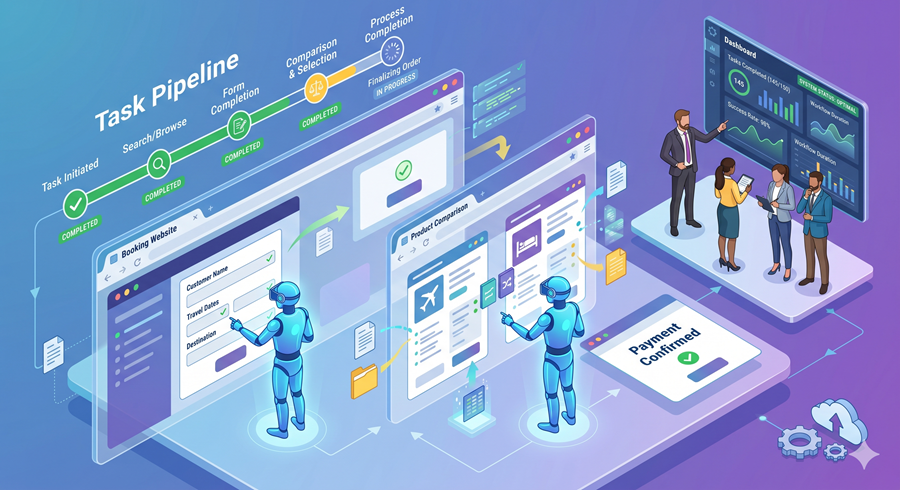
Instead of telling me what to do, it opens browsers, navigates websites, fills forms, compares options, and completes tasks end to end. I can give it a clear instruction, and it carries that instruction all the way through to a finished result.
Watching it operate inside a real browser without touching the keyboard feels like crossing a line. It no longer feels like software. It feels like delegation.
Real World Tasks Without Manual Effort
What impressed me most was how naturally it handles everyday digital work. I can ask it to search for a product, compare options, and prepare the final choice ready for checkout.
It navigates pages, reads reviews, adapts when errors occur, and continues without needing constant input. When something breaks, it does not stop. It tries again.
That behavior is important. Most tools fail the moment something unexpected happens. This one adjusts in real time, which makes it feel reliable in a way older systems never did.
Turning Chaos Into Structured Output
Another moment that stood out to me was handing over messy, unstructured data. Things like cluttered folders, random documents, and forgotten files.
Instead of just identifying them, the system organizes everything. It renames files, categorizes them, and even generates structured outputs like tracking sheets.
The key difference is not intelligence alone. It is an initiative. It identifies the problem, chooses a method, and completes the process without needing step-by-step guidance.
Automation That Thinks, Not Just Follows
What makes this category different is how it handles failure. When a process breaks, it does not repeat the same mistake.
It reads the error, changes strategy, and continues. That is something I rarely see in typical AI tools. Most systems depend heavily on perfect conditions. This one adapts when conditions are not perfect.
That shift from rigid execution to flexible problem solving is what makes it feel closer to real decision-making.
Parallel Work Changes the Game
Another major leap is the ability to run multiple tasks at once. Instead of handling one request at a time, it can manage dozens or even hundreds of processes simultaneously.
Research, data collection, analysis, and formatting can all happen in parallel. What would normally take hours or days can be completed in minutes.
This is where the efficiency gap becomes obvious. It is not just faster. It operates on a completely different scale.
From Outputs to Finished Deliverables
One of the clearest differences I notice is the type of output. Older tools give answers. This gives results.
Instead of explanations, I get completed reports, structured datasets, working prototypes, and ready-to-use assets. The output is no longer a step in the process. It is the end of the process.
That fundamentally changes how I approach work. I spend less time doing and more time reviewing.
The Always-On AI Workflow
The most impactful shift is mobility. I am no longer tied to a desk to use these capabilities.
I can send a simple instruction from my phone, even as a voice note, and receive a fully completed task in return. Research, summaries, and structured outputs arrive while I am doing something else entirely.
That changes how work fits into daily life. Tasks no longer require dedicated time blocks. They happen in the background.
Why This Feels Like a Turning Point
When I step back, the pattern becomes clear. AI is moving from answering questions to completing responsibilities.
The difference between a chatbot and an agent is the difference between advice and execution. Once that shift happens, everything else starts to feel slower.
This is not just a better tool. It is a different category entirely.
Follow Us on:
Clutch
Goodfirms
Linkedin
Instagram
Facebook
Youtube
