


For decades, the internet followed a simple pattern: search, click, and read. This loop built entire industries, powering search engines, blogs, and digital businesses of every kind.
Now, that structure is quietly breaking.
This is not just a gradual shift. AI is no longer a layer on top of the internet it is becoming the interface itself.
The End of the Click Economy
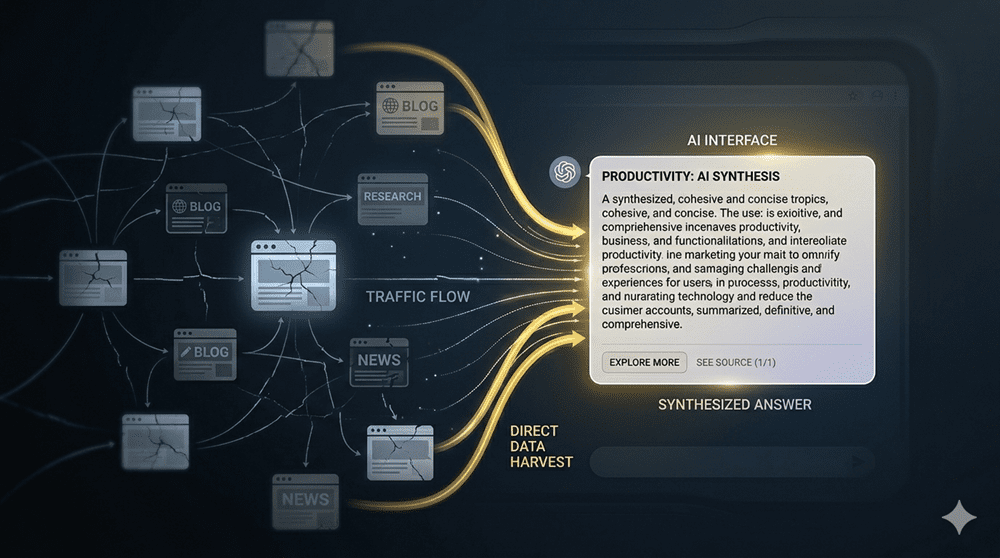
The old internet was built on clicks. Search engines directed users to websites, where traffic generated revenue and rankings determined visibility.
But that model is fading.
Today, users can ask AI a question and receive a complete answer instantly. There is no need to open multiple links or browse different sources. As platforms like Google integrate AI-generated summaries into search results, fewer users visit websites directly.
This creates a ripple effect across the digital economy. When clicks decline, so do the business models built around them.
Affiliate sites, ad-driven blogs, and SEO-focused platforms all rely on traffic. Without it, their foundation weakens.
The Content Paradox
At the same time, the cost of creating content has dropped significantly.
AI tools can generate articles, images, videos, and audio in minutes. This removes the friction that once made content creation slower and more deliberate.
As a result, the internet is filling with content faster than ever.
But this creates a paradox.
AI systems depend on high-quality human-created content. Yet by reducing traffic and incentives for creators, they risk weakening the very ecosystem they rely on.
Less reward for original work could eventually lead to less original work.
When Volume Replaces Scarcity
In the past, information was scarce and required effort to find.
Now, information is abundant to the point of overload. Anyone can publish instantly, and entire platforms can generate content at scale.
The challenge is no longer access it is verification.
With so much content available, it becomes harder to distinguish what is real, accurate, or trustworthy. AI can produce convincing reviews, expert opinions, and even false narratives.
The new scarcity is not information.
It is authenticity.
Why Trust Becomes the New Currency
As synthetic content increases, trust becomes the most valuable asset online.
People will rely more on credible sources, recognized individuals, and proven expertise. This marks a shift from optimization to authority.
Previously, success depended on ranking high in search results. Now, it depends on being trusted more than alternatives.
A New Internet Is Emerging
We are entering an AI-driven internet experience.
Instead of browsing websites, users interact with systems that summarize and generate information in real time. The internet becomes less about exploration and more about direct answers.
The internet is not disappearing it is evolving.
The key question is whether to adapt early or fall behind.