Indian IT stocks witnessed a sharp sell-off this morning as heavy losses swept across the technology sector. Shares of major companies like Persistent Systems, LTIMindtree, and Coforge tumbled between 6% and 7% during early trade. Within minutes, more than ₹1.5 lakh crore in market value was wiped out across the sector.
But this was not just a Dalal Street problem. The panic actually began in global markets after a new AI announcement triggered fears about the future of software and professional services companies worldwide.
The centre of the storm was Anthropic, the company behind Claude AI.
What Triggered the Panic?
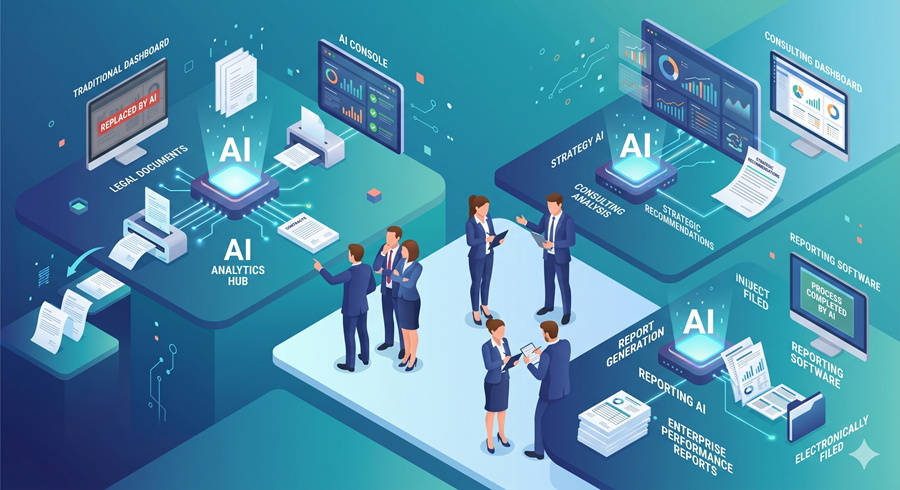
Anthropic launched its first major AI workplace automation system featuring 11 integrated plugins. These plugins are designed to automate tasks traditionally handled by highly paid professionals, especially in the legal and enterprise sectors.
The announcement immediately rattled investors because the AI tools are capable of reviewing contracts, drafting legal summaries, preparing reports, and handling documentation tasks that previously required teams of lawyers, consultants, and enterprise workers.
Even though Anthropic clearly stated that all AI-generated legal work should still be reviewed by licensed attorneys, the market reaction was brutal.
Investors quickly realised that AI is no longer just helping professionals work faster. It is now beginning to directly compete with the very services many software and consulting companies rely on for revenue.
Global Software Stocks Also Came Under Pressure
The impact was visible across global markets.
Several US software and SaaS companies saw sharp declines after the announcement. Gartner reportedly plunged as much as 21%, while major software names like Adobe, Salesforce, and Microsoft also faced selling pressure.
The weakness spread into Europe as well. RELX, which owns major legal and analytics platforms, dropped sharply in London trading. Other publishing and legal information firms also witnessed steep declines as investors worried about AI replacing parts of their business models.
Meanwhile, U.S.-listed ADRs of Indian IT companies like Mphasis and Wipro also fell nearly 5% to 6%.
Why Investors Are Suddenly Worried
The current fear in markets is very different from earlier AI excitement.
For the last two years, investors mostly believed AI would act as a productivity tool that helps software companies grow faster. But now, the concern is that AI could start eating directly into the core revenue streams of enterprise software firms, consulting businesses, legal research providers, and outsourcing companies.
This is especially worrying for Indian IT firms because a large portion of their business comes from enterprise support, consulting, workflow management, and outsourced professional services.
If AI systems can automate many of those functions internally for companies, demand for traditional outsourcing could eventually slow down.
That is exactly why brokerage firm Jefferies reportedly described the current market reaction as a “SaaS apocalypse.” Analysts even referred to the trading activity as “get me out” style selling, showing just how nervous investors have become.
Why Anthropic Is Seen as a Bigger Threat
What makes Anthropic particularly dangerous in the eyes of investors is that the company builds its own AI models instead of relying entirely on third-party systems.
Unlike smaller startups that depend on outside AI providers, Anthropic controls both the infrastructure and the underlying models powering its products. That allows the company to customise AI systems specifically for industries like legal services, enterprise automation, and corporate workflows.
This creates a deeper fear in the market that future AI startups may no longer need traditional software vendors at all. Instead, they could simply build specialised AI solutions directly on top of Anthropic’s ecosystem.
Many investors are comparing this moment to the earlier shock caused by DeepSeek, whose rise previously erased hundreds of billions of dollars from global tech valuations.
The big question now is no longer whether AI will disrupt software companies.
The real question is which companies will successfully adapt to the AI era, and which ones risk being left behind.