


The world of artificial intelligence is moving at an unbelievable pace. Every week, companies release tools that completely change how people work, create content, code, and even interact with computers. Recent announcements from companies like Google, OpenAI, Anthropic, Meta, and several Chinese AI startups prove that the AI race is becoming more competitive than ever before. These new updates are not just small improvements. They are changing the way humans interact with technology daily.
Humanoid Robots Are Becoming Smarter
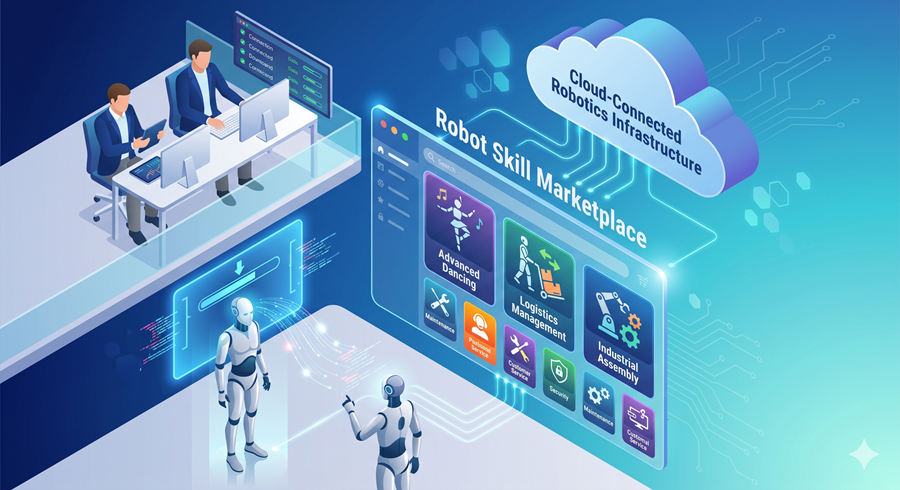
One of the biggest announcements came from the Chinese robotics company Unitree. They introduced something called UniStore, which works like an app store for humanoid robots. Previously, robots could only perform tasks that engineers manually programmed into them. Teaching a robot something new required coding knowledge and a lot of time.
Now, anyone can simply download new robot skills directly from a mobile app. A robot can learn dancing, folding laundry, inventory management, or even farming tasks in seconds. This is a massive step toward making robots useful for everyday people instead of limiting them to factories and research labs.
Google DeepMind Introduces AI Mouse Pointer
Google DeepMind revealed a new experimental concept called Magic Pointer. Instead of opening a chatbot separately, users can simply point their mouse at something on the screen and give a short command.
For example, a user can hover over a recipe and ask the AI to add ingredients to a shopping list instantly. It can also edit calendar invites, generate directions, and automate tasks directly from the cursor. This creates a much more natural interaction between humans and AI systems.
Claude Helps Recover Lost Bitcoin Fortune
A surprising story involved Anthropic’s Claude AI model helping a man recover access to forgotten Bitcoin worth nearly 3.8 crore rupees. The man had lost access to his wallet password for over 11 years.
Using Claude, he uploaded old files from a college computer. The AI located an encrypted wallet file and helped identify recovery methods using open source tools. Eventually, the wallet was unlocked successfully. This example showed how AI can assist in solving highly complex digital problems that would normally take experts a very long time.
AI Agents Are Becoming More Powerful
Google introduced Gemini Intelligence, a proactive AI assistant designed to complete tasks instead of simply answering questions. It can book tickets, update calendars, fill out online forms, and organize information automatically.
At the same time, OpenAI expanded Codex into mobile devices. Users can now control AI coding agents directly from their phones while those agents continue working remotely on laptops or cloud environments. Anthropic also launched Agent View for Claude Code, allowing users to manage multiple AI coding agents from one dashboard.
These systems are turning AI into autonomous digital workers capable of handling real workflows independently.
Chinese AI Models Are Challenging Claude and GPT
Chinese AI company Moonshot AI released Kimi K2.6, an affordable AI model that competes directly with Claude and GPT models. The tool can generate full websites, animations, and complete brand identities from only one image or a short prompt.
Users tested the system by uploading a single Nike image, and the AI created a fully animated website with shopping sections, product layouts, and interactive design features. Another test generated an entire fashion brand website from just one sentence.
This shows that high-quality AI design tools are becoming cheaper and more accessible for everyone.
The Future of AI Is Becoming More Human
Meta also introduced major upgrades to Meta AI. Voice conversations are now more natural, allowing users to interrupt mid-sentence or switch languages during discussions. Meta AI can even identify buildings, objects, and food using a phone camera in real time.
At the same time, companies are focusing heavily on privacy, autonomous agents, robotics, and multimodal AI systems. The latest updates clearly show that AI is no longer just a chatbot. It is becoming a fully capable digital assistant that can see, hear, understand, create, and act on behalf of users across multiple devices and environments.
