I have been watching AI evolve at a rapid pace, but this week felt unusually dense. Not because of one massive breakthrough, but because of how many different directions the industry moved at once. AI became more personal, more efficient, more embedded in tools, and at the same time, more controversial.
AI Companions Are Becoming Real
I find it fascinating how AI interfaces are starting to feel less like tools and more like personalities. The reimagining of Clippy into a responsive AI orb is not just nostalgia. It reflects a deeper shift toward systems that react emotionally, remember past interactions, and adapt in real time.
What stands out to me is the addition of memory and teaching modes. When an AI can recall previous conversations and guide learning step by step, it stops being a simple assistant. It starts to feel like a companion. But that also raises a challenge. Even if the technology improves, people still need to feel comfortable talking to machines naturally, something that has historically been harder than expected.
Faster AI Without Bigger Hardware
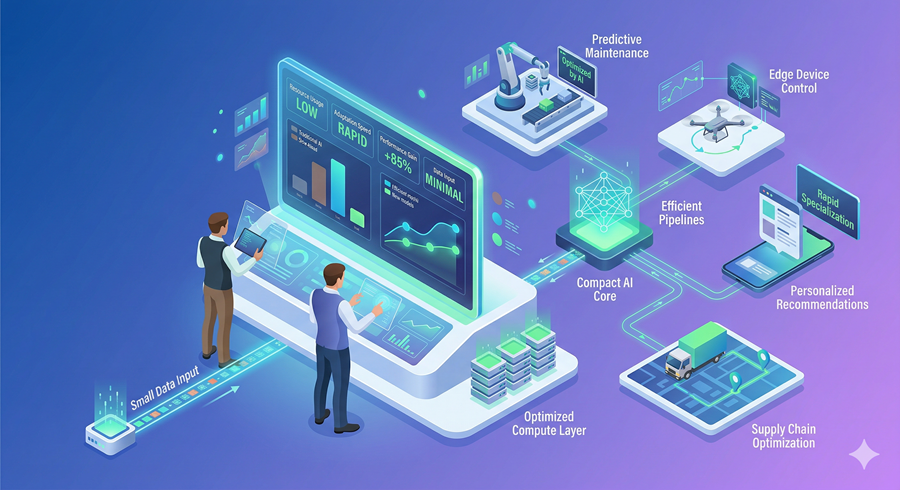
At the same time, I see a completely different kind of progress happening under the surface. Systems are becoming dramatically more efficient. Instead of requiring massive computing resources, new approaches allow models to adapt to specific tasks in minutes using minimal data.
This changes how AI can be deployed. It lowers the barrier for teams to build specialized tools without heavy infrastructure. The idea that a model can become highly effective in a niche domain with just a handful of examples feels like a quiet but powerful shift.
Quantum Computing Starts Feeling Real
Another moment that stood out to me is the growing sense that quantum computing is moving from theory to practice. Running certain algorithms dramatically faster than classical systems is no longer just a promise.
What makes this important is not just speed, but reliability. Producing consistent, verifiable results suggests that these systems are beginning to solve real problems, not just experimental ones. It feels like an early signal that a new layer of computation could soon sit alongside traditional systems.
AI Is Becoming the Interface to Knowledge
I also notice how AI is being embedded into everyday tools in subtle but meaningful ways. The ability to chat directly with documentation instead of searching through it changes how I interact with information.
This shift turns static resources into interactive systems. Instead of digging through pages, I can ask questions and get contextual answers instantly. It is a small change in the interface, but it significantly reduces friction in real workflows.
The Growing Divide on AI Boundaries
At the same time, I cannot ignore the growing tension around how far AI should go. Some companies are pushing toward more human-like and emotionally engaging systems, while others are drawing clear boundaries.
The debate around adult content in AI highlights a deeper issue. As these systems become more human-like, the line between tool and experience starts to blur. That raises questions about safety, responsibility, and long-term impact that the industry has not fully answered yet.
Short Paragraph
What stands out most to me is how AI is evolving in multiple dimensions at once. It is becoming more human, more efficient, more powerful, and more debated. The technology is advancing quickly, but the conversation around how it should be used is becoming just as important as the progress itself.