


Microsoft is reportedly reducing employee access to Anthropic’s Claude Code AI assistant after internal usage caused operational costs to rise sharply. The company had initially expanded access to thousands of employees, including engineers, designers, and project managers, encouraging widespread use of AI tools across workflows.
However, what started as an innovation push has now turned into a cost optimization decision. Microsoft has begun canceling most direct Claude Code licenses and is instead directing employees toward its own internal solution, GitHub Copilot CLI.
Rapid Adoption Across the Company
The rollout of Claude Code inside Microsoft was fast and widespread. Employees quickly integrated the tool into daily development tasks, using it for coding assistance, debugging, documentation, and automation.
This high adoption rate initially looked like a success story for enterprise AI. It showed how quickly developers could adapt to AI-powered workflows when given access to advanced tools.
But the same success created an unexpected challenge. As usage increased, so did operational costs, eventually reaching a level that forced Microsoft to reconsider its strategy.
The Economics Problem Behind AI Tools
The core issue lies in how modern AI systems are priced. Most large language models operate on a token-based pricing model, where companies are charged based on the amount of text processed and generated.
As employees use AI more frequently, token consumption rises significantly, and so do costs. In large organizations, even small per-user usage scales into massive monthly expenses.
This creates a paradox. Companies encourage employees to use AI more to boost productivity, but higher usage directly increases infrastructure and API costs.
Not an Isolated Case: Other Companies Facing the Same Issue
Microsoft is not alone in facing this challenge. Other major tech companies are reporting similar trends.
Uber, for example, reportedly exhausted its entire 2026 budget for AI coding tools within just four months. The company had actively promoted AI usage internally and even introduced leaderboards to encourage employees to use AI tools more frequently.
Similarly, companies like Amazon and Meta have also been pushing employees to integrate AI into their workflows, further increasing overall token consumption across the industry.
Agentic AI Makes the Problem Bigger
The next wave of AI systems, known as agentic AI, is expected to make this cost challenge even more significant. Unlike simple chat-based tools, agentic systems can perform multi-step tasks autonomously, interact with multiple tools, and complete entire workflows without constant human input.
While this increases productivity, it also increases compute usage dramatically. Each step an AI agent takes consumes tokens, API calls, and compute resources, which compounds costs at scale.
Industry Forecasts Show Explosive Growth in AI Spending
Analysts are warning that enterprise AI consumption is set to rise rapidly in the coming years. Goldman Sachs estimates that enterprise token usage could increase up to 24 times by 2030.
Even though the cost per token is expected to decline over time due to improved hardware and efficiency, overall spending is still projected to rise because AI systems are being used in far more complex and continuous workflows.
Compute Costs Are Becoming a Core Business Metric
The scale of AI infrastructure is now so large that compute costs are beginning to rival traditional workforce expenses. NVIDIA executive Bryan Catanzaro noted that in some teams, compute costs already exceed employee costs.
This signals a major shift in how companies think about productivity. Instead of just managing salaries and headcount, organizations now also need to manage AI compute budgets as a core operational expense.
Microsoft’s Strategic Shift
Despite reducing Claude Code access internally, Microsoft’s broader relationship with Anthropic remains intact. Its multi-billion dollar agreements and cloud partnerships are still active, particularly through Azure infrastructure commitments.
The decision appears to be more about cost control and internal platform preference rather than a breakdown in partnership.
By shifting employees toward GitHub Copilot CLI, Microsoft is effectively consolidating its AI usage within its own ecosystem, potentially gaining better cost control and tighter integration.
Final Thoughts: Productivity vs Cost Reality
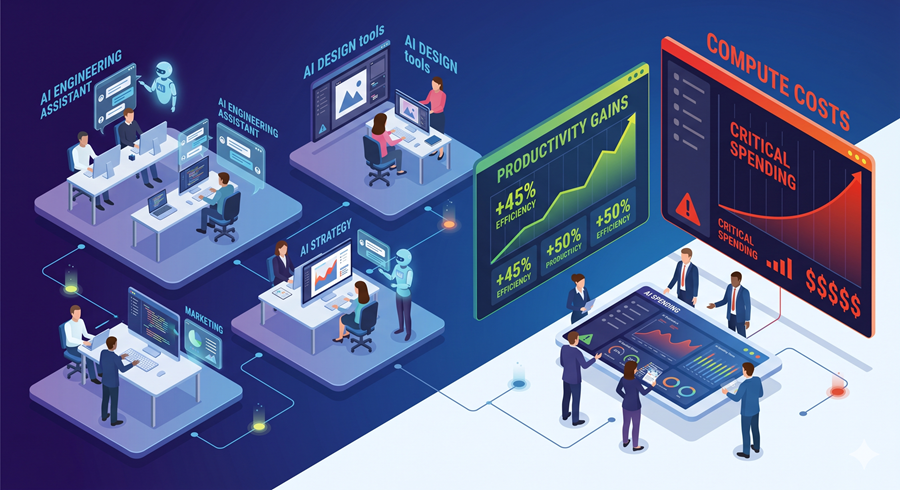
The situation highlights a growing tension in the AI industry. On one side, AI tools are delivering massive productivity gains. On the other side, their usage is expensive and scales rapidly in large organizations.
Companies are now realizing that adopting AI is not just a technical decision but also a financial strategy. The future of enterprise AI will likely depend on finding a balance between performance, autonomy, and cost efficiency.
What was once seen purely as a productivity revolution is now also becoming a compute economics challenge that every major company will need to solve.
