The most important part of Google’s new Deep Research agents is not that they search better. It is that they change what research is.
Deep Research and Deep Research Max are not designed to answer questions in the usual sense. They are designed to execute full research workflows. You give them a goal, they build a plan, search broadly, compare conflicting evidence, synthesize findings, and return a structured report with citations and visuals.
That is not a better chatbot. It is a different operating model for knowledge work.
This Is a Shift From Search to Delegation
The real leap here is not just model quality. It is a task structure.
Instead of treating research as a sequence of manual actions—searching, scanning, comparing, summarizing—Google has turned it into a delegated process. The user no longer manages the steps. The system does.
That matters because most research bottlenecks are not caused by a lack of information. They come from the overhead of sorting, validating, and reconciling too much of it. Deep Research is built to absorb that overhead.
The key change is simple: research is becoming something you assign, not something you manually assemble.
The Most Important Feature Is Synthesis
What makes this more useful than a standard search layer is not scale. It is a synthesis.
The system can process large volumes of information, but the more meaningful shift is that it can evaluate disagreement. When sources conflict, it does not simply choose one and move on. It identifies the tension, weighs the evidence, and presents the uncertainty.
That makes the output more usable in real decision-making. Most business research fails not because information is missing, but because contradictory information is hard to interpret. A system that can surface disagreement intelligently is more valuable than one that only retrieves more content.
This Changes the Shape of Business Work
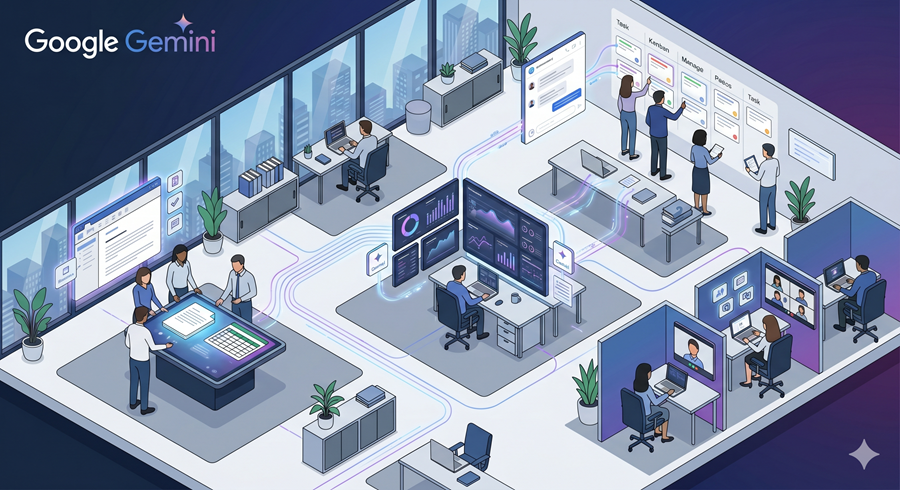
The practical impact is straightforward. Competitive analysis, sales preparation, market validation, and weekly intelligence briefings all become faster to produce and easier to repeat.
What used to require hours of fragmented effort becomes a repeatable workflow. Not because expertise disappears, but because the time spent gathering and structuring evidence shrinks dramatically.
That changes the leverage of small teams first. When research becomes cheaper, strategic preparation becomes easier to operationalize.
The Bigger Shift Is Infrastructure
The deeper signal is not the agent itself. It is what happens when it connects to internal systems.
Once research agents can combine public information with private business context CRM notes, internal documents, past proposals, customer patterns—they stop being search tools and start becoming decision infrastructure.
That is the larger shift underway. Research is no longer just retrieval. It is becoming a delegated, integrated, and increasingly autonomous business function.