I did not expect a development tool to feel like it was slowly turning into an operating layer for everything I do in software. But that is exactly what stood out to me when working through this new Codex-style environment. It no longer behaves like a simple coding assistant. It feels closer to a system that can run parts of the development process on its own.
A Full Development Workspace Instead of a Single Tool
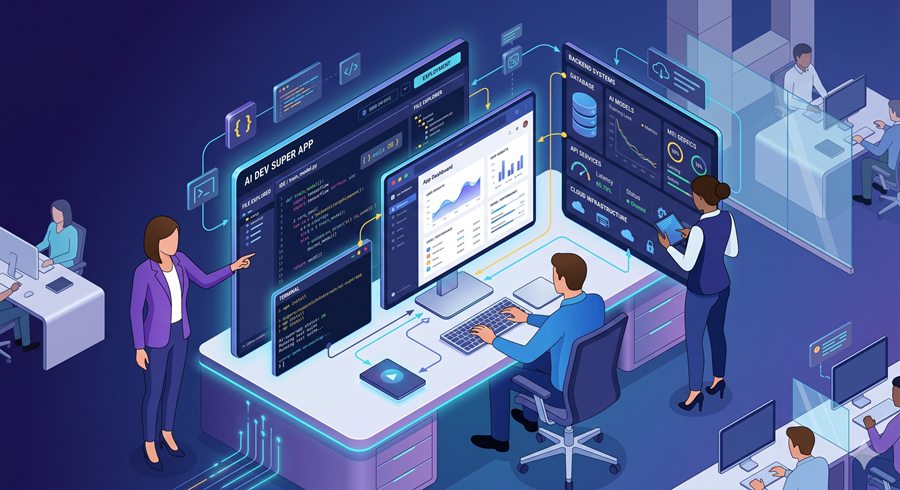
What immediately feels different is how many roles are now combined into one interface. I am not just writing code in isolation anymore. The environment brings together frontend, backend, terminal execution, and even a live browser preview into one continuous workflow.
When I trigger something like starting a development server, I do not need to manually switch contexts or move between tools. The system begins coordinating those steps automatically. The boundary between writing code and running it is becoming less visible.
Plugins, Skills, and the Expansion of the Software Layer
Another major shift is the introduction of plugins and skills inside the environment. This is not just a set of add-ons. It feels like an attempt to turn the coding workspace into a platform that can extend itself.
I see integrations for communication tools, project management systems, and documentation workflows. What matters more than the individual integrations is the direction they point toward. Everything is being pulled into a single unified interface where external tools become part of the same operating surface.
There is also a clear move toward letting users build their own automations. That changes the role of the environment from a fixed product into something customizable and expandable.
Automation as the Core Experience
What stands out most is that automation is no longer optional. It is becoming the default way the system operates.
Instead of executing every step manually, I can assign tasks and let the environment handle execution in the background. It can summarize work, maintain repositories, manage code quality, and run maintenance flows without constant input.
This shifts the developer’s role from constant execution to ongoing supervision. I am no longer doing every step myself. I am defining direction and reviewing outcomes.
Direct Interaction With Running Interfaces
One of the most interesting capabilities is being able to interact directly with a running application. I can select elements on the screen, leave instructions, and have the system interpret those changes.
This creates a feedback loop where intent is translated directly into implementation. I no longer need to convert UI feedback into technical instructions manually. The system handles that transformation.
It feels like development is moving closer to intent-driven design rather than syntax-driven work.
Computer Use Turns Software Into an Active Participant
The most surprising shift is when the system begins interacting with external applications. It can open tools, execute workflows, and operate environments as if it were a user.
Watching it launch a project, build it, and run it without direct step-by-step guidance changes how I understand software boundaries. The assistant is no longer confined to its own workspace. It is beginning to act across multiple environments.
That moves it closer to being an operator rather than a helper.