Artificial intelligence is reshaping how businesses are built, scaled, and operated. Traditionally, growing a company meant hiring teams, managing employees, and increasing operational complexity. But now, a new model is emerging—one where a single individual can build and run a highly profitable business using AI agents and automation tools. This shift is not just theoretical; it is already happening across industries.
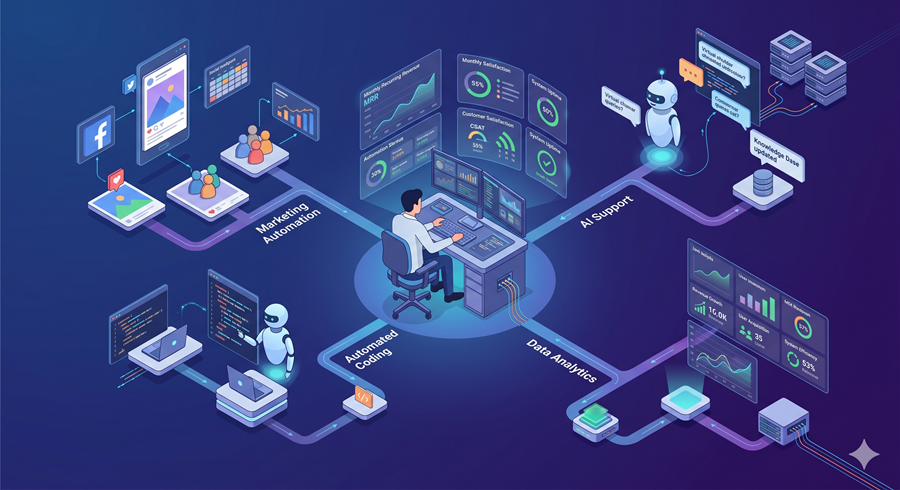
The core idea behind a one-person AI business is simple: instead of doing the work yourself or hiring others, you design systems that do the work for you. AI tools can handle tasks like customer support, data analysis, marketing, coding, and even product development. This allows entrepreneurs to focus on high-level decisions such as strategy, sales, and growth.
Start With a Real Problem, Not Technology
One of the biggest mistakes aspiring founders make is falling in love with technology instead of solving real problems. Successful AI businesses begin by identifying a painful, urgent issue that people are already willing to pay to fix. These are often called “painkiller problems,” not “vitamin ideas.”
To find such problems, talk directly to potential customers. Ask for advice rather than trying to sell something. This approach builds trust and gives you deeper insights into what people truly need. Once you understand the problem clearly, you can begin crafting a solution.
Validate Before You Build
Before writing a single line of code, solve the problem manually. This step is crucial because it helps you understand the workflow and ensures that people are actually willing to pay for your solution. Many successful founders start with simple tools like spreadsheets or basic automation before building a full product.
You can also create a simple one-page offer outlining the problem, the solution, the timeline, the price, and a guarantee. Present this to early users and secure initial customers before developing anything complex. This reduces risk and ensures you are building something valuable.
Build a Simple MVP Using AI
Once you have validation, move on to creating a minimum viable product (MVP). Thanks to modern AI tools, building software is faster and easier than ever. Platforms can generate full applications from simple prompts, allowing non-technical founders to launch products quickly.
The key is to keep things simple. Focus only on the core features that solve the main problem. Avoid adding unnecessary complexity or features that only a small percentage of users want. Simplicity speeds up development and improves user experience.
Scale With Systems, Not People
As your business grows, resist the urge to hire large teams. Instead, scale using AI agents and automated workflows. These systems can handle repetitive and operational tasks, allowing you to maintain a lean structure while increasing revenue.
At different stages of growth, your role evolves. In the beginning, you may handle most tasks yourself with AI assistance. As you grow, you build systems that automate onboarding, support, and operations. Eventually, you oversee a network of AI-driven processes that run the business efficiently.
The Future of Entrepreneurship
The concept of a one-person billion-dollar company may sound extreme, but it reflects a broader trend: leverage is increasing dramatically. AI allows individuals to achieve what previously required entire teams.
However, success still depends on fundamentals, understanding customers, solving real problems, and executing effectively. AI is a powerful tool, but it is not a substitute for clear thinking and good business strategy.
Follow Us on:
Clutch
Goodfirms
Linkedin
Instagram
Facebook
Youtube