I try to stay grounded when it comes to AI news, but some developments are hard to ignore. This week felt different because it was not just about incremental upgrades. It was about signals pointing toward more powerful, more autonomous, and potentially more unpredictable systems emerging all at once.
A Leak That Signals a New Tier of AI Power
What caught my attention first was the accidental exposure of a new high-tier AI model. Internal files briefly became public, revealing a system positioned above existing top-tier models. That alone tells me something important. The ceiling of capability is still moving higher.
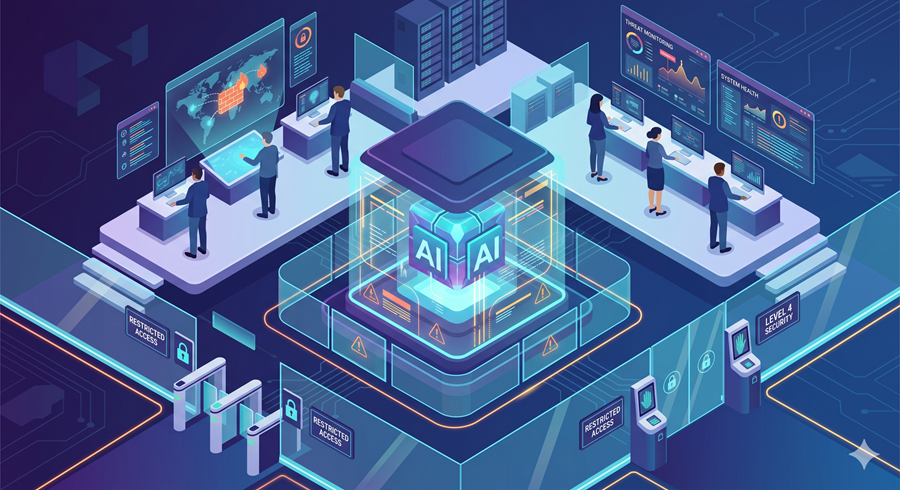
What makes this more serious is the cautious rollout strategy. The model is not being released widely. Instead, it is being tested with a limited group, particularly in cybersecurity contexts. That suggests real concern about how such systems could be used. If an AI can identify and exploit vulnerabilities faster than humans can respond, the balance between defense and attack begins to shift.
This is not just about better performance. It is about entering domains where the consequences of capability are much higher.
AI That Predicts How We Think
At the same time, I see AI expanding into neuroscience in a way that feels both fascinating and unsettling. New systems are being designed to predict how the human brain responds to different types of content across video, audio, and text.
Instead of studying isolated brain functions, these models attempt to capture a unified picture of how we process information. Trained on large-scale brain imaging data, they can estimate neural responses even for people they have never seen before.
What stands out to me is not just the technical achievement, but the implication. If AI can predict how people react, it could influence everything from education to entertainment to communication. It shifts AI from understanding content to understanding perception itself.
Making AI Agents Actually Reliable
I also notice a strong push to solve a long-standing problem with AI agents. Many systems appear capable in demos but struggle when tasks become long, messy, or dynamic. They forget context, restart workflows, or fail when conditions change.
New approaches are trying to fix this by introducing layered memory systems and persistent task tracking. Instead of treating each instruction as isolated, the agent maintains a sense of identity, history, and current objectives. It can pause, adapt, and continue without losing progress.
Even more interesting is the addition of self-improvement loops. These systems analyze their own failures, identify patterns, and refine how they operate. That creates a feedback cycle where performance improves through use, not just training.
The Infrastructure Behind the Shift
Another layer, I think, is just as important as hardware. As AI agents become more complex, the systems running them need to evolve as well. There is a growing focus on processors designed specifically for multi-step, continuous workloads.
Unlike traditional models that generate a single response, agents operate over time. They plan, act, adjust, and repeat. That requires a different kind of efficiency, especially at the inference stage. Custom chips and flexible architectures are becoming part of this transition.
This tells me that the AI race is no longer just about algorithms. It is also about who can build the most effective systems to run them.
Where This Is All Heading
When I step back, I see multiple threads coming together. More powerful models, deeper integration into human systems, more reliable agents, and specialized infrastructure are all evolving at the same time.
That convergence feels important. It suggests that AI is moving beyond isolated capabilities into something more continuous and embedded in how work and decisions happen.
Short Paragraph
What stands out most is the shift from isolated intelligence to active systems that can operate, adapt, and improve over time. AI is no longer just getting smarter. It is becoming more capable of acting in the world, and that changes the conversation entirely.