


I still remember the excitement of graduation day. Walking across the stage, surrounded by family and friends, felt like the beginning of everything I had worked toward. I believed my degree was a ticket to independence, stability, and a meaningful career. But just a few months later, that confidence started to fade.
The job search has been far more difficult than I expected. Applications go unanswered, interviews are rare, and the competition feels overwhelming. What surprises me most is that this struggle is not unique. It reflects a much larger shift happening in the job market right now.
A Tougher Start for New Graduates
I see a growing disconnect between education and employment. While overall unemployment rates may appear stable, young workers are facing a very different reality. Entry-level roles, once the gateway into professional careers, are becoming harder to find.
Part of the issue is simple supply and demand. More people than ever are earning degrees, but the number of suitable jobs is not increasing at the same pace. This creates a crowded market where even qualified candidates struggle to stand out. For me, it feels like the rules have quietly changed without warning.
How AI Is Changing Entry-Level Work
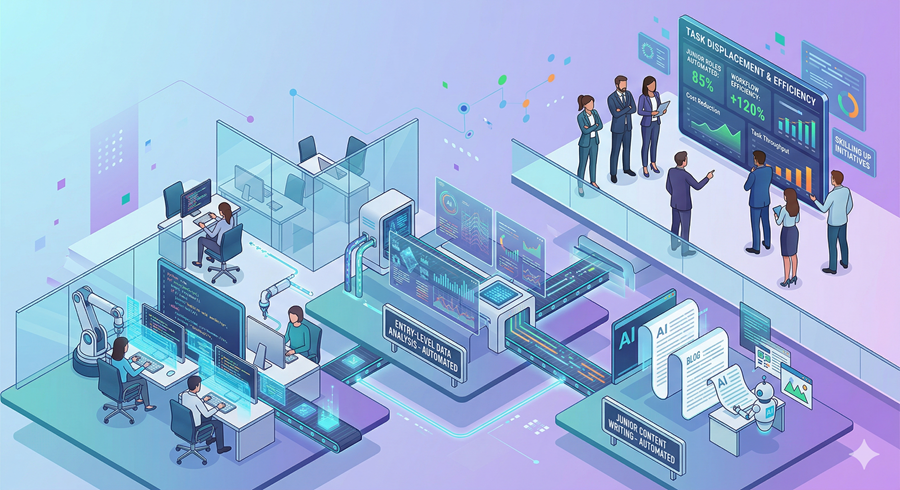
I also notice how artificial intelligence is reshaping hiring decisions. Tasks that once required junior employees, especially in areas like coding, analysis, and content creation, can now be handled by AI systems. From a business perspective, it makes sense. Companies can reduce costs and increase efficiency.
But from where I stand, it feels like the first step into the workforce is disappearing. Entry-level roles are not just jobs. They are learning environments. Without them, it becomes harder to gain experience and grow into more advanced positions.
A Market Still Adjusting After Rapid Growth
I think this shift is also tied to recent history. During the pandemic, many companies hired aggressively to meet demand. Now, those same companies are scaling back, restructuring, and becoming more cautious. Some are investing heavily in AI, while others are simply trying to operate with fewer people.
This creates a double challenge. Fewer openings exist, and the expectations for candidates are higher than before. It is no longer enough to have a degree. Employers are looking for skills, adaptability, and immediate value.
Rising Inequality and Long-Term Impact
What concerns me most is the long-term effect. Starting a career during a difficult economic period can impact earnings, confidence, and opportunities for years. If young workers struggle to find jobs now, it affects spending, savings, and even broader economic growth.
I also see a widening gap forming. Those who adapt quickly or have strong networks move ahead, while others fall behind. Over time, this can deepen inequality and create frustration among an entire generation entering the workforce.
Adapting to an AI-Driven Future
Despite the challenges, I do see a path forward. One thing is clear: understanding AI is no longer optional. Employers increasingly expect new hires to be comfortable using AI tools to improve productivity and solve problems.
I also realize that skills alone are not enough. Building relationships, gaining real-world experience, and staying adaptable matter more than ever. Networking, internships, and continuous learning are becoming essential, not optional.
I still feel hopeful. This moment may be difficult, but it is also shaping how we approach work, learning, and growth. If anything, it is forcing us to become more resilient, more resourceful, and more aware of how quickly the world is changing.
