
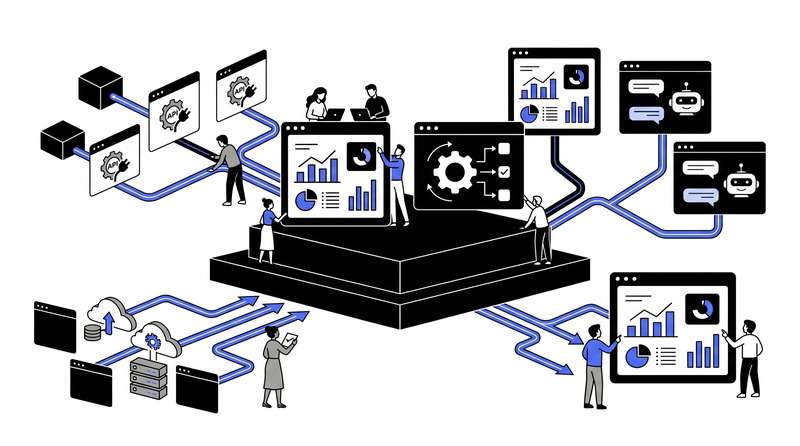
The term foundation model has become one of the most used and least understood phrases in enterprise AI. But foundation models represent a genuinely important shift in how AI is developed and deployed – one that every US enterprise building serious AI capabilities needs to understand clearly.
A foundation model is a large AI model trained on an enormous and diverse dataset, designed to serve as a general-purpose starting point that can be adapted for a wide range of specific tasks. Before foundation models, building an AI system for a specific task meant collecting task-specific training data, designing a model architecture, and training the entire system from scratch – expensive, time-consuming, and requiring significant technical expertise. Foundation models change this entirely. A model like GPT-4, Llama 3, or Claude has already learned a broad representation of language, reasoning, and knowledge. Building a specialized application on top requires far less data, compute, and time than building from scratch.
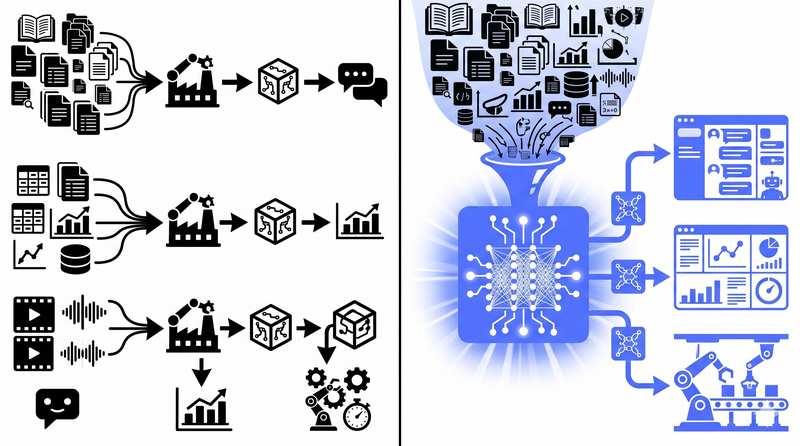
The fundamental shift in enterprise AI development enabled by foundation models
Development cost and time have dropped dramatically – a specialized AI application that previously required months can now be built in weeks through fine-tuning. The quality ceiling has risen substantially because foundation models trained on vast datasets have developed capabilities that would be prohibitively expensive to replicate through task-specific training. Adaptability has improved because broad general capabilities allow handling novel inputs and edge cases more gracefully than narrow task-specific models.
Fine-tuning a foundation model is fundamentally different from training from scratch. The model already understands language, reasoning, and general knowledge. Fine-tuning teaches it your specific domain, terminology, format preferences, and task requirements. The amount of data required is dramatically smaller – typically hundreds to thousands of examples rather than millions.
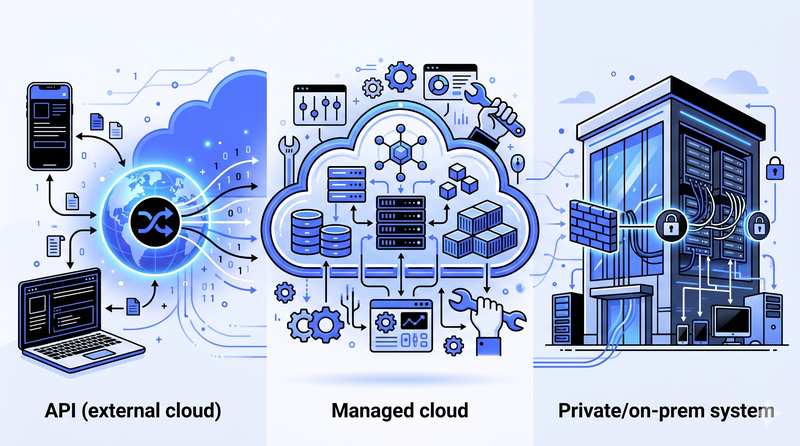
The three deployment options for foundation models and what they mean for US enterprises
API access through providers like OpenAI, Anthropic, or Google offers the lowest implementation overhead but involves sending data to an external provider. Managed cloud deployment through services like AWS Bedrock or Azure AI provides better data isolation. Private deployment on dedicated infrastructure provides maximum control and data security – the approach preferred by US enterprises in highly regulated industries.
We help US enterprises make this decision based on their specific workload requirements, existing infrastructure, and long-term AI roadmap - not platform preference.
Get expert insights on your use case and identify the most effective path forward.