


Work is entering a period of rapid transformation. A new industrial shift driven by artificial intelligence is beginning to reshape how teams function, how decisions are made, and how tasks are completed.
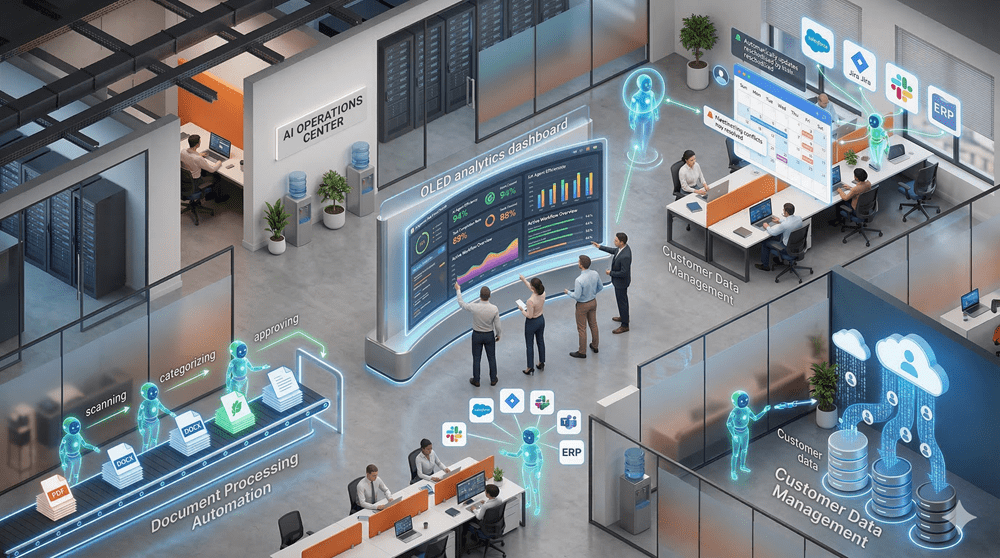
Instead of acting as simple tools, new AI systems are being designed to operate more independently. These systems, often called agentic AI, are built to complete tasks with minimal guidance. Once given access to information and a clear objective, they can move through processes, analyze data, and carry out work across different systems.
The result is a workplace where human teams may soon be joined by digital ones.
Understanding Agentic AI
I like to think of agentic AI as something similar to a wind-up toy. You give it instructions, provide access to the right tools and information, and then let it run until the job is done.
Unlike traditional AI assistants that respond to prompts, these systems are meant to act on their own. They can gather information, make small decisions, and complete sequences of tasks without constant human involvement.
In some workplaces, early forms of these agents are already appearing. They can help process expenses, assist with onboarding employees, summarize information, or support customer service operations.
The promise is simple: assign the task and let the system handle the process.
Why Companies Are Moving Quickly
Even though the technology is still developing, businesses are rushing to explore its potential. Large investments have already been made in artificial intelligence, and companies are eager to turn that investment into practical value.
At the same time, many leaders worry about falling behind if they ignore the technology. The fear of missing out is powerful. Organizations feel pressure to experiment now rather than risk falling behind competitors.
Yet adoption remains surprisingly early. Only a small share of companies say they have fully integrated AI into their operations. For most organizations, this is still an experimental phase.
What Happens to Human Roles
Optimists argue that AI will remove the most repetitive parts of work. Tasks that follow predictable rules or require constant processing could be handled by machines.
Human roles may shift toward areas that require creativity, judgment, and strategic thinking. Instead of focusing on routine tasks, people could spend more time designing ideas, solving complex problems, and building meaningful connections.
In theory, this change could make work more human rather than less.
Organizations might also become less rigid. Traditional hierarchies could evolve if digital agents begin handling certain responsibilities within teams.
The Challenge of Trust
Still, adopting AI at this level raises important questions. Humans are naturally cautious when asked to trust unfamiliar systems.
Using agentic technology often requires a leap of faith. Workers must rely on tools that operate partly outside their direct control. That uncertainty creates hesitation, especially when jobs, privacy, and decision-making are involved.
Another concern is misplaced trust. When technology becomes powerful enough to mimic human reasoning, people may begin relying on it too heavily.
The challenge is not only whether we trust these systems, but whether we understand their limitations.
The Reality Behind the Hype
Despite the excitement, fully autonomous AI does not yet exist. Many tools described as agentic still require careful monitoring.
These systems can perform impressive tasks, but they also fail in unexpected ways. In many cases, organizations adopting them are still learning what works and what does not.
The technology is evolving quickly, but it is far from finished.
For now, the future of work is being shaped in real time. Businesses, employees, and technology companies are all experimenting with what these systems can do.
Where that experiment leads will determine how humans and machines ultimately work together.