




Artificial intelligence is no longer just a piece of technology. It has become one of the defining forces of our century, quietly reshaping how we live, work, and think.
For years, AI felt distant, mostly confined to research papers and academic discussions. It seemed more like an idea than a reality. But that changed when computing power finally caught up with ambition. Progress accelerated rapidly, and what once felt theoretical suddenly became real and visible.
When AI Entered Everyday Life
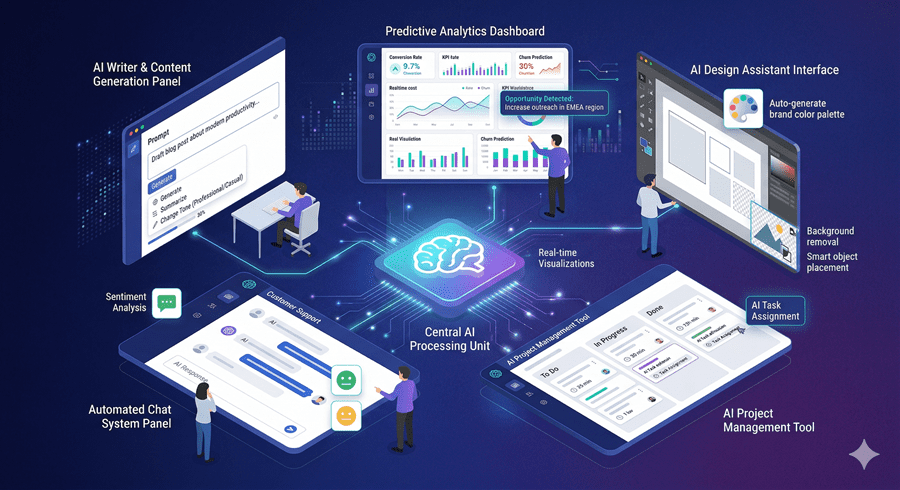
The true turning point came when AI entered everyday life. Machines began writing, designing, and solving problems that once required human creativity and expertise.
Once complex tasks became simple and accessible. Millions of people started using tools that could generate text, create images, and answer questions instantly. AI was no longer limited to experts. It became something anyone could use.
That shift changed perception. The world realized this was not just another technological upgrade, but a deeper transformation.
The Billion Dollar Competition
As the potential of AI became clear, major technology companies began investing heavily. Billions of dollars started flowing into research, infrastructure, and talent.
What began as curiosity quickly turned into competition. Companies raced to build more powerful systems, research labs expanded, and startups emerged at a rapid pace. The stakes grew higher as each breakthrough pushed the boundaries further.
This is no longer just about creating useful tools. It is about shaping the future of technology and society.
The Hidden Engines Behind AI
Behind every AI system lies a powerful but often unseen infrastructure: massive data centers.
These facilities process enormous amounts of data every second. Thousands of servers operate together, supported by engineers who ensure everything runs smoothly. At the heart of these systems are specialized chips designed specifically for AI workloads.
Without this hardware, modern AI would not exist. Every improvement in computing power directly accelerates progress in artificial intelligence.
A Technology Reshaping the World
AI is already transforming industries faster than expected. From healthcare and transportation to scientific research and urban planning, its influence is expanding rapidly.
Problems that once seemed impossible are now being approached with new tools and confidence. Entire industries are evolving, and the global economy is shifting along with them.
However, this progress also brings uncertainty.
The Questions We Cannot Ignore
As AI continues to advance, important questions remain. Who controls this technology? How far should it go? What happens if it surpasses human capabilities in critical areas?
These are no longer distant concerns. They are immediate and deeply connected to our future.
The race is still in its early stages, but its outcome will shape civilization in ways we are only beginning to understand. And whether we realize it or not, everyone is part of this journey.
