




The Illusion of Sudden Change
It may feel like artificial intelligence arrived overnight. New tools appear constantly, and machines now write, design, and assist with complex tasks. The pace feels rapid and sometimes overwhelming. But beneath this visible acceleration, a more deliberate process has been unfolding. While attention remained focused on breakthroughs and experimentation, a quieter strategy was taking shape. Microsoft was not chasing headlines. It was building the foundation.
A Strategic Shift That Changed Everything
A decade ago, Microsoft was stable but not seen as a major innovator. That perception began to shift when Satya Nadella became CEO. The company moved toward cloud computing, subscription models, and platform-based services. At the center of this transition was Microsoft Azure.
Rather than competing in short-term consumer trends, Microsoft focused on long-term infrastructure. It built systems for developers, businesses, and governments. By the time AI entered its modern phase, the company was already positioned where it needed to be.
AI’s Real Bottleneck: Compute, Not Ideas
As AI models advanced, the biggest limitation was not innovation, but computing power. Training these systems required large-scale infrastructure, specialized chips, and global networks.
Microsoft anticipated this need early. Its partnership with OpenAI was based on alignment. Microsoft provided the computing backbone while gaining access to advanced AI models.
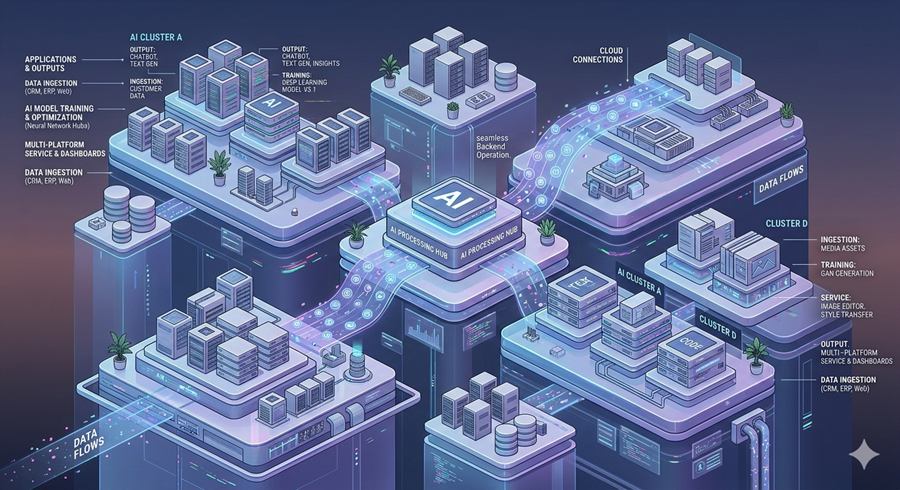
When conversational AI became widely visible, much of the attention went to the tools themselves. But behind them, Azure was quietly handling the massive computational demand.
Turning AI Into Everyday Work
Microsoft did not stop at infrastructure. It integrated AI into tools people already use for writing, coding, data analysis, and presentations.
This approach changed how AI is adopted. Instead of requiring users to switch platforms, AI became part of existing workflows. It began to feel less like a separate tool and more like an assistant embedded in daily productivity.
At the same time, Azure became a gateway. Businesses could access AI systems through the cloud instead of building them independently. This created growing reliance, one integration at a time.
The Rise of the Cognitive Layer
Every major tech era is defined by control of a foundational layer. Operating systems shaped personal computing. Search engines organized the web. Mobile platforms built the app economy.
Now a new layer is emerging, a reasoning layer.
As people rely more on AI to interpret and generate information, the platform hosting that intelligence gains influence. Microsoft’s strategy aligns with this shift by connecting infrastructure, AI models, and software into a unified ecosystem.
This is not dominance through visibility, but through integration. As AI becomes central to how we work and think, the key question is not just who builds it but where it lives.
