



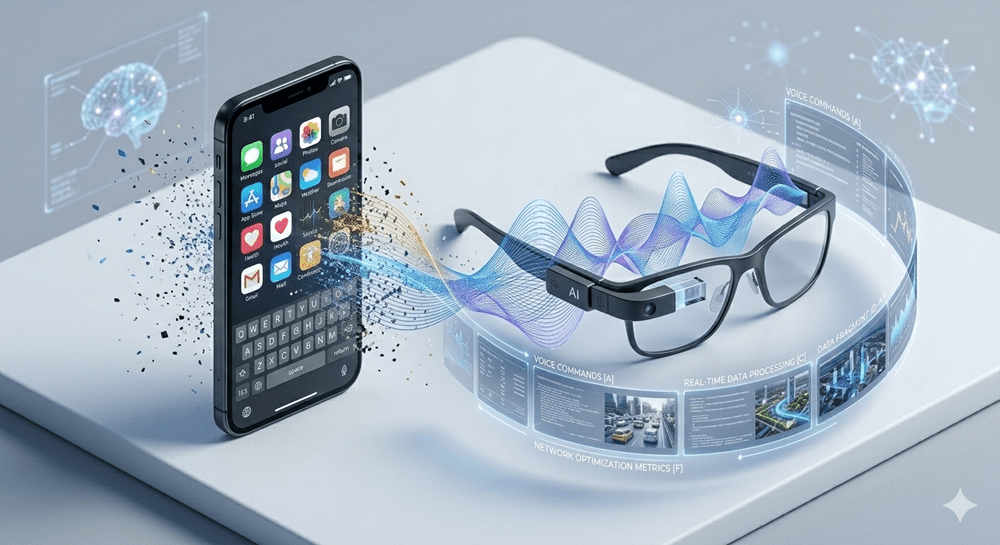
Technology has been evolving rapidly for years, but the current shift feels fundamentally different. Artificial intelligence is no longer just a feature inside applications. It is becoming the foundation of an entirely new computing era.
Not long ago, the biggest competition in tech revolved around smartphones, operating systems, and cloud platforms. Today, that focus is changing. The center of innovation is moving toward AI, with companies investing heavily in models, chips, and infrastructure.
This raises an important question: what comes next?
The Birth of AI-First Devices
The next major leap may not be just better software, but entirely new devices built from the ground up around artificial intelligence.
Unlike smartphones, which are designed around screens, these devices could be built for natural interaction. They may rely on voice, sensors, and context awareness rather than touch and apps. In this model, AI is not just part of the device it defines how the device works.
Such systems may feel less like tools and more like companions, capable of understanding not only commands but also intent.
From Assistants to True Companions
Current voice assistants are useful, but limited. They respond to instructions but often lack a deeper understanding.
Future AI devices could go much further. They might learn user habits, understand schedules, and respond based on real-world context. Instead of waiting for commands, they could anticipate needs and take action proactively.
These systems could manage daily tasks, translate conversations in real time, assist with work, and even help create content. Rather than navigating multiple apps, users would interact directly with the AI.
This shift could fundamentally change how people use technology.
The New Tech Race Has Already Begun
This transformation is not happening in isolation. Many major technology companies are already moving in this direction, working to create a new category of AI-driven devices.
There is a growing belief that the next generation of products will act as a physical interface to intelligent systems. These devices would not just perform tasks but serve as gateways to AI.
The situation resembles the early days of smartphones, when a new category reshaped the entire industry. However, the stakes are even higher now, as AI could influence every aspect of computing.
A Future Beyond Screens
One of the most striking ideas is that screens may become less important.
Instead of searching, scrolling, and tapping, people might simply speak and interact naturally while technology operates in the background. Complex processes would still happen, but they would feel like simple conversations.
If these AI devices succeed, they may not just compete with smartphones they could replace them as the center of digital life.
And if that happens, it will not just be a hardware upgrade. It will redefine how humans interact with technology.