




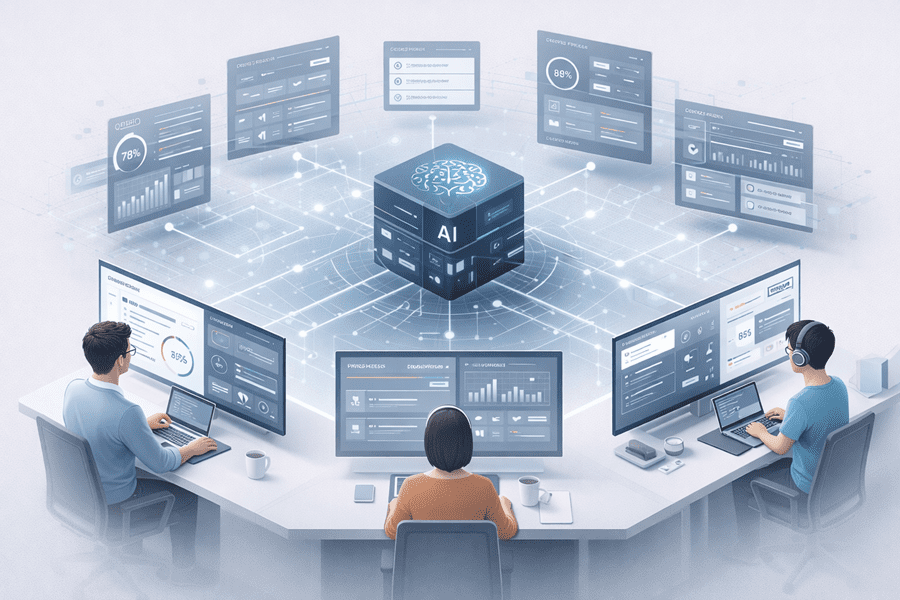
I often think about how quietly revolutions begin. Not with noise, but with small shifts that slowly rewrite what we once believed was fixed. What we are building today is not just better technology. It is a new way of living, thinking, and making decisions.
By 2030, the world will not just look different. It will behave differently.
Cities That Think for Themselves
We are moving toward cities that no longer depend entirely on human input. Systems will manage traffic, waste, energy, and emergency response in real time. Buildings may even buy and sell energy automatically, while waste systems sort themselves and drones assist in monitoring and response.
Another important idea is simulation. Entire cities could be tested digitally before changes are made in the real world. Policies, layouts, and disaster responses can be experimented with safely. In many cases, reality may follow what simulations prove to be effective.
The Blurring Line Between Mind and Machine
The boundary between human thought and machines is beginning to fade. Technologies that interpret brain signals are already helping people communicate without speaking.
By 2030, this may expand further. Not full control, but subtle enhancements such as improved focus, memory, and emotional balance. This raises a deeper question: if our thoughts can be supported or influenced, where does the human end and the machine begin?
Learning Without Limits
Education is also changing. Instead of a single system for everyone, learning may become highly personalized. Each student could receive guidance based on how they think and respond.
Mistakes may be corrected instantly, with awareness of emotional impact. In many regions, this could replace outdated systems entirely. However, faster learning may also bring concerns about faster conditioning and influence.
Work Becomes Creation
Discussions about jobs often focus on loss, but transformation is equally important. Routine roles may decline, but new opportunities will emerge.
Individuals may build entire businesses on their own, supported by intelligent systems that handle execution. Creativity, strategy, and vision will become more valuable. The question may shift from “What job should I get?” to “What do I want to create?”
Truth, Health, and Human Connection
Not all changes will feel comfortable. As digital content becomes indistinguishable from reality, trust may become fragile. Systems may be needed just to verify what is real.
At the same time, health monitoring could become continuous, shifting from reacting to predicting problems. People may understand their bodies better than ever before.
Relationships may also evolve, with systems influencing how people connect. This introduces a powerful role for technology in deeply human experiences.
This decade is not just about progress. It is about control, responsibility, and the choices we make with these tools.
