



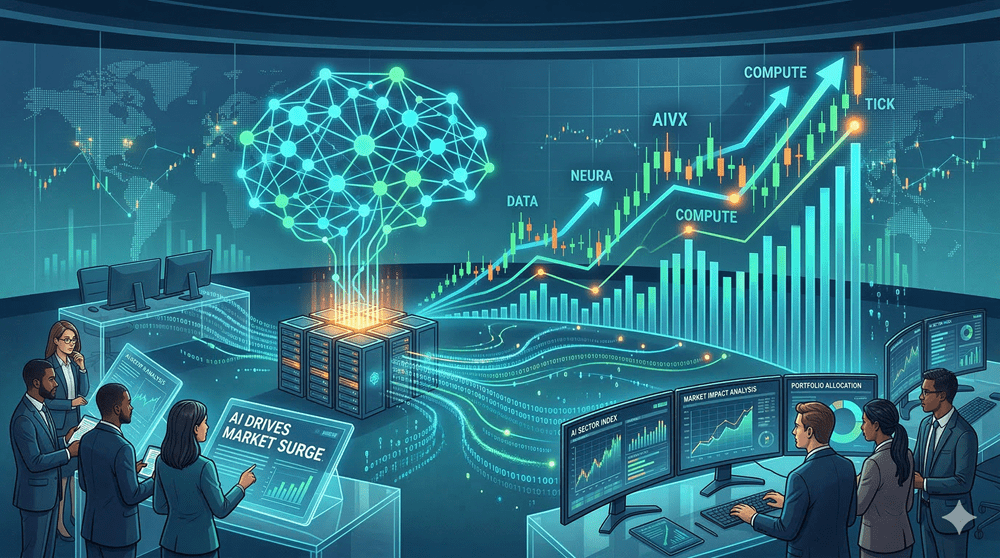
For a company at the center of the artificial intelligence revolution, the past year has been surprisingly turbulent. The organization that once presented itself as a mission-driven project for humanity now looks more like a traditional tech giant racing toward one of the largest IPOs in history. And the path there is anything but smooth.
Legal disputes over intellectual property, questions about governance, safety concerns around AI tools, and high-profile talent departures have all added pressure. On top of that, critics argue that some recent decisions prioritize revenue over the original mission of building technology for the greater good.
But the most immediate challenge is financial. Running large AI systems is extremely expensive, and the company is reportedly burning billions each month while committing to trillions in future spending.
Why Investors Are Still Betting Big
Despite the uncertainty, major investors continue pouring money into the AI race. Tech giants and financial backers have committed enormous sums to keep development moving.
From a traditional business perspective, the numbers look difficult to justify. But investors are betting on four key assumptions.
First, user growth must remain strong. Millions of people need to adopt these tools, and ideally many of them should pay for subscriptions.
Second, those users must stick around long enough to generate profit.
Third, the company must stay competitive in the race toward more powerful AI systems.
If those conditions hold, investors believe the business could eventually become a dominant software platform with recurring subscription revenue.
The Classic Tech Strategy
The playbook is familiar. Launch a useful and affordable product. Attract a massive user base. Gradually eliminate competitors. Then increase prices, cut costs, and add additional revenue streams such as advertising.
Technology businesses thrive on this model because the cost of serving each additional user is very low. Once the infrastructure exists, scaling becomes incredibly profitable.
There is another factor helping the AI business model. The cost of running AI systems has been falling rapidly. Data suggests the price of generating AI outputs has dropped dramatically in just a few years, even as usage has exploded.
In simple terms, demand is rising while costs are falling.
If these trends continue, AI subscriptions could eventually resemble something like a streaming service. A widely adopted monthly fee model alone could justify enormous valuations.
The Risks Beneath the Hype
However, the story begins to weaken when the underlying assumptions are challenged.
Recent controversies have damaged public perception and triggered boycotts from some users. At the same time, competitors are gaining momentum with alternative models that are often easy to switch to.
That flexibility matters. If users are not loyal to a specific AI platform, then market dominance becomes much harder to achieve.
Talent is another vulnerability. The competition for top AI researchers is intense, with salaries reaching extraordinary levels. Ethical disputes and reputation risks may push some experts toward rival companies offering similar pay with fewer controversies.
As talent moves, knowledge spreads. That increases the likelihood that AI tools eventually become commodities rather than proprietary breakthroughs.
The IPO That Could Reshape Markets
Even with these challenges, the company could still launch the largest public offering in history. Its private valuation already rivals some of the biggest corporations in the world.
If it goes public at that scale, the offering could absorb an enormous share of available investment capital. Large index funds would also need to adjust their portfolios to include the new stock, potentially forcing them to sell portions of other companies.
In extreme scenarios, multiple giant tech IPOs in the same period could create unusual pressure on financial markets.
Nobody knows how this will unfold. But one thing is clear. The future of artificial intelligence is no longer just a technological question. It is also one of the biggest financial experiments of our time.