The software development industry is going through one of the biggest transformations in its history. In 2026, developers are no longer just writing code manually line by line. Instead, many are managing entire ecosystems of AI agents that generate code, debug applications, handle infrastructure, and even make product decisions. What once required full engineering teams can now be accomplished by a single developer working alongside intelligent automation tools.
This shift has created a new reality for programmers. Traditional coding skills still matter, but knowing how to coordinate AI systems is becoming just as important. The conversation is no longer about whether AI will change programming it already has.
AI Agents Are Replacing Traditional Development Workflows
Modern AI coding assistants can now generate entire applications from simple prompts. Instead of spending hours designing backend systems, APIs, or frontend interfaces manually, developers increasingly describe what they want while AI systems build the majority of the implementation automatically.
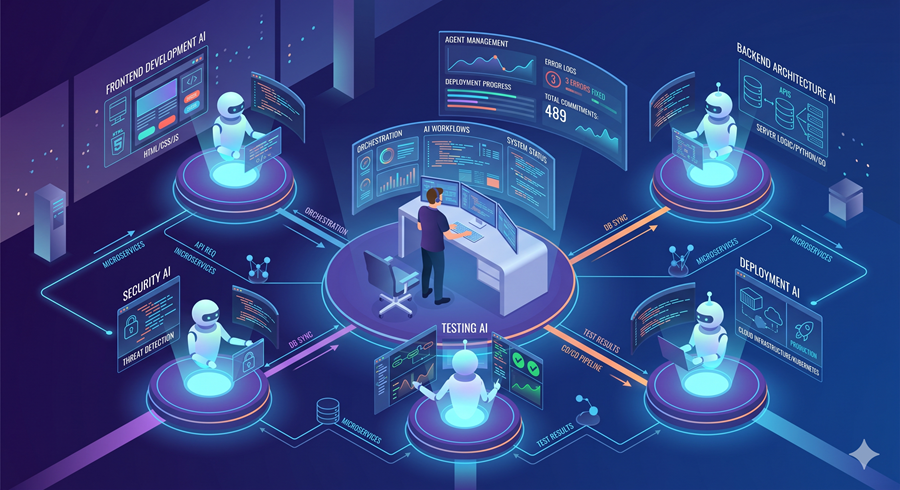
This trend is pushing developers toward a more orchestration-focused role. Rather than coding every feature themselves, engineers are learning how to manage specialized AI agents that each handle different responsibilities. Some agents focus on frontend development, others handle backend architecture, while additional systems specialize in security, marketing, growth, or customer engagement.
One highlighted project called “The Agency” demonstrates this idea by providing open-source AI agent templates designed for startup-style roles. Developers can combine multiple AI personalities into a collaborative workflow that behaves like an automated software company.
Prompt Engineering Has Become a Core Development Skill
As AI-generated applications become more common, the quality of prompts becomes critically important. Poor prompts often lead to unreliable outputs, security vulnerabilities, or inconsistent user experiences. This has created demand for tools that test and optimize prompts systematically.
Projects like Prompt Foo introduce testing frameworks specifically for AI prompts. Developers can compare different prompts across multiple language models to determine which combinations perform best. These systems also simulate attacks such as prompt injection attempts, helping developers identify weaknesses before deploying applications publicly.
In many ways, prompt engineering is evolving into a discipline similar to software testing and quality assurance.
Context Management Is Now Essential for AI Systems
Another major challenge in AI-assisted development is context management. AI models perform best when they receive organized, relevant information. If the context provided to an AI system is cluttered or incomplete, the output quality rapidly decreases.
Open-source projects like Open Viking aim to solve this problem by organizing AI memory, resources, and workflows more efficiently. Instead of relying entirely on vector databases, these systems structure information using file-system-based memory architectures. This allows AI agents to compress information, manage long-term memory, and reduce token consumption while becoming more effective over time.
Efficient context handling may become one of the most valuable technical skills for future developers working with autonomous AI systems.
Frontend Design Is Also Being Automated
AI is not only changing backend engineering. Frontend design workflows are also becoming increasingly automated. Tools such as Impeccable focus specifically on improving AI-generated user interfaces by refining layouts, simplifying visual complexity, applying brand colors, and enhancing animations automatically.
This addresses one of the biggest complaints about AI-generated apps today: many designs feel generic and repetitive. Specialized design-focused AI tools aim to produce cleaner, more polished interfaces that better reflect brand identity and user experience principles.
Developers Must Adapt to the AI-Driven Future
The overall message from this discussion is clear: software development is evolving from manual coding into AI orchestration. Developers who resist these changes may struggle, while those who learn how to guide, test, and manage AI systems could become dramatically more productive.
Although many programmers miss the satisfaction of handcrafted code, the industry is moving toward automation at an extremely fast pace. The future developer may spend less time typing code and more time directing intelligent systems that build, optimize, and maintain applications automatically.