Commencement season is supposed to be a moment of celebration. Students graduate, families take photos, and universities highlight success stories. But behind the ceremonies, a more uncomfortable discussion is growing louder. Many students are now asking a question that once felt almost unthinkable: Is a college degree still worth it?
This question is not only coming from commentators or critics. It is coming directly from students who are struggling to find jobs, dealing with student loans, and stepping into a labor market that is rapidly changing because of artificial intelligence.
Growing Anxiety Among Students
Across many universities, students are expressing uncertainty about their future. A common concern is the difficulty of finding stable employment after graduation. Even in institutions with strong placement records, students often feel that the job market is unpredictable.
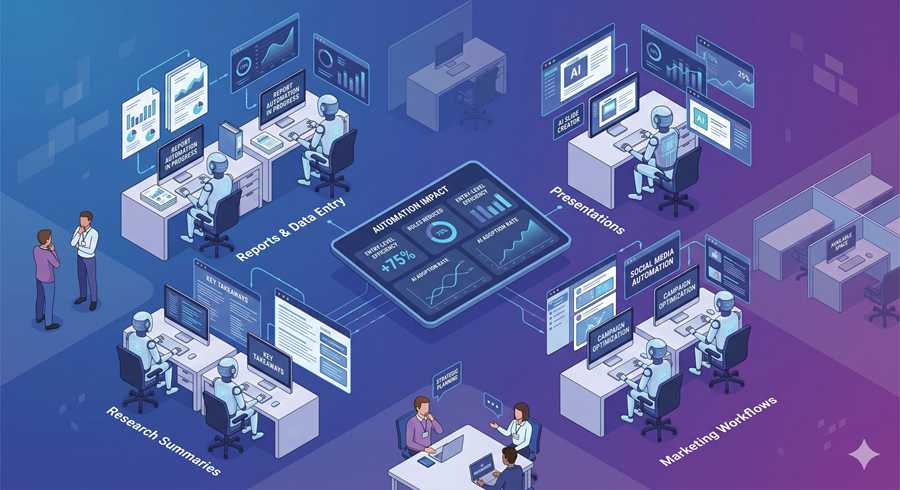
A major reason for this anxiety is the shrinking number of traditional entry-level roles. These jobs were once the first step for graduates to gain experience. Today, many of these tasks are being automated or assisted by AI tools.
Work like writing reports, creating presentations, summarizing research, basic marketing content, and administrative support is now faster and cheaper to produce using AI systems. As a result, students feel that the first step on the career ladder is becoming harder to reach.
The High Cost of Education
Another major issue is affordability. Over the past few decades, the cost of college education has increased significantly, especially in public universities. Many students now graduate with large amounts of debt that can take years to repay.
Several factors contribute to this rise in cost. Public funding for universities has decreased over time, forcing institutions to rely more on tuition fees. At the same time, universities have expanded facilities, student services, and administrative departments, which adds to overall expenses.
While these improvements enhance campus life, they also increase the financial burden on students. This has led many to question whether the return on investment still justifies the cost.
Artificial Intelligence and the Changing Job Market
Artificial intelligence is now one of the biggest forces reshaping the value of a degree. Unlike earlier technological changes that mostly affected manual work, AI is increasingly capable of handling cognitive and creative tasks.
Entry-level roles in business, marketing, journalism, law support, communication, and basic data analysis are especially affected. These roles once served as training grounds for graduates. They helped students gain real-world experience before moving into more advanced positions.
Now, AI tools can generate content, analyze data, and produce structured output in seconds. This reduces the need for large entry-level teams and changes how companies hire new graduates.
The result is a shift in expectations. Employers increasingly want candidates who already have higher-level skills, even for junior roles.
How Universities Are Trying to Respond
Universities are aware of these changes and are attempting to adapt. Many institutions are now focusing on improving job outcomes and aligning education with industry needs.
Some of the steps being taken include stronger internship programs, collaboration with employers, updated curricula, and increased emphasis on practical skills. Alumni networks are also being used to better understand what companies are looking for in new graduates.
However, higher education systems tend to change slowly. This creates a gap between how quickly the job market is evolving and how quickly universities can respond.
The Changing Value of a Degree
The debate around higher education is no longer simple. It is not about whether college is good or bad. It is about how its value is changing in a new economic environment.
A college degree still provides benefits. It can lead to higher lifetime earnings, access to professional networks, and structured learning that builds foundational knowledge. For many careers, it is still an important requirement.
At the same time, concerns are rising about debt levels, job uncertainty, and the impact of automation on entry-level opportunities. Many traditional career paths are no longer as stable as they once were.
This creates a more complex reality where a degree alone is no longer enough. Skills, adaptability, and familiarity with modern tools like AI are becoming equally important.
A System in Transition
Higher education is going through a period of transition. It is being shaped by multiple pressures at the same time, including economic changes, technological disruption, and rising expectations from students and employers.
Universities are now expected to do more than educate. They are expected to prepare students directly for employment in a rapidly changing economy. This is a difficult balance to maintain.
At the same time, students are being forced to rethink how they approach education. Instead of viewing college as a guaranteed path to stability, many now see it as one part of a longer journey that requires continuous learning and adaptation.