


Not long ago, it felt impossible to imagine anyone catching OpenAI. ChatGPT became the fastest-growing consumer app in history. The company dominated headlines, attracted massive investment, and shaped the public conversation around artificial intelligence. For most people, AI and OpenAI were basically the same thing.
But something changed.
Over the past year, I noticed more developers, founders, and enterprise teams quietly switching tools. Not because OpenAI suddenly became irrelevant, but because another company started executing with unusual precision.
Anthropic stopped trying to win attention and started winning trust.
The Enterprise AI Market Shifted First
The biggest clue was not social media hype. It was enterprise adoption.
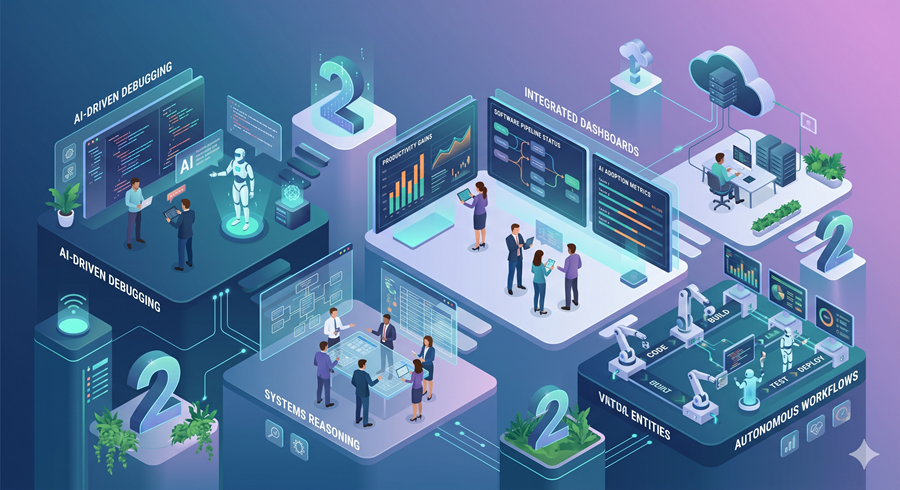
Coding has become the most valuable use case in generative AI, and Anthropic has positioned itself directly at its center. Developers increasingly rely on Claude for long-form coding, debugging, reasoning, and autonomous workflows that stretch far beyond simple chatbot tasks.
That matters because enterprise customers do not care about viral moments. They care about reliability, productivity, and long-term capability.
Once AI models started behaving less like assistants and more like digital employees, the economics changed completely. Businesses were no longer paying for convenience. They were paying for labor replacement and operational leverage.
Anthropic understood that shift earlier than most.
Shipping Fast Became a Competitive Weapon
One reason Anthropic gained momentum is simple: they ship relentlessly.
While many AI companies spent months teasing future products, Anthropic kept releasing upgraded models, frameworks, developer tools, and coding systems at an aggressive pace. The consistency created a perception that the company was moving faster than everyone else.
And perception matters in technology.
Developers want to build on platforms that feel alive. Enterprises want partners that appear stable, ambitious, and ahead of the curve. Every successful release compounds confidence.
That creates a feedback loop in which stronger products attract stronger users, which then accelerates improvement further.
Trust Became Anthropic’s Greatest Advantage
What surprised me most was that Anthropic’s rise was not driven only by benchmarks or technical performance. It was driven by reputation.
At a moment when many AI companies appeared willing to partner with anyone for growth, Anthropic positioned itself differently. Publicly resisting certain government demands transformed the company into something rare in tech: an AI lab people perceived as principled.
Whether that perception is fully deserved almost does not matter.
In enterprise environments, trust influences purchasing decisions just as much as raw capability. Legal teams, executives, and regulators increasingly want AI vendors that appear cautious and aligned with safety concerns.
Anthropic turned restraint into a competitive advantage.
The AI Race Is Far From Over
I still think OpenAI can recover.
The AI industry changes too quickly for permanent winners to exist. One breakthrough model, one new platform, or one major infrastructure advantage could shift the landscape again almost overnight.
But right now, Anthropic feels different.
Not louder. Not flashier.
Just more focused.
And in technology, focus often beats hype.
