




For a long time, the idea of machines learning from experience felt like science fiction. The thought that computers could recognize patterns, understand language, or generate knowledge seemed distant.
Now, it is part of everyday life.
Artificial intelligence (AI) is no longer limited to research labs. It has become one of the most powerful forces shaping the modern world.
What Artificial Intelligence Really Means
At its core, AI is about building systems that can perform tasks linked to human thinking. These include recognizing patterns, understanding language, analyzing data, solving problems, and making predictions.
Instead of thinking like humans, AI relies on algorithms and large datasets to identify patterns and produce results. A good example is ChatGPT from OpenAI, which generates human-like responses by learning from vast data.
AI does not truly “understand.” It predicts outcomes based on probability.
The Core Building Blocks of AI
Modern AI systems are built on three main components: algorithms, data, and machine learning. Algorithms define how information is processed, data provides the learning material, and machine learning allows systems to improve over time.
A breakthrough came with the introduction of the transformer architecture in 2017, enabling deeper processing of language, images, and audio. Today, many systems use neural networks and deep learning inspired by the human brain.
Narrow AI vs the Future
Most AI today is narrow AI, designed for specific tasks like recommendations, fraud detection, or image recognition. These systems are powerful but limited.
Researchers often discuss artificial general intelligence (AGI), which could perform any intellectual task a human can. However, that level has not yet been reached.
How AI Is Transforming Industries
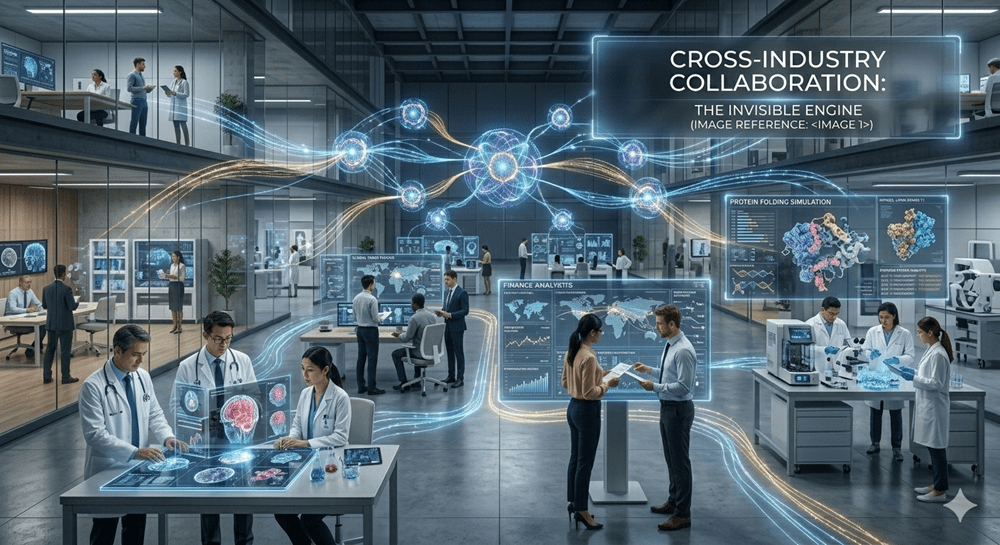
AI’s real impact appears in practical use. Businesses use it to automate tasks and improve decision-making. Logistics systems optimize supply chains, while finance uses AI for fraud detection and risk analysis.
Digital platforms like Netflix and Spotify rely on AI to recommend content based on user behavior.
Accelerating Science and Innovation
AI is also transforming research. In healthcare, it helps analyze medical images and detect diseases. In biology, systems like AlphaFold from DeepMind can predict protein structures, opening new possibilities in medicine.
Researchers also use AI to process massive datasets in climate science and astronomy.
Challenges and the Future
Despite its benefits, AI brings challenges. Automation may reshape jobs, data privacy remains a concern, and biased data can lead to unfair outcomes. AI-generated content also raises concerns about misinformation.
Artificial intelligence is still evolving. Its future includes deeper integration with robotics and smarter systems, but also growing concerns about energy use and control.
AI is not just another technology. It is becoming a foundation of modern society, and its impact will depend on how we choose to use it.
