The artificial intelligence industry is currently moving through one of the fastest periods of technological transformation. This week, several major announcements have captured global attention, highlighting how AI companies are rapidly expanding their capabilities in infrastructure, model development, intelligent assistants, and robotics. From strategic partnerships to next-generation AI systems, the industry is entering a new phase of innovation.
Anthropic Partners with SpaceX to Expand AI Infrastructure
One of the biggest developments this week is the partnership between Anthropic and SpaceX. As AI models continue to grow in size and complexity, they require enormous computing power, GPU resources, and electricity for both training and inference. To meet these demands, Anthropic is reportedly leveraging large-scale AI infrastructure, including Colossus One, in collaboration with SpaceX. This partnership could provide Claude users with improved performance, faster response times, and fewer usage restrictions while supporting the company’s long-term AI ambitions.
OpenAI Shifts Focus Toward Reliability with GPT-5.5 Instant
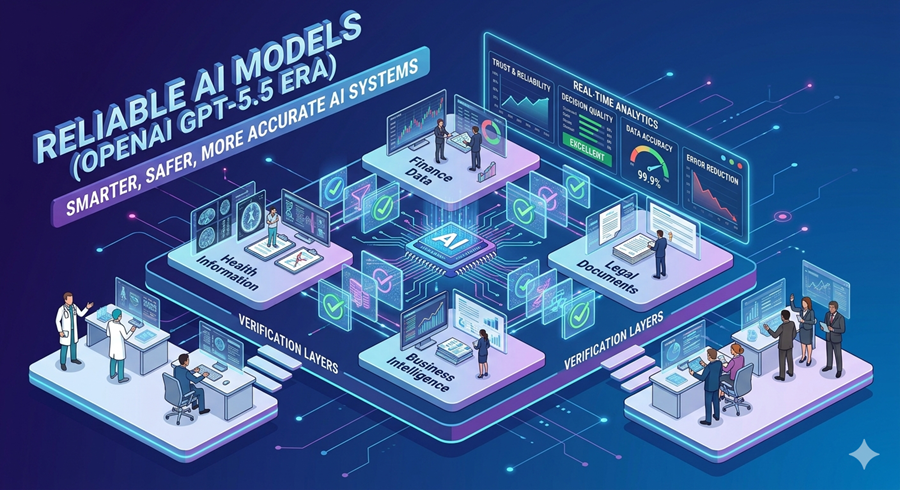
OpenAI has introduced GPT-5.5 Instant with a strong emphasis on improving AI reliability. One of the biggest challenges faced by AI chatbots has been hallucinations, where models generate incorrect or misleading information. According to OpenAI, GPT-5.5 Instant significantly reduces factual errors in high-stakes areas such as healthcare, finance, and legal assistance compared to previous models.
The new model also delivers more concise responses, allowing users to receive accurate information without unnecessarily lengthy explanations. In addition, OpenAI has enhanced personalization features, enabling the AI to better understand users’ projects, preferences, and ongoing workflows for a more tailored experience.
Google’s Remy AI Agent Could Transform the Smartphone Experience
Google is also accelerating its AI ambitions with reports suggesting that the company is developing an advanced AI agent known as Remy. Unlike traditional chatbots that simply answer questions, Remy is designed to perform tasks on behalf of users.
The system is expected to integrate with Gmail, Calendar, Google Docs, Drive, and several third-party applications to handle scheduling, messaging, document management, and other everyday activities automatically. Google’s long-term vision is to transform smartphones into intelligent assistants that continuously work in the background to improve productivity.
Governments Increase Oversight of Advanced AI Models
As AI systems become increasingly powerful, governments around the world are paying closer attention to their development. Companies including Google DeepMind, Microsoft, and xAI have reportedly agreed to submit advanced AI models for review by U.S. government agencies before public release.
These evaluations aim to ensure that powerful AI systems cannot be misused for cyberattacks, dangerous chemical research, or other high-risk activities. The initiative is considered an important step toward strengthening AI safety and responsible deployment.
DeepSeek V4 Reshapes the Competitive AI Landscape
DeepSeek V4 has emerged as one of the most disruptive developments in the AI market. The model is reported to deliver performance comparable to leading AI systems while offering significantly lower operating costs.
Its open-source nature allows developers to freely download, modify, and deploy the model, making advanced AI technology more accessible than ever before. As a result, DeepSeek is challenging traditional closed-source business models and increasing competitive pressure across the AI industry.
Robotics Continues to Advance Alongside AI
Beyond software, robotics is also experiencing rapid progress. Humanoid robots such as China’s Unitree H2 and Engine AI T800 have demonstrated remarkable improvements in movement, balance, and impact resistance.
These robots are no longer limited to basic walking or simple demonstrations. Instead, they are increasingly capable of performing complex physical tasks in real-world environments, highlighting the growing convergence of artificial intelligence and advanced robotics.
Conclusion
The AI industry is clearly entering a new era of innovation. OpenAI is prioritizing reliability and accuracy, Anthropic is expanding its computing infrastructure, Google is developing intelligent AI agents, and DeepSeek is challenging the market with affordable open-source models. At the same time, rapid advancements in humanoid robotics are bringing AI closer to practical real-world applications.
Together, these developments indicate that the future of artificial intelligence will be more powerful, accessible, and deeply integrated into everyday life than ever before.