
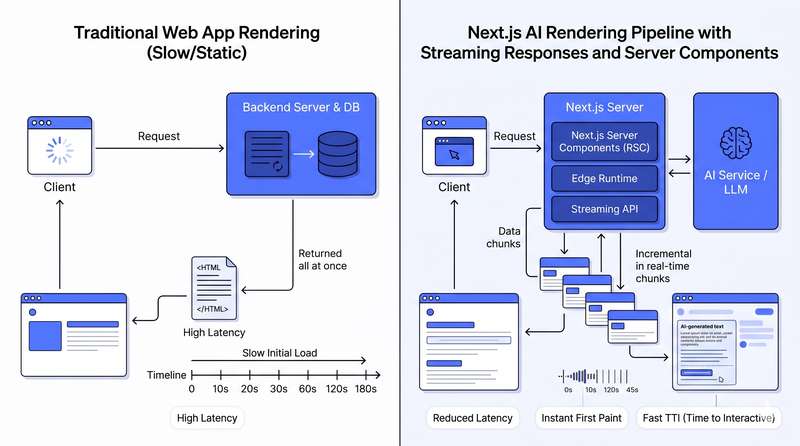
New frameworks emerge regularly, each promising to be better suited to modern AI-integrated development. Despite this, Next.js remains our default recommendation for US enterprises building AI-powered web applications – and the reasons are more nuanced than familiarity or inertia.
Building AI into a web application changes the fundamental performance and architectural requirements in ways that expose weaknesses in frameworks not designed for these demands. Streaming – LLM responses are generated token by token, and waiting for the entire response before displaying anything produces an unacceptably slow experience. Server-side AI processing matters for performance and security – making AI model calls from the browser exposes API keys and creates latency. Edge deployment is increasingly important where reducing latency between the user and the processing layer directly improves experience.
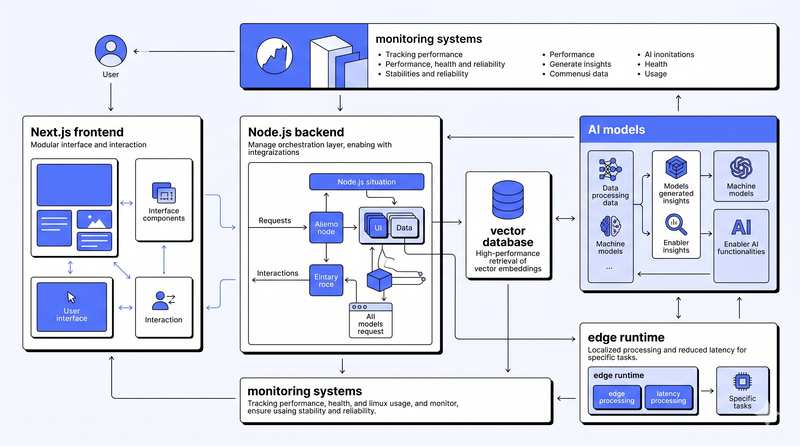
The specific Next.js features that make it well-suited for AI application development in 2026
Server Components allow AI processing to happen on the server with zero JavaScript shipped to the client. Streaming Server Components and Suspense enable progressive rendering of AI-generated content with loading states handled natively. Route Handlers provide a clean way to build backend AI endpoints within the same codebase as the frontend. Edge Runtime support allows specific API routes to run at the edge, reducing latency for AI-integrated endpoints serving users globally. Vercel AI SDK integration provides first-class support for building streaming AI interfaces with pre-built UI components.
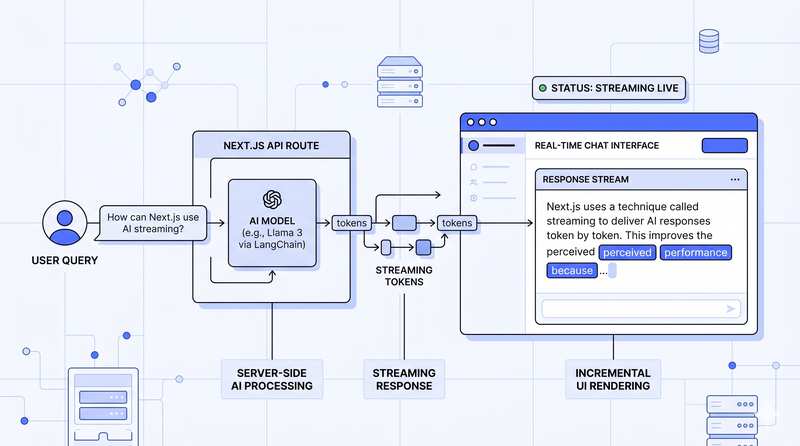
How Next.js compares to its real alternatives for AI application development
Remix offers excellent progressive enhancement but has a smaller ecosystem of AI-specific tooling. SvelteKit produces smaller bundle sizes with an excellent developer experience but has a smaller enterprise adoption base. The honest answer is that a well-built application on any of these frameworks will outperform a poorly built one on Next.js. The reason we recommend Next.js as a default is that its ecosystem, AI tooling, deployment options, and community make it the path of least resistance to a well-built AI application in 2026.
We help US enterprises make this decision based on their specific workload requirements, existing infrastructure, and long-term AI roadmap - not platform preference.
Get expert insights on your use case and identify the most effective path forward.