


As AI agents become more capable, memory is turning into one of their most important features. A chatbot can answer questions based on the current conversation, but a true AI agent needs to remember information, learn from experience, follow procedures, and apply knowledge across multiple sessions. Without memory, agents would start from scratch every time they receive a new task.
Interestingly, AI memory systems are inspired by how human memory works. Humans rely on short-term memory, factual knowledge, learned skills, and personal experiences to make decisions. Modern AI agents follow a similar pattern through four distinct memory types: working memory, semantic memory, procedural memory, and episodic memory. Together, these memory systems allow agents to become more reliable, efficient, and personalized over time.
Working Memory: The Agent’s Active Workspace
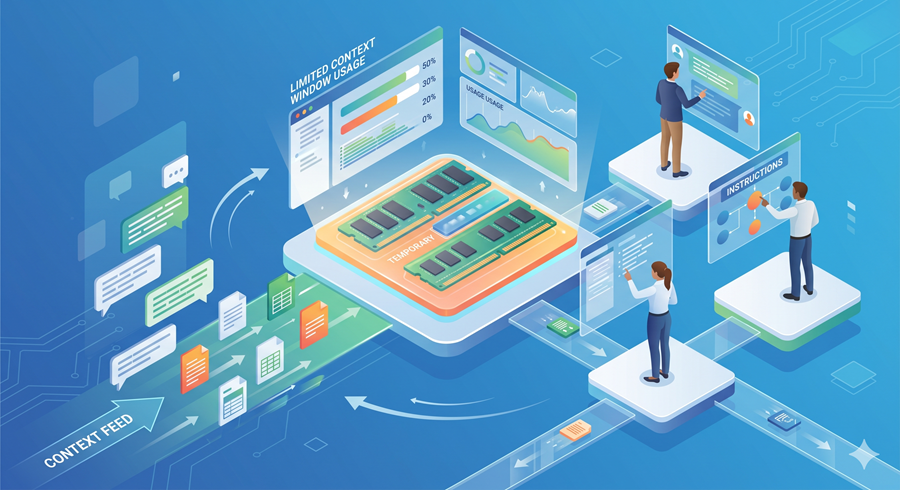
Working memory is the information an AI agent can access immediately. It includes the current conversation, system instructions, uploaded files, and any data currently loaded into the context window.
This memory type is similar to a computer’s RAM. It is fast, easily accessible, and essential for completing current tasks. However, it is also temporary. Once the session ends, the information is typically lost unless it is stored elsewhere.
Although modern AI models support very large context windows, there are still limits. When too much information is added, the model may struggle to maintain focus and important details can become less effective. Working memory serves as the agent’s temporary workspace where active reasoning takes place.
Semantic Memory: Storing Facts and Knowledge
Semantic memory contains the agent’s long term knowledge. This includes facts, documentation, project guidelines, coding standards, company policies, and other reference information.
In many real-world AI systems, semantic memory is surprisingly simple. Instead of relying entirely on complex databases, many agents use structured Markdown files that contain important project information. For example, coding agents often load documentation files that explain project architecture, development rules, and best practices.
Semantic memory helps agents avoid repeating mistakes and ensures consistency across tasks. Rather than relearning the same information every session, the agent can continuously reference established knowledge whenever needed.
Procedural Memory: Knowing How to Perform Tasks
Procedural memory focuses on skills and workflows. Instead of storing facts, it stores instructions that explain how to complete specific tasks.
These skills can include activities such as performing code reviews, creating presentations, generating reports, or executing troubleshooting processes. Many agent frameworks store these skills as structured instruction files that contain step-by-step guidance.
A key advantage of procedural memory is efficiency. Agents do not load every available skill into memory at once. Instead, they maintain a lightweight index of available skills and only load detailed instructions when a relevant task is requested. This approach reduces unnecessary context usage while allowing access to a large library of capabilities.
Episodic Memory: Learning from Experience
Episodic memory is the most advanced and arguably the most challenging form of agent memory. It stores information about past interactions, decisions, successes, and failures.
Rather than saving every conversation in full, advanced systems often summarize experiences into useful lessons. For example, instead of storing an entire debugging session, the agent may remember that a previous authentication issue was caused by middleware configuration.
This allows the agent to improve over time and apply lessons learned from earlier situations. However, episodic memory also introduces challenges. Systems must decide what information is worth keeping, what should be forgotten, and when old memories become irrelevant.
How Memory Transforms AI Agents
The combination of working, semantic, procedural, and episodic memory is what separates AI agents from traditional chatbots. While chatbots respond only to current inputs, agents can use knowledge, skills, and past experiences to make better decisions.
As AI technology continues to evolve, memory architecture will play a crucial role in building agents that are more intelligent, adaptable, and capable of learning from the tasks they perform every day.
