The AI industry is quietly moving beyond chatbots.
For the last two years, most AI products have revolved around prompts: ask a question, get an answer, repeat. But the newest systems emerging from Google, OpenAI, and Anthropic suggest the interface itself is changing. AI is no longer being designed merely to respond. It is being designed to operate.
That distinction matters more than most model benchmarks.
AI Is Becoming Persistent
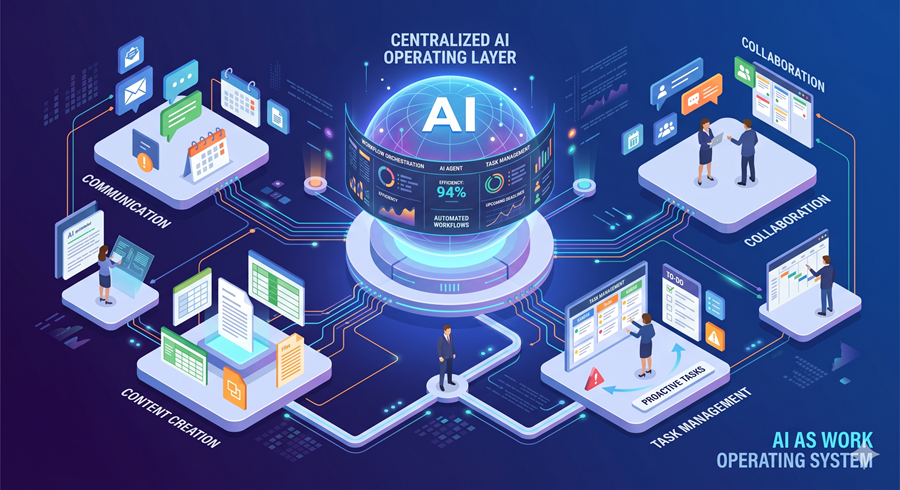
Google’s internal agent project signals a major shift toward continuous assistance rather than on-demand interaction. Instead of waiting for instructions, these systems are being built to monitor workflows, manage information, and execute tasks proactively across email, calendars, documents, search, and collaboration tools.
The strategic advantage here is ecosystem control.
Unlike standalone AI startups, Google already owns much of the productivity stack people use daily. That creates the possibility of an assistant with persistent context across work, communication, scheduling, and research simultaneously.
The result starts looking less like software and more like infrastructure.
The Real Battle Is Workflow Ownership
Anthropic appears to be moving in the same direction with proactive briefing systems tied into GitHub, Slack, Figma, Drive, and internal communication tools.
What is emerging is a competition to become the operational layer sitting between humans and digital work.
That may ultimately become more important than raw intelligence improvements.
The company that controls workflow orchestration gains access to the highest-value layer of enterprise behavior: prioritization, coordination, and decision flow. Once AI systems begin managing information before users even ask, they stop functioning like assistants and start functioning like cognitive operating systems.
That changes the relationship entirely.
Model Performance Is Now About Practicality
At the same time, the underlying models are becoming dramatically more usable.
Google’s improvements around multi-token prediction and speculative decoding address one of the largest hidden problems in AI: inference speed. Faster generation is not just a convenience upgrade. It determines whether AI feels natural enough to stay integrated into daily work.
Meanwhile, newer lightweight models are reducing hallucinations, improving reasoning, and increasing personalization simultaneously. Reliability is becoming the differentiator.
That is especially critical for finance, legal work, software development, and research environments where small errors carry real consequences.
The Interface Is Disappearing
The deeper trend underneath all of this is subtle but important.
The AI interface itself is starting to disappear into workflows. Instead of opening an application and prompting a model, systems increasingly operate in the background, coordinating tasks, summarizing information, preparing decisions, and managing context automatically.
That is a very different future than the chatbot era originally promised.
The companies leading this transition are no longer building tools people occasionally use. They are attempting to build systems people depend on continuously and once that happens, AI stops being a feature. It becomes part of how modern work is structured.
Follow Us on:
Clutch
Goodfirms
Linkedin
Instagram
Facebook
Youtube