Most people still think AI is a chatbot problem.
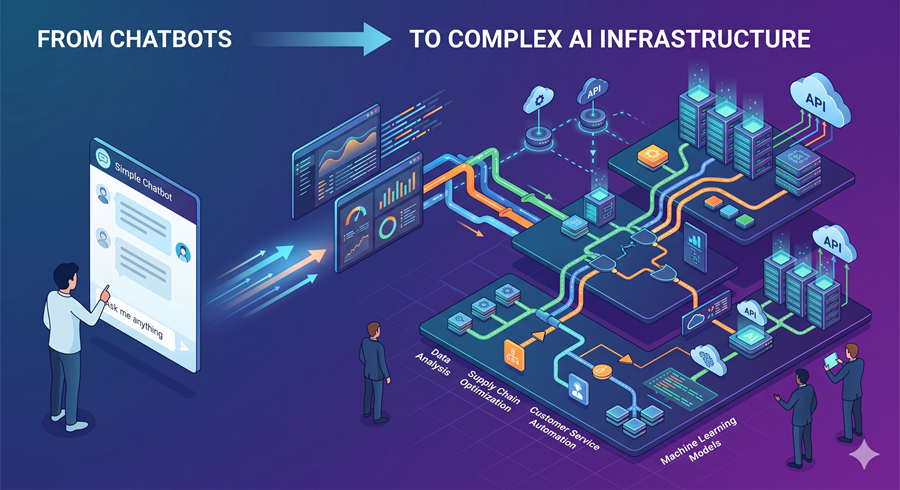
Ask a question, get an answer, maybe generate a draft. That is still how most people interact with AI. Useful, but limited. The real shift is happening one layer deeper, where AI stops behaving like a tool and starts behaving like infrastructure.
That is what makes Hermes interesting. It is not just another assistant. It is a clearer example of where AI agents are actually headed: persistent, task-oriented, self-improving systems that operate in the background instead of waiting for prompts.
The Real Upgrade Is Not Intelligence. It Is Continuity.
The biggest limitation in most AI tools is not reasoning. It is amnesia.
Most systems still start from zero every time. They can generate well, but they do not durably accumulate operational context. That makes them useful for tasks, but weak for workflows.
Hermes changes that by treating memory as a product feature, not a prompt trick. It retains what it learns, updates its own working context, and reuses that information the next time the same task appears.
That matters because repetition is where most real work lives. The more often a task repeats, the more valuable persistent memory becomes.
AI Agents Are Becoming Background Workers
The most important part of the agent model is not autonomy. It is an ambient execution.
The real value is not that an agent can complete a task. It is that it can complete recurring work without requiring attention every time. That shifts AI from interactive software into background labor.
This is the real unlock. Daily summaries, monitoring, formatting, reporting, drafting, and routine synthesis are not hard tasks. They are expensive because they are repetitive.
AI agents become useful the moment they stop needing to be supervised every time they work.
The Next Competitive Layer Is Workflow Ownership
What makes agent systems more meaningful than standard assistants is not that they produce better outputs. It is that they absorb more of the workflow around the output.
That is the strategic difference. A chatbot answers questions. An agent replaces the process.
Once AI begins handling the surrounding tasks, collecting inputs, structuring outputs, routing results, and remembering preferences, the value shifts away from raw model performance and toward workflow ownership.
That is where the real product moat starts to form.
The Most Valuable AI Will Feel Invisible
The strongest AI products will not feel like tools people actively use. They will feel like systems quietly removing work.
That is the more important signal here. The future of AI is not just better responses. Fewer tasks are reaching the human in the first place.
The winners in this category will not be defined by who built the smartest model.
They will be defined by who built the most useful layer around it.
Follow Us on:
Clutch
Goodfirms
Linkedin
Instagram
Facebook
Youtube