


Television keeps changing, but one format continues to survive every reinvention: daytime.
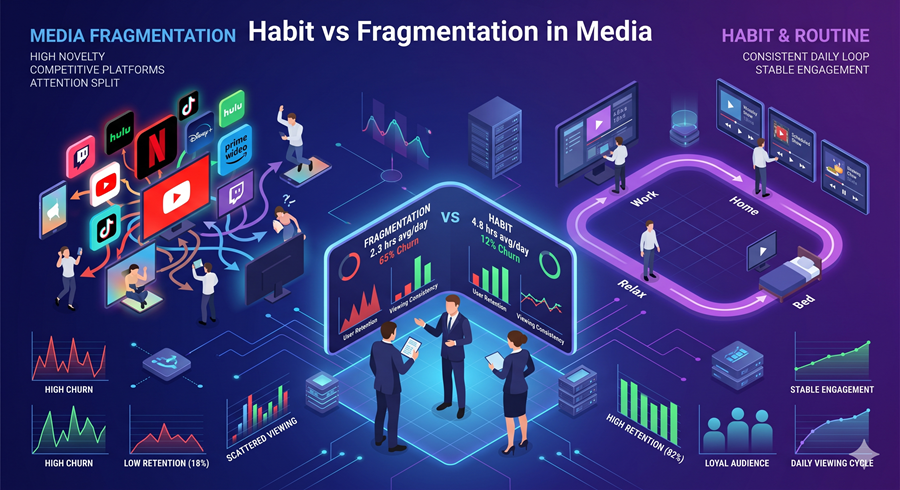
That matters more than it gets credit for. While much of television is still trying to solve for fragmentation, churn, and shrinking loyalty, daytime has been quietly proving something the rest of the industry keeps forgetting. Habit is still one of the most valuable forms of audience retention.
That is what makes the recent momentum in daytime so notable. Renewals, audience stability, and stronger streaming economics are not just good news for one genre. They are a reminder that consistency may be more valuable than scale.
Daytime Still Understands Audience Behavior
Most modern television is built around novelty. Daytime is built around ritual.
That distinction matters. Prime-time and streaming platforms spend heavily to win attention in bursts. Daytime earns it through repetition. Viewers return not just for plot, but for continuity, familiarity, and emotional habit.
That kind of loyalty is difficult to replicate and even harder to buy. A daily audience that returns across broadcast, streaming, and generations is not just stable. It is structurally valuable.
In a media economy built around volatility, routine is an asset.
Streaming Did Not Replace Daytime. It Extended It
One of the more useful misconceptions about daytime is that streaming disrupted it in the same way it disrupted everything else. It did not.
Streaming gave daytime another distribution layer. It did not replace the core behavior. The audience still shows up. They simply show up through more than one channel now.
That changes the economics in meaningful ways. A show no longer depends on a single viewing window to justify its existence. Broadcast, next-day streaming, and platform loyalty all reinforce each other.
For a format already built on consistency, streaming did not break the model. It made the model easier to monetize.
AI Will Change Production, Not Loyalty
The anxiety around AI in television is understandable, but its first impact on daytime will likely be operational, not emotional.
Production workflows may change. Virtual sets may expand. Background environments may become cheaper to simulate. Cost structures will almost certainly shift. But efficiency is not the same thing as connection.
Daytime has always depended less on spectacle and more on familiarity. The audience is not showing up because a hallway was rendered beautifully. They are showing up because they know what happened there.
That distinction matters. AI may compress production. It does not automatically recreate emotional continuity.
The Real Asset Is Devotion
What makes daytime unusual is not just longevity. It is behavioral depth.
Very few entertainment formats still produce multigenerational loyalty at daily frequency. Fewer still create the kind of durable relationship where viewers return for decades, often with an inherited emotional attachment to the format itself.
That is not nostalgia. It is one of the most durable retention systems in media.
The rest of television is still trying to rebuild that kind of loyalty from scratch.
Daytime never stopped compounding it.
Follow Us on:
Clutch
Goodfirms
Linkedin
Instagram
Facebook
Youtube
