


OpenAI is reportedly missing key internal targets for revenue and user growth during a critical phase ahead of a potential IPO. Despite claims of massive usage numbers, including over a billion users across its ecosystem, the company is struggling to convert that scale into sufficient revenue.
Concerns are also emerging from within leadership. OpenAI’s finance leadership has expressed worry that the company may not be able to sustain future computing costs if revenue growth does not accelerate. This is especially significant because compute contracts, including large infrastructure commitments, are extremely expensive and long-term.
The situation highlights a deeper structural issue in the AI industry. Usage is growing rapidly, but profitability is not keeping pace. Even with experiments like advertising inside ChatGPT, there are doubts about whether user behavior will support meaningful ad revenue at scale.
Oracle exposure and market reaction
One of the most striking examples of financial exposure in this ecosystem is Oracle’s reported multi-billion-dollar cloud agreement with OpenAI. The deal positioned Oracle as a major infrastructure provider for OpenAI’s compute needs.
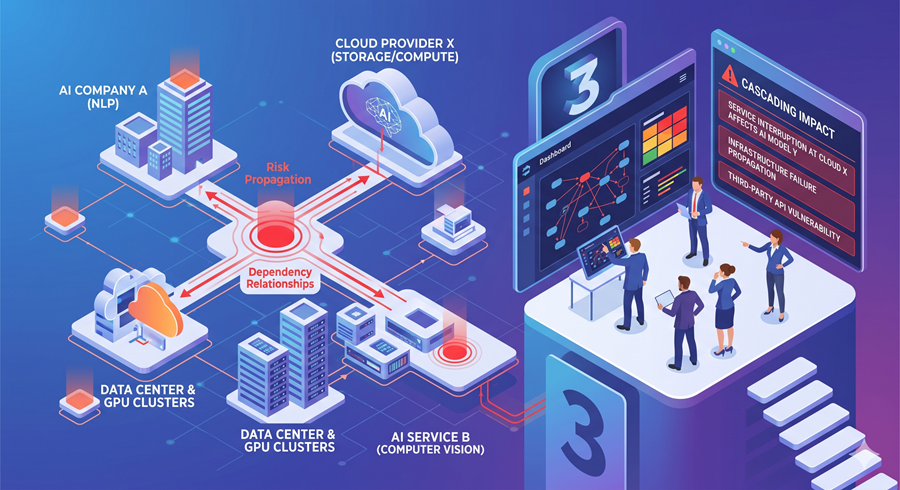
However, market confidence appears sensitive to any sign of instability from OpenAI. When reports surfaced about OpenAI’s revenue concerns, Oracle stock experienced a notable decline. This reaction reflects how tightly linked major AI companies have become to a shared infrastructure and financing loop.
If one major player in the chain slows down, the ripple effects extend across cloud providers, chipmakers, and data center operators.
Ads, revenue struggles, and IPO pressure
OpenAI has reportedly explored multiple monetization strategies, including integrating advertising into ChatGPT. However, early signals suggest limited demand or weak performance from AI-driven ad formats.
This creates a tension between scale and monetization. Even if user numbers are high, the willingness of advertisers to pay for placement inside conversational AI may not match expectations.
At the same time, pressure is increasing ahead of a potential IPO. Investors expect strong growth and clear paths to profitability. Internal cost control discussions suggest the company is now being pushed toward greater financial discipline after years of aggressive expansion.
Microsoft distancing and shifting partnership structure
Microsoft, one of OpenAI’s most important partners, has adjusted its relationship with the company through a revised agreement. The new structure reduces dependency and increases flexibility for both sides.
Key changes include broader freedom for OpenAI to use multiple cloud providers, while Microsoft maintains licensing access to OpenAI models under non-exclusive terms. The agreement also simplifies revenue-sharing arrangements and reduces direct financial entanglement.
This shift signals a strategic repositioning. Microsoft continues to support OpenAI infrastructure but is also ensuring it is not overexposed if the company faces financial or operational instability.
The move reflects a broader trend in cloud computing, where providers want flexibility to host multiple competing AI models rather than relying heavily on a single partner.
AI phones, agents, and monetization pressure
Another emerging theme is the push toward AI-driven hardware and agent-based systems. Concepts such as AI-powered smartphones aim to replace traditional apps with autonomous agents that perform tasks on behalf of users.
In theory, these systems could handle everything from payments to scheduling. In practice, they introduce new concerns about cost, since each action would likely consume compute resources and potentially introduce per-use charges.
This raises questions about whether AI devices will shift from subscription-based models to usage-based pricing, where everyday actions could carry incremental costs.
Critics argue that this direction may feel like an attempt to create new revenue streams in a market where traditional app ecosystems are already mature and difficult to disrupt.
Broader AI bubble concerns and infrastructure strain
Across the industry, there is a growing debate about whether current AI expansion is sustainable. Infrastructure costs are rising rapidly, driven by demand for GPUs, data center capacity, electricity, and cooling systems.
At the same time, companies are investing heavily in new models, larger training runs, and expanded deployment systems, all of which require enormous capital expenditure.
Some analysts and commentators suggest that the industry may be entering a phase where expectations about AI revenue, productivity gains, and adoption are running ahead of real economic returns.
This tension between rapid technological advancement and uncertain monetization models is becoming one of the defining challenges of the current AI cycle.
Follow Us on:
Clutch
Goodfirms
Linkedin
Instagram
Facebook
Youtube
