I find it fascinating how some of the biggest shifts in AI don’t arrive with hype. They just quietly appear, packed with capabilities that completely reshape what these systems can do. That is exactly how I felt looking through Google’s latest set of updates.
Most people are not even talking about them yet, but the direction is hard to ignore.
Deep Research Is Becoming a Superpower
The biggest leap, in my view, comes from the new deep research capabilities. What stands out is not just accuracy, but how fast and thorough the system has become.
I can now ask questions that would normally take days or even weeks of digging through academic papers, reports, and datasets. Instead of manually piecing together fragmented information, the system pulls from multiple sources and builds a structured answer that feels cohesive.
What makes it more powerful is how it blends different types of data. It does not just analyze numbers or text in isolation. It connects quantitative data with context, sentiment, and narrative. That shift turns raw information into something much closer to insight.
Multi-Agent Systems Are the Real Breakthrough
What really changes the game is how multiple AI agents now work together behind the scenes. Instead of one system doing everything, specialized agents handle different parts of a task and coordinate with each other.
I can give a single prompt, and the system splits it into research, analysis, strategy, and execution layers. Each agent handles its role, and then everything is merged into a final output.
This feels fundamentally different from earlier AI tools. It is not just answering questions anymore. It is executing workflows.
From Prompt to Execution in Minutes
What used to take hours of coordination across teams can now happen in minutes. I can ask for something like market research, inventory analysis, and a relaunch strategy, and the system builds the entire plan.
It does not stop there. It can generate assets, suggest pricing strategies, and even prepare rollout materials like presentations. The most surprising part is how little input it needs to get started.
The bottleneck is no longer execution. It is deciding what to ask.
Enterprise AI Is Becoming an Operating Layer
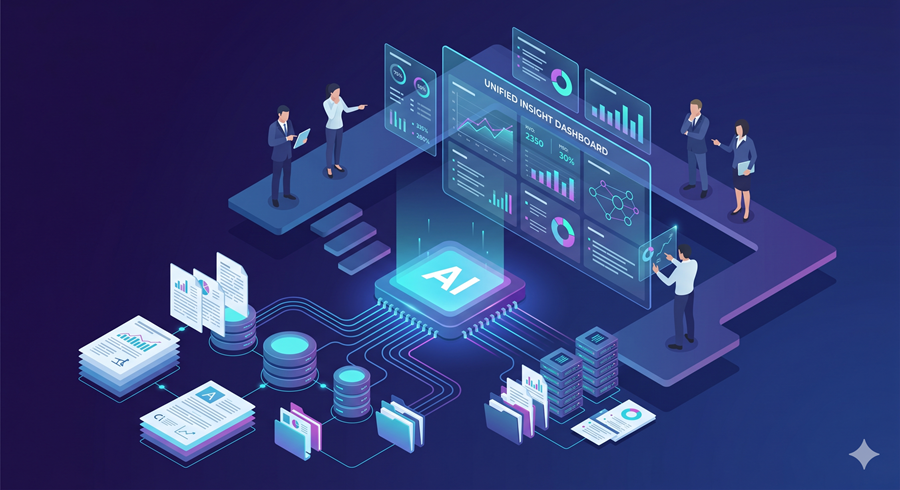
Another shift I notice is how these systems are integrating directly into business environments. Instead of being separate tools, they are becoming a central layer that connects data, workflows, and teams.
They can pull from internal databases, external sources, and historical context all at once. That means decisions are no longer based on isolated information. Everything is connected in a single flow.
For businesses, this is less about automation and more about coordination at scale.
Visual Intelligence Expands Beyond Text
What surprised me most is how far visual understanding has come. AI is now analyzing motion, tracking physical dynamics, and extracting meaningful data from video.
It can break down movement frame by frame, track spatial positioning, and generate insights that were previously impossible without specialized tools. This is not just useful for analysis. It changes how people learn, train, and understand complex actions.
The gap between human perception and machine analysis is shrinking fast.
Where This Is All Heading
When I step back, the pattern becomes clear. AI is moving from isolated capabilities to fully integrated systems that think, act, and coordinate.
It is no longer just about generating text or code. It is about executing multi-step processes with minimal input. The role of the user is shifting from doing the work to directing it.
That is the real shift happening here. Not louder releases, but deeper systems quietly taking on more responsibility than ever before.