I can feel the shift happening in real time. Cybersecurity is no longer just about patching systems and reacting to threats. It is becoming a race between intelligent systems, where speed, scale, and automation define who stays secure and who falls behind.
The Rise of AI That Finds What Humans Miss
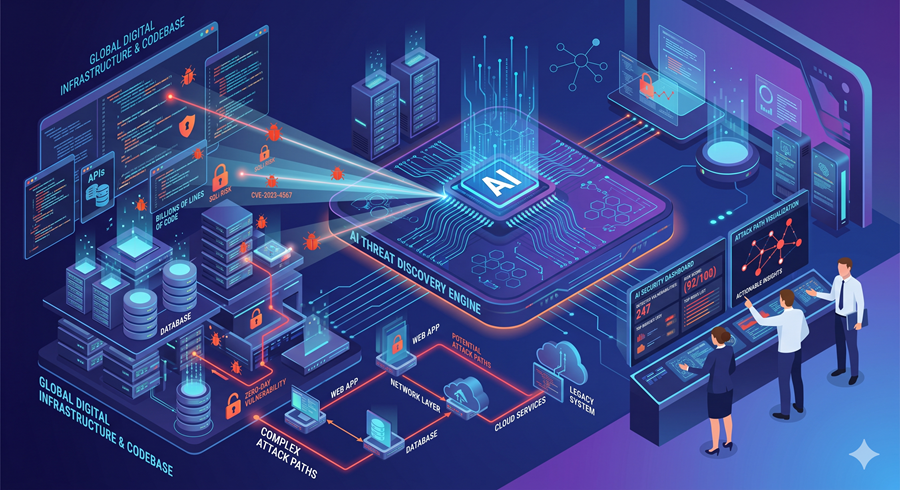
What stands out to me is how quickly AI has evolved from a helpful assistant into something that can scan massive codebases and uncover hidden vulnerabilities. These are not simple bugs. They are subtle weaknesses buried across millions of lines of code that would take human teams months, if not years, to identify.
When an AI system can connect these small gaps into larger attack paths, the nature of cybersecurity changes completely. It is no longer about isolated issues. It becomes about how multiple weaknesses interact in ways we did not anticipate.
Why Access and Timing Matter More Than Ever
Right now, access to these advanced systems is limited. Only a handful of major organizations are testing them, using the technology to identify and fix vulnerabilities before they become public risks.
That creates an uneven playing field. Large companies with resources and partnerships can prepare in advance, while smaller businesses may not even know where their weaknesses lie. Many rely on layered software systems, often built on top of each other, which increases complexity and exposure.
This imbalance matters because the broader economy is not made up of tech giants. It is built on smaller organizations that often lack the capacity to respond at the same speed.
The Fragility of a Connected System
What makes this more serious is how interconnected everything has become. Financial systems, energy infrastructure, communication networks, and everyday digital services are all tied together.
A vulnerability in one layer can ripple across multiple systems. The more we depend on digital infrastructure, the more critical it becomes to secure every part of that chain.
This is no longer just about protecting data. It is about maintaining the stability of systems that entire societies rely on.
Why Panic Is the Wrong Response
Despite the intensity of these developments, I do not think panic is useful. The pace of change is fast, but reacting emotionally does not improve security outcomes.
What matters more is taking the situation seriously while staying grounded. These technologies are evolving on a cycle measured in weeks, not years. That means responses must also become faster, more adaptive, and more coordinated.
The goal is not to eliminate risk, but to reduce exposure and respond effectively when new threats emerge.
Fighting AI With AI
One idea keeps coming up again and again. The only way to keep up with intelligent threats is to use intelligent defenses.
If attackers can use AI to discover vulnerabilities, defenders will need systems that can detect, patch, and respond at the same speed. This creates a new kind of arms race, where both sides rely on increasingly capable tools.
The difference will come down to how quickly defenses can evolve compared to threats.
The Urgency of Regulation and Preparedness
Another layer to this is regulation. Governments and financial authorities are beginning to pay attention, recognizing that these risks extend beyond individual companies.
But policy tends to move more slowly than technology. That gap creates a window where systems can advance faster than the rules designed to manage them.
Being proactive matters here. Waiting for a crisis to force change is not a sustainable strategy.
A Future Defined by Speed and Responsibility
What I take away from all of this is simple. We are entering a phase where cybersecurity is defined by speed, scale, and coordination.
The tools we are building are becoming powerful enough to both protect and expose entire systems. The outcome depends on how responsibly and quickly they are deployed.
This is not just a technological shift. It is a structural one that will define how secure our digital world can remain.