I keep thinking about how quickly the conversation around artificial intelligence has shifted from capability to scale, and then from scale to fear. The numbers involved are so large now that they almost stop behaving like normal economic data and start feeling abstract.
The Scale of AI Infrastructure Spending
When I look at recent estimates of global spending on AI infrastructure, the figure that stands out is roughly 400 billion dollars in a single year. Most of this is directed toward data centers, high-performance chips, and the electrical systems needed to keep everything running.
What surprises me is not just the size of the investment, but how concentrated it is in physical expansion rather than immediate profit generation. The industry is effectively building the foundations of a future system before it has proven what that system will fully return.
When Growth Outpaces Physical Reality
There is a growing gap between what companies announce and what can actually be built or powered in time. Data centers depend on land, energy availability, construction timelines, and supply chains that do not scale at the same speed as software progress.
Even when demand signals appear strong, the physical constraints introduce delays. Power grids, cooling systems, and chip availability all act as friction points. That creates a situation where projected capacity often appears larger on paper than in reality.
Security Fears and Exaggerated Narratives
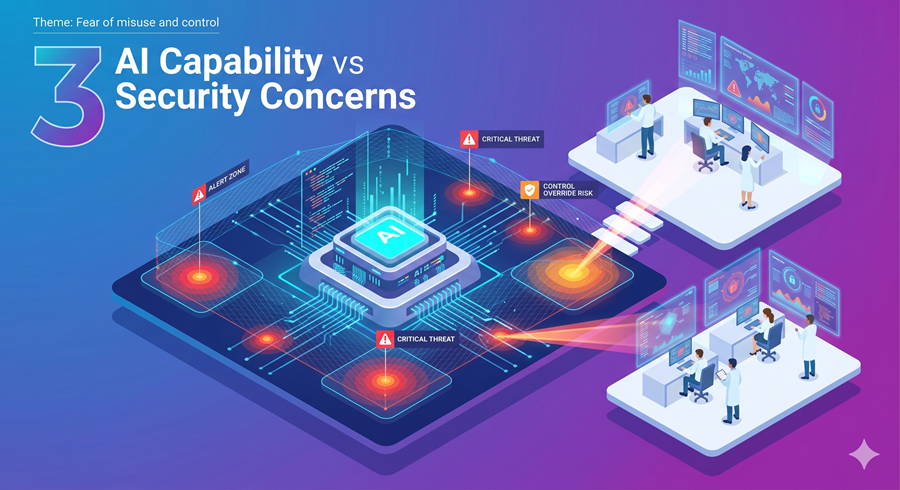
Alongside these infrastructure debates, I notice a second layer of discussion forming around safety and control. Some narratives describe advanced AI systems as capable of discovering critical vulnerabilities or behaving unexpectedly during testing.
In many cases, these claims circulate faster than they can be independently verified, which makes it difficult to separate technical possibility from speculation. What is clear, however, is that cybersecurity has become a central concern in how these systems are developed and tested.
The more capable these models become at analyzing code and systems, the more seriously their misuse is considered, even if the most extreme scenarios remain theoretical.
Why Hardware, Energy, and Timing Matter
One thing I keep returning to is that AI progress is no longer just a software problem. It is tied directly to hardware supply chains and energy infrastructure. Chips may define capability, but electricity defines scale.
Energy costs, grid limitations, and equipment depreciation all influence how quickly systems can expand. Even if hardware continues to improve rapidly, deployment depends on whether the surrounding infrastructure can keep up.
This creates a lag between what is technically possible and what is practically usable at scale.
What I Take Away From the Hype Cycle
When I step back, the most consistent pattern is not sudden breakthroughs, but accelerating investment layered on top of uneven deployment. Some parts of the system move extremely fast, while others remain constrained by physical and economic realities.
The result is a cycle where expectations rise quickly, but real-world implementation follows more slowly and unevenly. That gap is where both optimism and anxiety tend to grow.
What feels most important to me is not predicting dramatic outcomes, but understanding how dependent this entire ecosystem is on infrastructure that cannot scale infinitely, no matter how fast the software evolves.