A Warning That Feels Closer Than Expected
I have heard predictions about AI replacing jobs for years, but this one feels different. The timeline is not decades or even several years. It is 12 to 18 months. That kind of urgency changes how I think about the future of work.
The idea is simple but unsettling. If your job primarily happens on a computer, it may soon be at risk. This is not limited to developers or technical roles. It extends to lawyers, accountants, analysts, and even marketing professionals. Roles that once felt secure because of their complexity are now being reconsidered in light of rapidly advancing AI systems.
The Rise of Professional-Level AI
I see a new category of AI emerging, one that goes beyond assistance and moves into full professional capability. These systems are being designed to perform tasks that typically require training, judgment, and experience.
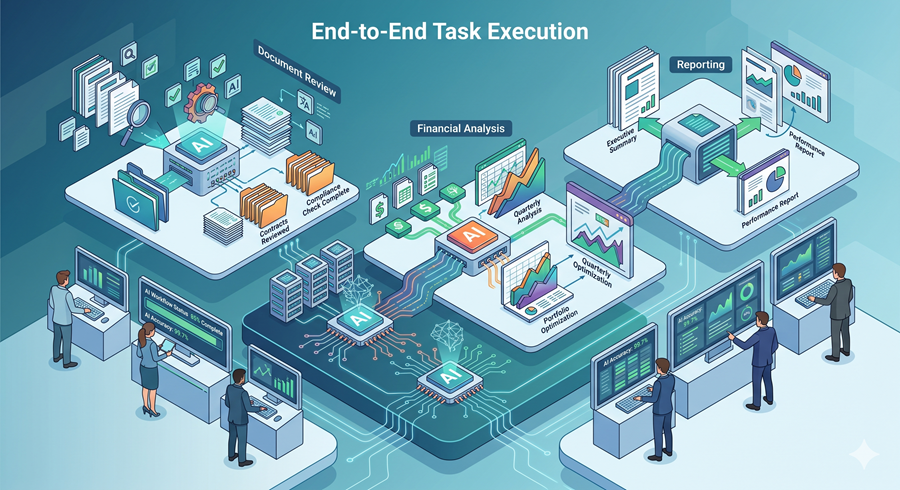
Instead of just helping draft a document or analyze data, AI is being positioned as something that can handle entire workflows. It can review contracts, prepare financial summaries, generate reports, and support decision-making processes. This is what makes the shift feel significant. It is not about replacing small tasks, but about replicating the broader function of a role.
Why Companies Are Moving Fast
From a business perspective, the motivation is clear. AI offers efficiency, speed, and cost reduction. Companies are already experimenting with replacing certain roles or reducing hiring needs by integrating AI systems into their workflows.
I notice that this is not just theoretical. There are already signs of companies restructuring teams and adjusting priorities to focus more on automation. When organizations begin to see AI as a viable alternative to human labor in specific areas, adoption tends to accelerate quickly.
Is This a Sudden Disruption or a Gradual Shift?
What I find interesting is the contrast between the warning and what we currently see in the job market. While there are reports of layoffs and restructuring, we are not yet seeing a complete collapse of white-collar employment.
This makes me wonder if we are in the early phase of a larger transition. Technology often takes time to fully integrate into real-world systems. There are challenges around trust, accuracy, regulation, and accountability that slow down immediate replacement.
At the same time, once a tipping point is reached, change can happen very quickly. That is what makes this moment feel uncertain. It could remain gradual for a while, then accelerate suddenly.
What This Means for Professionals Like Me
I think the biggest shift is not just about job loss, but about how work itself changes. If AI can handle routine and structured tasks, then the value of human work may shift toward creativity, judgment, and complex decision-making.
This does not mean everyone gets replaced. It means roles evolve. Some tasks disappear, others emerge, and many get reshaped in ways we do not fully understand yet.
Still, the warning is hard to ignore. If AI continues to improve at this pace, then adaptation will not be optional. It will be necessary.
Short Paragraph
What stays with me is the speed of this shift. It is not just about whether AI can replace jobs, but how quickly it might start doing so at scale. Whether the timeline proves accurate or not, the direction is clear, and it is arriving faster than most people expected.