I often notice that AI feels complicated at first, but when I break it down, it becomes much easier to understand. At its core, artificial intelligence is simply a combination of computer science, large amounts of data, and problem-solving. It is designed to help machines perform tasks that normally require human thinking.
I realize that I have probably already interacted with AI many times without even noticing. Whether it is asking a voice assistant to play music or chatting with a customer service bot online, these everyday interactions are powered by AI working quietly in the background.
Understanding the Types of AI
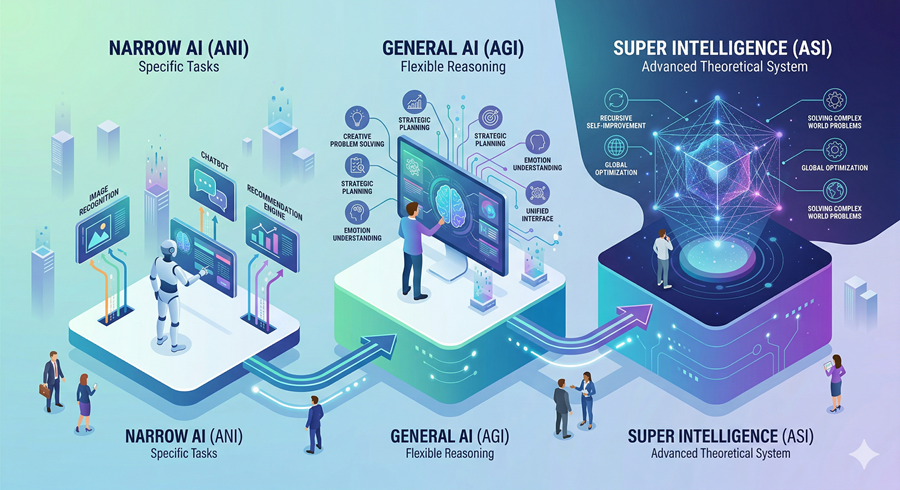
I find it helpful to think of AI in three main categories. The first is Artificial Narrow Intelligence, or ANI. This is the type we use today. It is designed to perform specific tasks like answering questions, recognizing voices, or automating processes. It does one thing well but does not truly “think” like a human.
Then there is Artificial General Intelligence, or AGI. This is the idea of machines that can think, plan, and make decisions similar to humans. Many researchers believe this is where AI is heading, but it has not been achieved yet.
The final type is Artificial Super Intelligence, or ASI. This is still theoretical. It describes a future where machines could become more intelligent than humans in every way. While it sounds fascinating, it remains an idea rather than a reality.
How AI Is Used Today
I see AI being used mostly for automation. It helps handle repetitive tasks, making processes faster and more efficient. For example, customer service systems can respond to common questions instantly using voice recognition and machine learning.
AI is also used in fields like robotics, where it performs tasks that are too dangerous for humans. This could include handling toxic materials or operating machines in extreme environments. In these cases, AI is not just convenient; it is essential for safety.
The Benefits of AI
One thing I appreciate about AI is how much time it saves. By automating repetitive work, it allows humans to focus on more creative and meaningful tasks. It also reduces the chances of human error in certain situations, especially in data-heavy or precise operations.
Another major benefit is that it opens the door to discoveries. AI can process vast amounts of information quickly, helping researchers and scientists find patterns and insights that might otherwise be missed.
The Challenges and Risks
At the same time, I cannot ignore the downsides. AI systems are expensive to build and maintain, often requiring significant resources. There is also concern about job loss, especially for roles that involve routine tasks.
I also think about the environmental impact. Large AI systems require massive data centers that consume energy and water. On top of that, there are ethical concerns like misuse, plagiarism, and security risks from hackers.
Why Understanding AI Matters
For me, the most important takeaway is that AI is not going away. It is becoming a bigger part of everyday life, whether we fully notice it or not. Understanding how it works, along with its benefits and risks, feels essential.
Short Paragraph
AI is not just a technology trend. It is a shift in how we solve problems and interact with machines. The more I understand it, the better prepared I feel to navigate a future where AI plays a central role.