I’m starting to notice a clear divergence in how AI companies are building. On one side, there’s a push toward ownership and control. On the other hand, a move toward systems that evolve themselves.
Microsoft’s latest release makes that first direction obvious. For years, it relied on external models to power image generation across its products. That worked, but it came with a tradeoff. Core capabilities depended on someone else’s roadmap. Now, that dependency is shrinking.
With its new image model, Microsoft is doing more than improving output quality. It is reclaiming control over iteration speed, integration, and cost structure. That changes how quickly it can ship features across its ecosystem.
Why Image Generation Still Matters
It’s easy to dismiss image models as solved, but they’re not. One of the hardest problems has been something surprisingly simple: text inside images.
Posters, menus, diagrams, slides. These are practical outputs, not just creative ones. And they tend to break when precision matters. Fixing that turns image generation from a novelty into a tool.
Microsoft seems to understand this. The focus is not just realism, but reliability. If the model can consistently generate usable layouts with accurate text, it becomes immediately valuable for real workflows.
That’s where the shift happens. From generating images to producing assets.
From Outputs to Workflows
But even strong image generation is only one piece. Creating something that feels complete still requires stitching multiple steps together.
New tools are starting to rethink that process entirely. Instead of generating fragments and fixing them later, the workflow begins with structure. Characters, environments, camera motion, and final grading are all defined upfront.
This approach reduces randomness. It replaces trial and error with direction. The result is not just better visuals, but a more predictable creative pipeline.
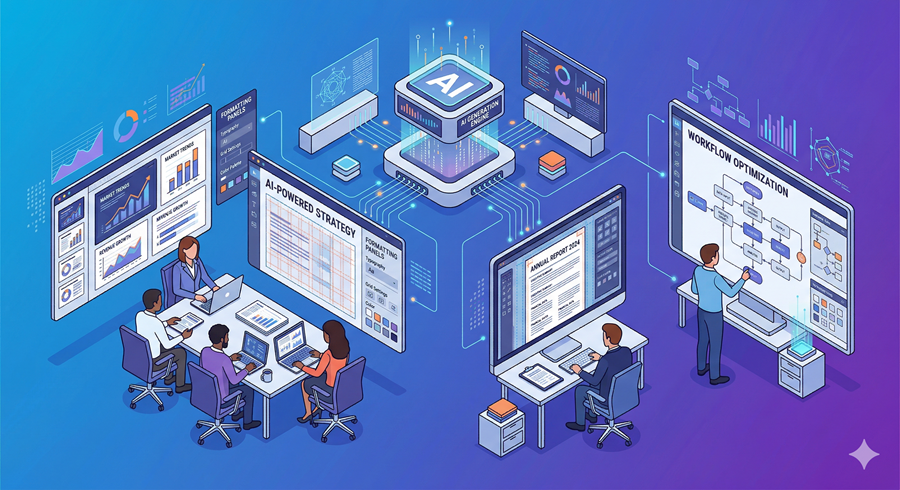
The pattern is clear. AI is moving from isolated outputs toward controlled systems.
The Rise of Self-Evolving Systems
Then there’s the second path, which looks very different.
Instead of focusing on control, some models are being designed to improve the systems around them. Not just writing code, but refining how that code gets written, tested, and deployed.
This is where things get interesting. These systems can build tools, evaluate their own performance, and iterate on their own structure. Over time, they get better not just at tasks, but at the process of doing those tasks.
In engineering contexts, that starts to resemble real work. Debugging production issues. Analyzing logs. Suggesting fixes. Even improving the workflows that guide those actions.
The loop becomes recursive. The system improves itself.
Where This Is Heading
What I find most interesting is not which approach wins, but how both evolve together.
Control-based systems will dominate where reliability, integration, and scale matter. Self-evolving systems will push boundaries in complexity, adaptability, and autonomy.
The real shift is that AI is no longer just about generating outputs. It is becoming part of the infrastructure that builds, maintains, and improves itself.
That changes the role of the user. Less operator, more supervisor, and eventually, maybe something else entirely.
Follow Us on:
Clutch
Goodfirms
Linkedin
Instagram
Facebook
Youtube