
Machine learning development services enable organizations to design, train, and implement artificial intelligence (AI) models that perform decision-making functions. These services also offer end-to-end support to ensure these models operate continuously and reliably, eliminating the need for in-house data science teams.
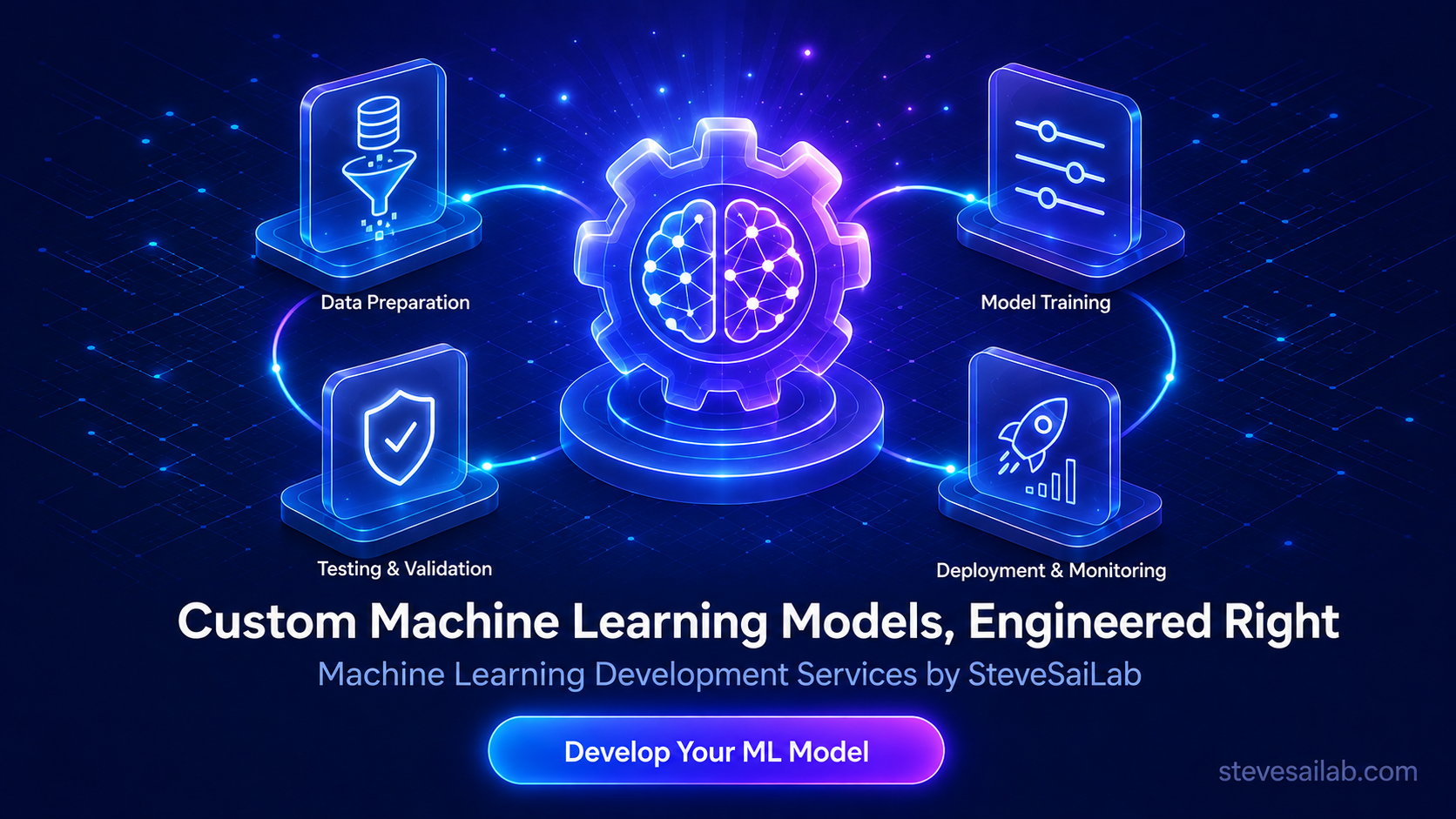
Machine learning development services provide end-to-end support for creating and maintaining machine learning models. These companies offer expertise in developing and implementing custom machine learning algorithms to fulfill particular business objectives. Such services usually include data preparation, algorithm design, training and testing processes, and post-deployment model performance monitoring.
Many organizations are interested in utilizing the power of predictive analytics and automation but do not have the necessary expertise in-house. At the same time, hiring an entire data science team can be expensive since these professionals require specialized skills.
Therefore, many companies opt for third-party support in developing and maintaining their artificial intelligence (AI) models, which have experience applying these solutions in real-world scenarios.
Machine learning development services usually comprise the entire process of model design and maintenance rather than simply coding algorithms. This usually includes collecting and preparing data, choosing the most appropriate algorithm, training and testing the model, deploying it in the target environment, and continuously monitoring and retraining for better performance. Reputable providers usually offer end-to-end services to ensure these models perform reliably and consistently.
Creating a reliable and high-performing model requires more than just coding skills. This process also requires domain knowledge and experience working with various statistical tools and techniques. Below are some of the main reasons why companies rely on these services:
A competent machine learning engineer usually has the skills and experience required to create reliable and high-performing models. These experts can help organizations avoid common pitfalls when developing such solutions, including selecting appropriate algorithms and ensuring the quality of training data.
Experienced developers usually achieve better results faster compared to inexperienced counterparts. Therefore, these professionals can help organizations achieve faster results while also reducing the likelihood of errors.
Working with an experienced provider can significantly reduce risks associated with developing such solutions, including model inaccuracies and data quality issues. In addition, these companies have well-established frameworks that help reduce various other pitfalls that may arise during the development process.
Many organizations fail to recognize the importance of continuous model maintenance, which is crucial in ensuring these solutions perform optimally. Outsourced developers usually offer such support, which in-house counterparts may lack.
The machine learning development process usually follows a standardized approach that typically involves several key steps. While these steps can vary depending on the specific requirements of a given project, they usually follow a similar pattern:
This step usually entails identifying the particular business need that the model will address.
This phase is crucial in ensuring there is adequate data to develop the solution. It may also entail several data preparation steps, including feature engineering.
This step entails choosing the most appropriate algorithm and training it using the prepared data set.
This process ensures the trained model performs reliably and consistently before deployment.
The next step is to integrate the solution into the target environment.
This step is crucial in ensuring the model continues to perform optimally and makes necessary adjustments when there are performance issues.
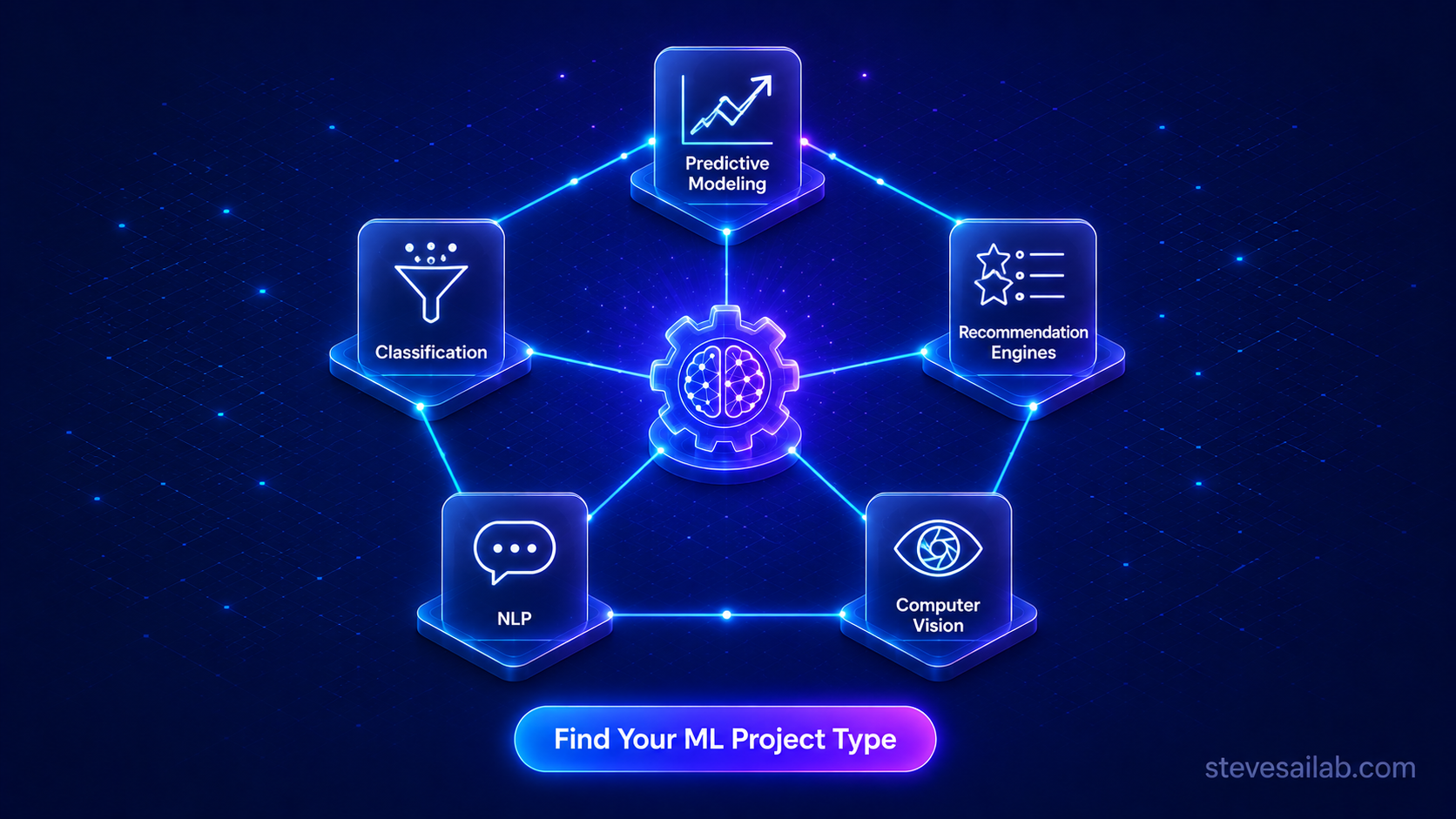
There are several different project types that usually determine the approach to model development. Below are some of the most common categories:
Project Type Description Common Applications
Forecasts potential outcomes based on historical data
Demand forecasting and risk scoring
Arranges data into distinct categories
Fraud detection and spam filtering
Suggest products, content, or other items
E-commerce and video streaming
Interprets or generates human language
Chatbots and sentiment analysis
Helps computers interpret images and videos
Visual inspection and security monitoring
The choice of an appropriate category usually depends on the particular business need and the availability of training data.
The choice between in-house and outsourced developers depends on various factors, including the specific project requirements and the organization’s overall objectives. In most cases, companies with significant and recurring AI/ML-related needs usually consider hiring in-house developers. At the same time, outsourcing such processes can be more cost-effective, especially for relatively small-scale projects.
Many firms also choose to outsource such processes, at least initially, to ensure there are sufficient skills and expertise in-house before considering permanent hires.
Machine learning development services are usually just one part of a broader initiative aimed at adopting AI solutions. Most organizations that utilize such services usually also invest in generative AI development solutions to create more comprehensive systems that offer extended functionality. This can include solutions that combine predictive analytics with content creation to offer more integrated solutions, such as recommendation engines.
In most cases, such strategies also entail broader application development solutions that enable these AI models to be deployed as fully-fledged products or features within an existing application.
Many companies overlook the importance of choosing the right development partner when outsourcing such processes. Below are some of the most crucial considerations:
It is essential to choose a firm with extensive experience in the relevant domain. This includes understanding the intricacies of the particular industry where the model will be deployed.
Choosing a competent partner is crucial, especially when dealing with complex data sets.
It is also crucial to ensure the selected company offers transparent performance metrics to help measure the accuracy of the selected model.
Choosing a reliable partner that offers continued support is crucial, as it ensures the model will perform reliably even after deployment.
Machine learning development services enable organizations to utilize the power of AI to transform their operations. These solutions offer end-to-end support, which is usually crucial in ensuring these models perform reliably and consistently. By working with competent developers, organizations can ensure they design reliable solutions that support their business objectives. As such initiatives become more pervasive across industries, partnering with an experienced team is usually more valuable than trying to navigate the intricacies of such processes in-house.
The cost of such services depends on the complexity of the requested solution. Some simpler models can be created for several thousand dollars, while complex systems with multiple algorithms can cost hundreds of thousands of dollars. Mostly, the final price is determined by the amount of data, the required type of ML algorithms, and additional services.
No, you don’t. Our company provides you with experts who will help you build and train your machine learning system. Therefore, you don’t have to hire your machine learning engineer for development services.
It depends on the complexity of your system and the amount of data you have. Usually, it takes several weeks to create a simple system and several months to design a complex ML system.
There is no difference in definitions since solutions can be referred to as services. However, sometimes solutions mean the final product that the company wants to achieve, while services mean the process of creating this product.
Yes, it can. We can equip your system with both predictive and generative AI features.
We help US enterprises make this decision based on their specific workload requirements, existing infrastructure, and long-term AI roadmap - not platform preference.
Get expert insights on your use case and identify the most effective path forward.