
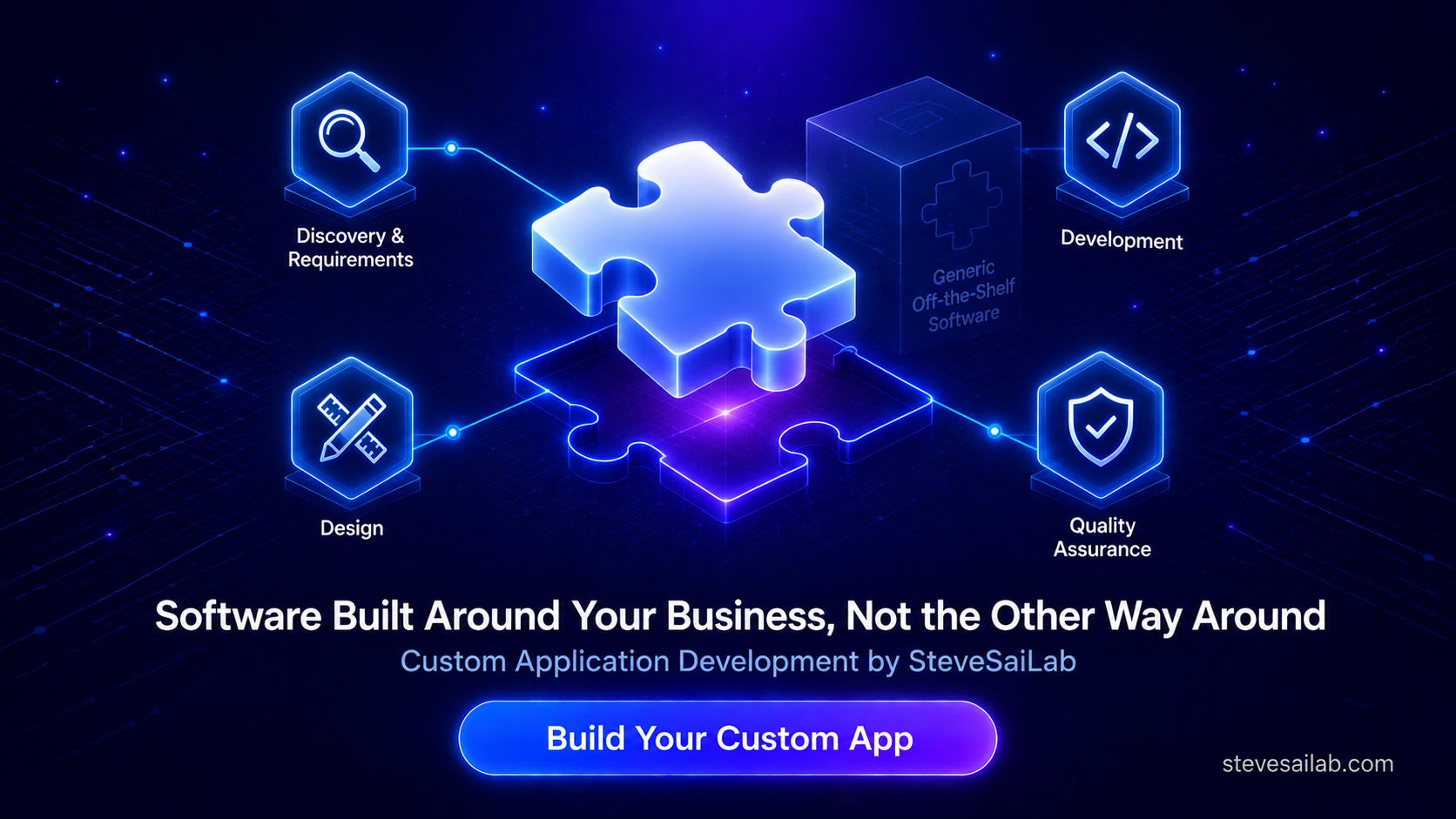
Custom application development refers to the process of designing and constructing customized software rather than using an off-the-shelf solution. This process typically requires extensive analysis, design, coding, testing, and support of the application in accordance with the organization’s specifications.
Custom application development involves the construction of a software application designed specifically for the purposes of a particular entity. Unlike generic software products, such programs are constructed based on the inner needs and peculiarities of the adopting organization. A custom application is therefore a program that provides a set of features and tools required to perform certain tasks better than generic alternatives.
While standardized commercial applications are often sufficient in most cases, some businesses implement highly specific, integrated processes requiring customized solutions. Such software products are typically more advantageous despite the additional costs and time spent on development. Working with an experienced custom application development partner helps ensure that investment translates into a system that actually fits how the business runs.
The process of custom application development involves the construction of a software application that is designed specifically for the purposes of a particular entity. Unlike standardized products, such programs are constructed based on the inner needs and peculiarities of the adopting organization. Custom application development refers to the software development life cycle (SDLC), which generally consists of five stages:
Businesses opting for custom application development are usually in need of a product that is specifically designed to address their individual or particular organizational needs.
Custom software products are typically developed to meet the specific requirements of the adopting entity. Unlike generic products, these programs are usually more advantageous since they are designed around the organization’s current and future needs and peculiarities.
The following points highlight some of the advantages of custom application development:
Despite the differences between various types of software products, the general application development process typically involves the following stages:
These steps are general guidelines, and the actual process may differ depending on the nature of the product and the preferences of the service provider. The discovery phase plays a major role in custom application development, since it involves identifying the major goals, objectives, and requirements. Other aspects of the design process can also be adjusted if the end user requests changes or additions, which further emphasizes the importance of the discovery stage.
The need for a custom application often emerges when a business requires a highly specific technological tool. In most cases, organizations turn to a custom-designed product when available generic alternatives are incapable of meeting their individual or organizational needs.
The decision to acquire a custom application is typically informed by the following factors:
Where none of these factors apply, it may make more sense to opt for an off-the-shelf alternative. This approach is generally more cost-efficient, especially when a generic product can already address the majority of the organization’s needs.
Custom applications can generally be divided into the following types:
These four categories help distinguish between a program developed to meet the particular requirements of one entity or industry and a generic product that is typically sufficient for most cases. Businesses seeking custom application development services usually work with providers that have extensive experience across more than one category, which allows them to handle more complex projects involving a variety of tools and functions.
Artificial intelligence (AI) tools and features are becoming a major part of the custom application development process. Many generic products currently offer AI-based features, and the same trend is observed in the development of customized programs.
Businesses building a custom application are now requesting AI features as a basic requirement. AI development services often involve the use of various AI-powered tools and functions, including chatbots and virtual assistants. Many companies working in this space now offer generative AI development services, allowing businesses to integrate such tools directly into their programs. Some AI development services also involve the use of foundation models — pre-trained AI models used as a basis for developing products with minimal coding.
Custom application development is a process that requires extensive experience and expertise. It’s essential to choose a provider that fully understands the scope of the envisioned product and is capable of bringing the concept to realization.
A reliable application development company will have extensive experience with complex projects, along with the technical expertise to address the intricacies of the envisaged project. Such firms typically offer end-to-end application development services, including maintenance and support after the initial launch. A strong development company should also have a well-defined process and provide transparent communication throughout the project.
At Steves AI Lab, we work with businesses to scope, build, and support custom applications engineered around their actual workflows — not a generic template.
In summary, this article covered the main benefits of custom application development, along with the major stages of the process. As discussed, custom applications provide a significantly better fit around the peculiarities and requirements of the adopting entity. From both a process and strategic perspective, custom application development offers advantages that generic products simply can’t deliver.
1. What is included in custom application development? Custom application development covers everything from requirement analysis, design, coding, and testing to launch and maintenance. The end product is a software application built for the particular business process, rather than a generic solution that has to be molded to fit a set of requirements.
2. How much does it cost to develop a custom application? The cost of developing a custom application varies greatly depending on the complexity of the project. Some simple applications can be built for a couple of thousand dollars, while enterprise-level application development can cost hundreds of thousands of dollars.
3. How long does it take to develop a custom application? It depends on the complexity of the application. Simple applications can take only a few weeks to build and deploy, while more complex applications often require more than six months of continuous development before launch and testing.
4. What is the difference between custom and off-the-shelf software? Custom software is designed to fulfill the requirements of a particular organization, while off-the-shelf software is a generic solution built to meet the needs of many organizations. The custom approach suits individual requirements; the off-the-shelf approach suits generalized requirements.
5. Can AI be incorporated into custom applications? Yes. Many providers offer generative AI development services alongside traditional development services and can incorporate various AI technologies into custom applications.
We help US enterprises make this decision based on their specific workload requirements, existing infrastructure, and long-term AI roadmap - not platform preference.
Get expert insights on your use case and identify the most effective path forward.
WhatsApp us