
Diffusion Models in the Enterprise: What US Businesses Need to Know in 2026
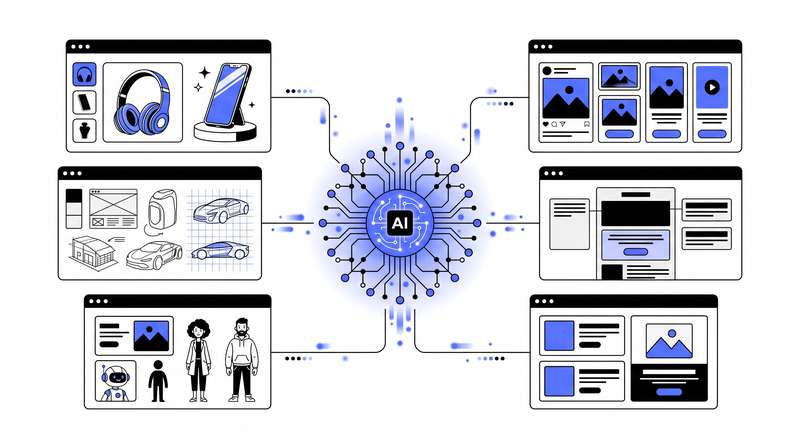
When most people hear the term diffusion models, they think of AI image generators. Reducing diffusion models to an image generation novelty is one of the most significant misconceptions in enterprise AI today. For US businesses in content-heavy, design-intensive, or data-rich environments, diffusion models represent a serious operational capability moving rapidly from research into production. What Diffusion Models Are and How They Work Diffusion models are a class of generative AI that learns to create data by studying the process of gradually adding noise to existing data, then learning to reverse that process. While image generation is the most visible application, the same approach applies to audio, video, 3D shapes, molecular structures, time series data, and more. The range of production enterprise applications being built on diffusion models in 2026 Enterprise Applications Already in Production Visual content production at scale – US companies in e-commerce, retail, media, and advertising are generating product imagery and marketing visuals at a fraction of traditional production cost and time. Product design and prototyping – an emerging application with significant implications for US manufacturing and consumer goods companies. Drug discovery and molecular design – US biotech and pharmaceutical companies are using diffusion models to generate novel molecular structures with specific desired properties. Synthetic data generation – enabling ML development where real data cannot be used directly due to privacy constraints. The Business Case for Visual Content Automation Traditional visual content production involves photographers, studios, art directors, and post-production teams. Cost per image across this pipeline is substantial and time from brief to finished asset is measured in days or weeks. Diffusion model-based content systems produce high-quality visual assets in seconds to minutes at a cost per image orders of magnitude lower. The human creative team shifts from execution to direction and curation. The engineering requirements that separate enterprise-ready diffusion deployments from demos
What Real Enterprise Generative AI Looks Like Behind the Scenes in 2026
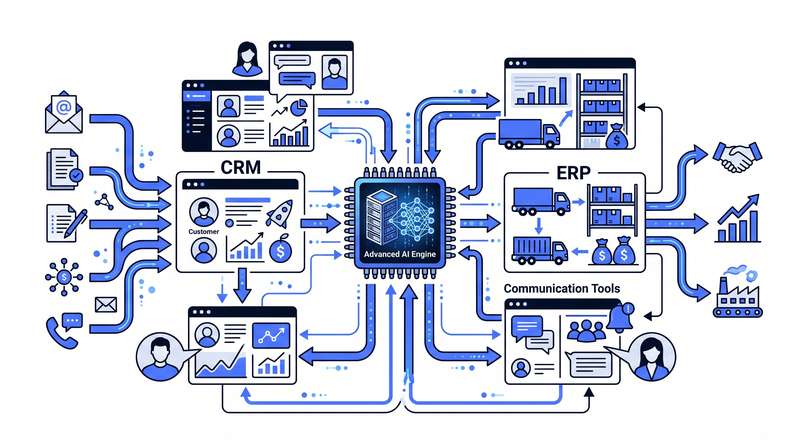
ChatGPT changed how the world thinks about AI. But the conversation that ChatGPT started and the reality of enterprise generative AI in production are two very different things. Consumer AI tools are designed for individual users. Enterprise generative AI is designed for organizations with complex workflows, sensitive data, regulatory requirements, and the need for consistent, auditable outputs at scale. Why Consumer AI Tools Are Not Enterprise AI Systems The critical differences between consumer AI tools and enterprise AI systems Security and data isolation – consumer AI tools process user inputs on shared infrastructure. For enterprises handling customer data or regulated content, this is unacceptable. Reliability and uptime standards for enterprise operations are dramatically higher than what consumer tools guarantee. Integration depth – consumer tools are standalone applications while enterprise generative AI is woven into CRM platforms, ERP systems, and workflow automation. Auditability and explainability requirements exist across virtually every regulated US industry. The Architecture of a Real Enterprise Generative AI System The foundation layer consists of one or more LLMs accessed through a private API or deployed on dedicated infrastructure. The data layer connects the generative system to enterprise knowledge bases through retrieval mechanisms. The orchestration layer manages the flow of information between components and handles multi-step reasoning. The safety and governance layer applies content filtering, compliance checking, and brand standard enforcement. The monitoring and observability layer tracks performance metrics and logs all system interactions for audit purposes. The five-layer architecture of a production-grade enterprise generative AI system What Separates Deployments That Succeed From Those That Stall The generative AI deployments delivering the strongest outcomes share consistent characteristics: executive sponsorship extending beyond the initial launch, design around specific measurable business outcomes rather than general AI exploration, genuine change management and user training built into the deployment plan, and a commitment to iteration rather than treating the deployment as a finished product.
What Generative AI in Content Production Actually Looks Like for US Enterprises
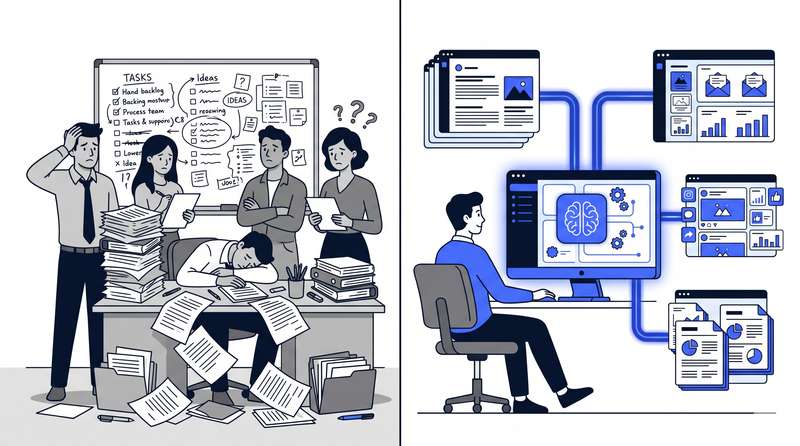
The real question for US enterprises is operational: how do we produce more high-quality content, faster, at lower cost, while maintaining consistency and accuracy? Generative AI, when implemented properly, answers that question in ways that go well beyond what most organizations have imagined. The Scale Problem Generative AI Actually Solves Enterprise content operations face a structural challenge: demand across digital channels, sales enablement, customer communications, and product documentation consistently outpaces the capacity of human content teams. Content teams that implement generative AI properly report producing three to five times more output with the same headcount. AI handles the volume work and first drafts, freeing human writers to focus on strategy, editing, and creative work that genuinely requires human expertise. The highest-value enterprise content use cases for generative AI in 2026 Where Generative AI Delivers the Most Value Product descriptions and catalog content – a US retailer with tens of thousands of SKUs can generate accurate, on-brand, SEO-optimized descriptions at scale using a system trained on your product database and brand guidelines. Personalized customer communications – email sequences that adapt to individual customer context can be generated at a scale impossible with manual writing. Content repurposing – taking a long-form research report and generating a blog post, a social media series, and a sales enablement one-pager from the same source material, with human oversight rather than human execution. What a Production-Grade Content AI System Actually Requires A brand and style knowledge layer ensures the system understands and consistently applies your specific tone and terminology. A content accuracy layer connects the generative system to your product data and factual sources. A human review workflow integrates AI output into your existing editorial process. Quality monitoring tracks the consistency and accuracy of AI-generated content over time and flags degradation before it becomes a problem. The four components that separate a production-grade content AI from a consumer tool